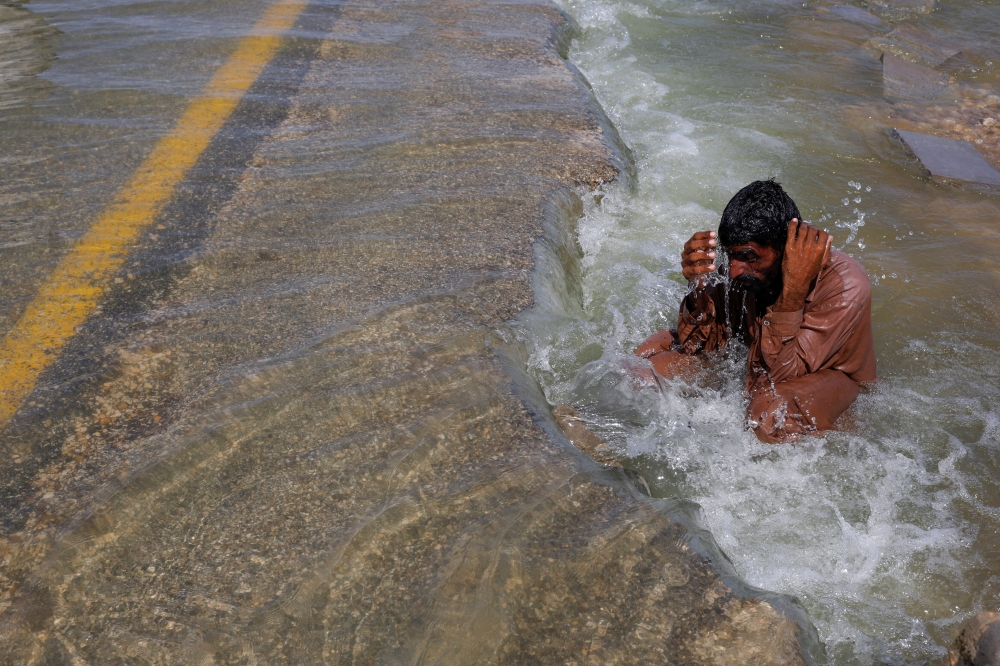
A displaced man cools off to avoid heat on flooded highway, following rains and floods during the monsoon season in Sehwan, Pakistan, on September 16, 2022. REUTERS/Akhtar Soomro
Islamabad: Pakistan is facing the risk of fresh floods and more deaths, after unusually severe torrential downpours triggered by climate change submerged a third of the country and killed more than 1,500 people.
Although the water has started receding in some areas, authorities are worried that heavy rains in parts of neighbouring India could swell key rivers in Pakistan. The Provincial Disaster Management Authority has advised to evacuate people from some areas of Pakistan to avoid any further loss of property and lives, after the nation reported 22 more deaths in a day.
The South Asian nation, already reeling from depleted currency reserves and the highest inflation in decades, is now facing a climate catastrophe that has affected 33 million, more than the population of Australia, and caused $30bn of damage. Fresh floods will bring further pain to the country that recently avoided a default after the International Monetary Fund’s help. Bonds have hit the lowest since mid-July, while its currency is near a record low.
"The economic impact of the floods is a major source of concern for global investors,” said Abdul Kadir Hussain, head of fixed income asset management at Dubai-based Arqaam Capital Ltd. Also, there is nothing tangible on dollar inflows that were supposed to follow the IMF loan, he said. On top of that, political uncertainty continues in the country, Hussain said.
At a time when the country is struggling to provide relief to millions of flood-affected people, the political atmosphere remains charged. Former Prime Minister Imran Khan received a rare public criticism from the army after he accused the government of delaying elections until a new army chief is appointed. Khan, who was ousted in April and is calling for early elections, is also facing multiple legal challenges that risk setting off street protests.
However, the focus stays on the disaster. Scientists say that climate change made peak rainfall in Pakistan’s Sindh and Balochistan provinces 75% more intense than it would have been in a world without warming. A heat wave in India and Pakistan earlier this year, also fueled by climate change, worsened the flooding, according to World Weather Attribution, a scientific group that studies the link between extreme weather events and climate change.
The latest flood warning comes as India’s weather office predicts monsoon rains in some parts of Gujarat, Maharashtra, Madhya Pradesh, Jammu and Kashmir until Tuesday. Still, the overall situation in Pakistan is improving. Some areas should be clear of floods in two to three weeks, but it could take as much as three months at some places, Prime Minister Shehbaz Sharif’s office said in a reply to Bloomberg’s questions.