DOHA: With an unprecedented wave of new LNG supply projects coming on stream, 33 new LNG ships have been ordered globally so far this year, compared to 19 in the whole of 2017 and just six in 2016.
Owners have been tempted by higher spot/short-term charter rates, still-low newbuilding prices and rapidly growing LNG trade. New LNG supply is being absorbed far more easily than many expected by booming demand in Asia, according to leading energy consultancy firm Wood Mackenzie.
A new wave of FIDs (final investment decisions) on new supply projects is expected to create even more demand for shipping. But owners need to be careful they don’t over order. There is still a huge number of ships ordered in the 2011-2014 LNG newbuilding boom to be delivered to the fleet and there is a long history of new ships arriving before new supply, Wood Mackenzie’s Principal Analyst (LNG Shipping & Trade) Andrew Buckland said.
LNG shipping is benefiting from an unprecedented wave of new LNG supply projects coming on stream in a relatively short period.
Between 2015 and 2020 LNG production is forecast to increase by over 150 mmtpa; in comparison, supply rose by just 20 mmtpa in the five year prior to 2016, Buckland said in a research note.
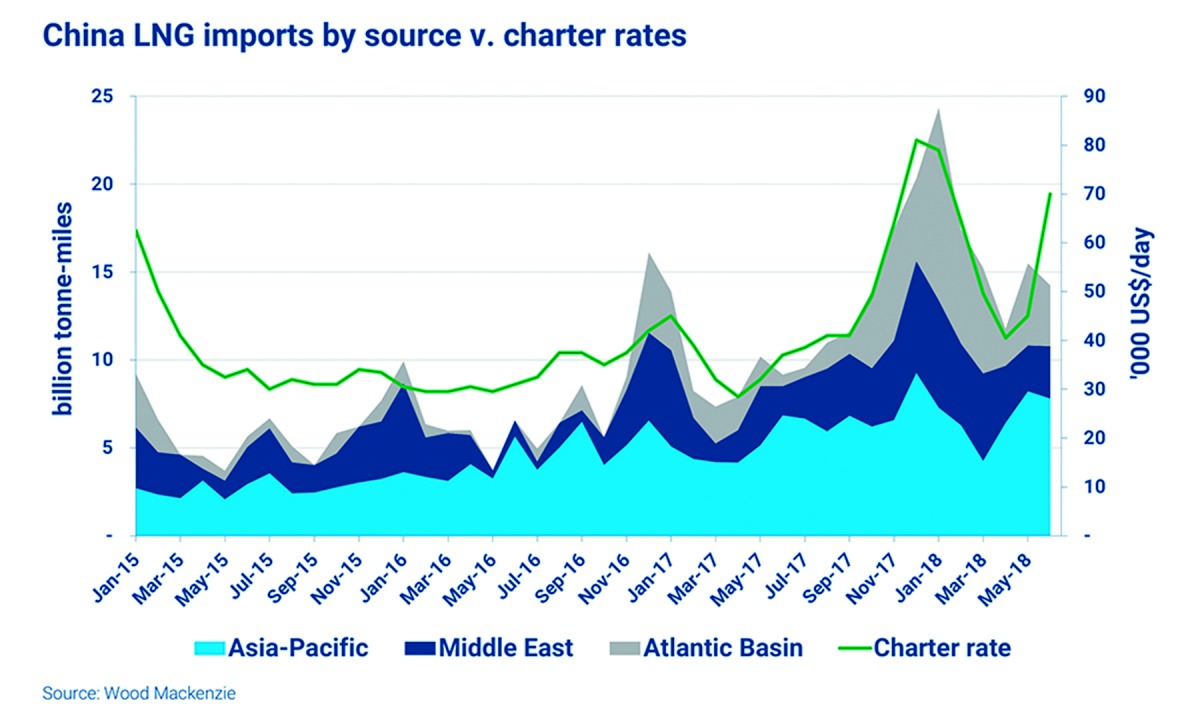
The huge increase in LNG supply has so far been comfortably absorbed by rapid growth in demand. China has been at the forefront of demand growth with imports in the first half of 2018 up 50 percent, following 46 percent growth in 2017.
Chinese LNG demand is also taking a more pronounced seasonal shape as new terminals have opened up in the north of the country requiring more LNG in the winter months.
The apparent ease by which the current wave of new LNG supply is being absorbed by markets has turned attention to who will develop the next wave of LNG supply.
Wood Mackenzie currently forecast that 114 mmtpa of new LNG capacity will take FID between 2018 and 2021.
These pre-FID projects will not provide any new LNG to the market until at least 2023 and most of it is unlikely to be available to ship before 2025. Between the current wave of new LNG supply and the anticipated pre-FID wave there will be a period of low LNG supply growth.
Ships being ordered now will deliver just in time for the start of the period of low supply growth.
Vessel design and technology advances have seen the typical new order LNG ship become larger and more efficient, making ships ordered even three or four years ago outdated.
Ship orders now are typically sized at 170-180,000m³, compared to 155,000m³, dues to design advances and to maximise carrying capacity through the newly expanded Panama Canal. In addition, the introduction of gas-injection slow-speed engines has offered fuel savings of over 20 tonnes per day even against modern DFDE/TFDE engines and 75 tonnes per day against older steam ships.
So far this year 36 new vessels have been added to the fleet and three have been scrapped.
A further 22 are scheduled for delivery before the end of the year – if these vessels are delivered on time and no further vessels are removed from the fleet, capacity will grow by 13.0 percent in 2018 (up from 6.8 percent in 2017). The 37 vessels currently scheduled for delivery in 2019 will grow the fleet another 7.6 percent.
LNG trade is growing strongly but our forecast of an 8.2 percent expansion in 2018 lags behind fleet capacity growth. More long-haul imports from the USA to Asia should see tonne-mile demand grow at a faster rate, leaving a delicate balance between supply and demand for LNG ships.
But forecast trade growth of 13.7 percent in 2019 should tip the balance in favour of ship owners.