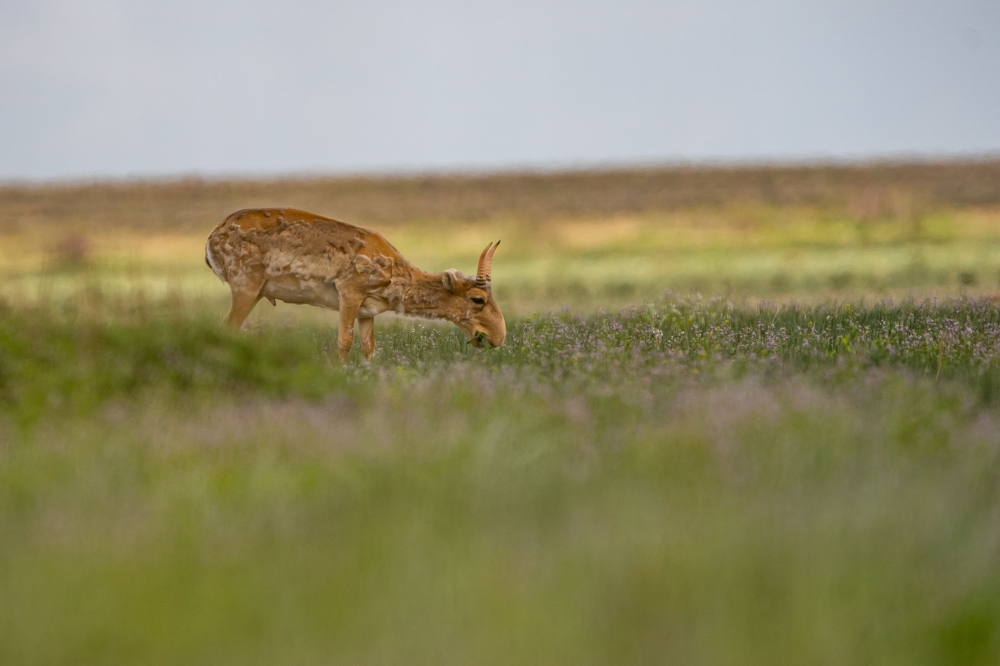
(FILES) A Saiga antelope grazes in the steppe on the border of Akmola and Kostanay regions of Kazakhstan in the morning of May 10, 2022. (Photo by Abduaziz MADYAROV / AFP)
Astana, Kazakhstan: Kazakhstan on Monday said it would legalise hunting of the once-threatened Saiga antelopes to manage their population -- a sensitive subject in a country where the animals are widely revered.
The government says there are currently around two million Saiga antelopes. Once threatened with extinction, the antelopes are still on the red list of the International Union for the Conservation of Nature.
"Regulation of the Saigas is necessary. This species is damaging farming," Ecology Minister Erlan Nysanbayev told a press conference, adding that damage caused by them to farms totalled 12 million tenge ($25 million).
"There are two methods -- capturing them during the day using nets and hunting them at night. I won't avoid the question. We will also have to use the second option," he said.
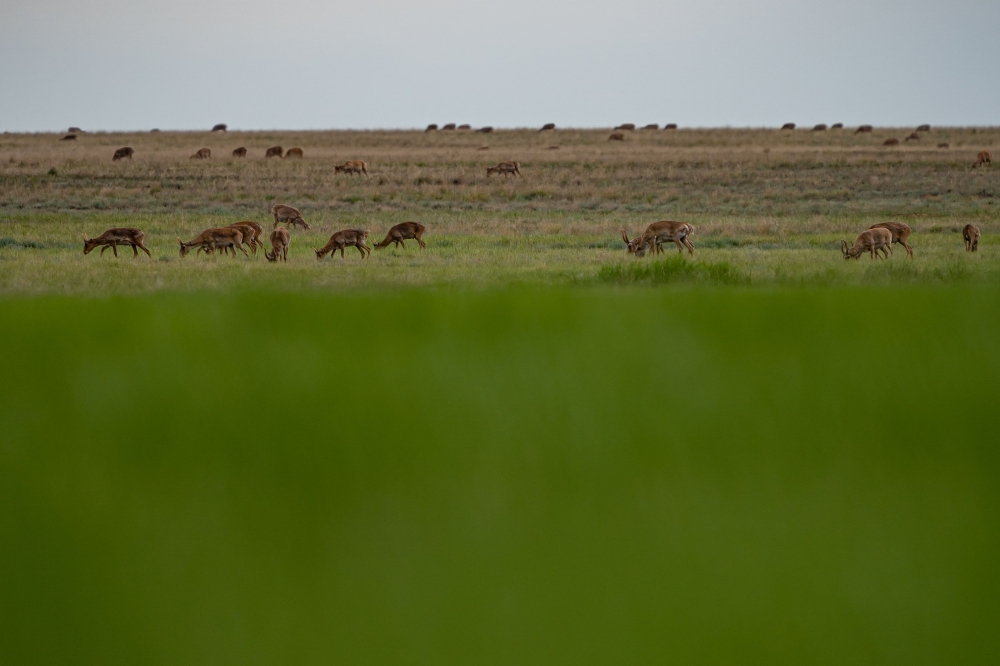 (FILES) Saiga antelopes graze after sunrise in the steppe on the border of Akmola and Kostanay regions of Kazakhstan on May 13, 2022. (Photo by Abduaziz MADYAROV / AFP)
A ministry spokesman said that "up to 337,500 Saiga antelopes) have to be captured or killed by November 30".
The culling of Saiga antelopes is a frequent subject of debate in Kazakhstan.
President Kassym-Jomart Tokayev intervened last year by warning a former ecology minister about hunting the "sacred" animals.
Nysanbayev said the population had "exceeded its historical record because of an absence of natural predators".
Saiga antelopes have a distinctive rounded snout and live mainly in the steppes of central, western and northwest Kazakhstan.
Poaching exploded after the break-up of the Soviet Union, while dangers to the antelope population were exacerbated by a lack of water and disease.