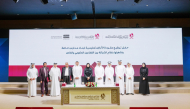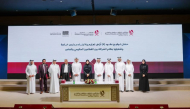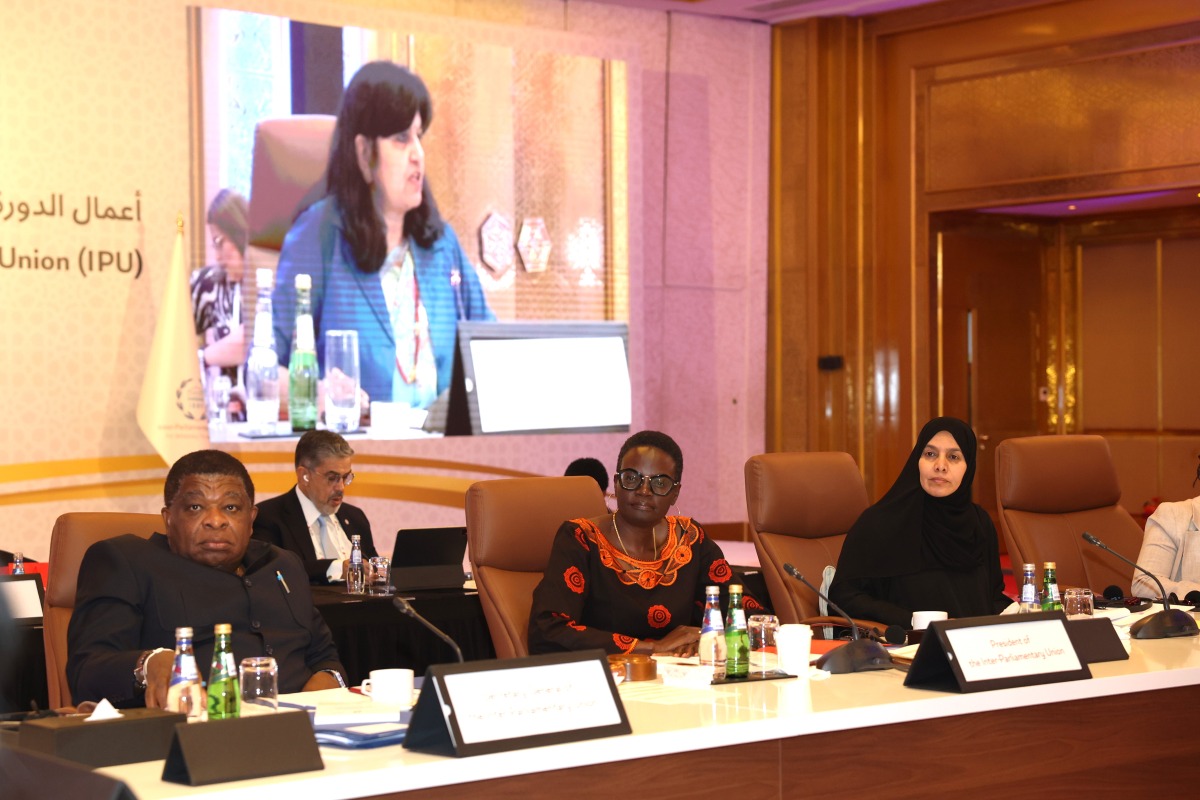
Deputy Speaker of Shura Council H E Dr. Hamda bint Hassan Al Sulaiti with other delegates during the meeting.
Doha, Qatar: The 298th session of the Executive Committee of the Inter-Parliamentary Union (IPU), hosted by the Shura Council, concluded in Doha yesterday.
The two-day session deliberated on an array of subjects on the agenda, foremost of which was the evaluation of the implementation of the IPU’s current strategy, the general directions of the upcoming five‑year strategy, along with a wide range of organisational and parliamentary issues related to reinforcing the IPU’s role and the effectiveness of its mechanisms.
Deputy Speaker of the Shura Council H E Dr. Hamda bint Hassan Al Sulaiti, who is also a Member of the Executive Committee of the IPU and Vice-President of the Committee representing the Arab Group within the Union, affirmed that the session constituted a consequential milestone for evaluating the Union’s operational path. She emphasised that the event produced outcomes that would help advance the IPU’s mechanisms and effectiveness in addressing the current challenges facing international parliamentary action.
The convened discussions demonstrated the commitment of the Executive Committee’s members to boosting joint parliamentary action, deepening the multilateral parliamentary cooperation approach as an effective tool in supporting dialogue, coordinating positions, and sharing expertise among national parliaments, thereby contributing to achieving the IPU’s objectives and responding to peoples’ aspirations, Dr. Hamda pointed out.
Dr. Hamda underscored the Shura Council’s commitment to forging ahead in positively contributing to international parliamentary cooperation pathways and fostering partnerships with regional and global parliamentary institutions and parliaments, stemming from its belief in the importance of collective work to deepen peace and development and confront common challenges on multiple levels.