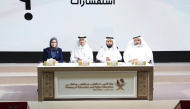
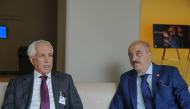
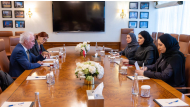
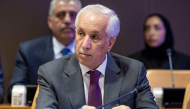
Doha, Qatar: Under the patronage of Prime Minister and Minister of Foreign Affairs H E Sheikh Mohamed bin Abdulrahman bin Jassim Al Thani, and with the sponsorship of Qatar Fund for Development (QFFD), Qatar Red Crescent Society (QRCS) has announced that its field training 10th Disaster Management Camp (DMC-10) would be organised February 3-11, 2026.
Held under the theme “Effective Preparedness and Better Response”, the nine-day training event will be attended by representatives of many Qatari government organizations and NGOs, 200 trainees from QRCS volunteers and Arab National Societies, and 100 trainers and administrative staff.
Launched by QRCS in 2006, DMC involves a theoretical and practical training curriculum, as well as multiple daily disaster simulation scenarios. Over the years, this extensive and specialized program has established itself as Qatar’s and the region’s top disaster preparedness and response training event.
To be held in Mesaieed (Sealine), DMC-10 is sponsored by QFFD, as part of the fruitful strategic partnership between QRCS and QFFD in numerous humanitarian, relief, and community activities, both locally and internationally. This reflects their shared commitment to encouraging and empowering various initiatives and programs that contribute to the goals of Qatar National Vision 2030.
Building on the resounding success of the previous nine editions of DMC, QRCS is set to launch this highly anticipated event, with a complete list of lectures, training sessions, and scenario drills that simulate real-world humanitarian situations. This offers the participants a unique opportunity to acquire knowledge and skills that no other organization or event can give.
At both the individual and institutional levels, DMC is a crucial asset of community capacity-building. It helps develop the potential and skills of the participating volunteers, facilitate sharing of expertise with different Movement partners, and strengthen coordination and engagement among the competent Qatari organizations to deal with unforeseen risks or disasters.
The agenda comprises two main parts: Specialized Training: Emergency Shelter, Water and Sanitation, Food Security and Livelihoods, Emergency Health Care, Emergency Planning and Operations Room, and Field Assessment and Coordination.
General Training: Media and Communication in Emergencies, Restoring Family Links (RFLs), Safer Access, Psychosocial Support (PSS), Disaster Management and Basic Humanitarian Standards, and Humanitarian Data Analysis.
During training sessions, there will be daily unannounced drills designed to assess the trainees’ learning and responsiveness. One day before the closing ceremony, there will be a large-scale field training in preparation for the final comprehensive scenario.
On the sidelines of the camp, a humanitarian and social tent will receive the trainees, school students, and the public, who will attend informative lectures on a variety of topics related to humanitarian and social work, to be delivered by a select group of humanitarian, legal, social, and diplomatic experts and VIPs.