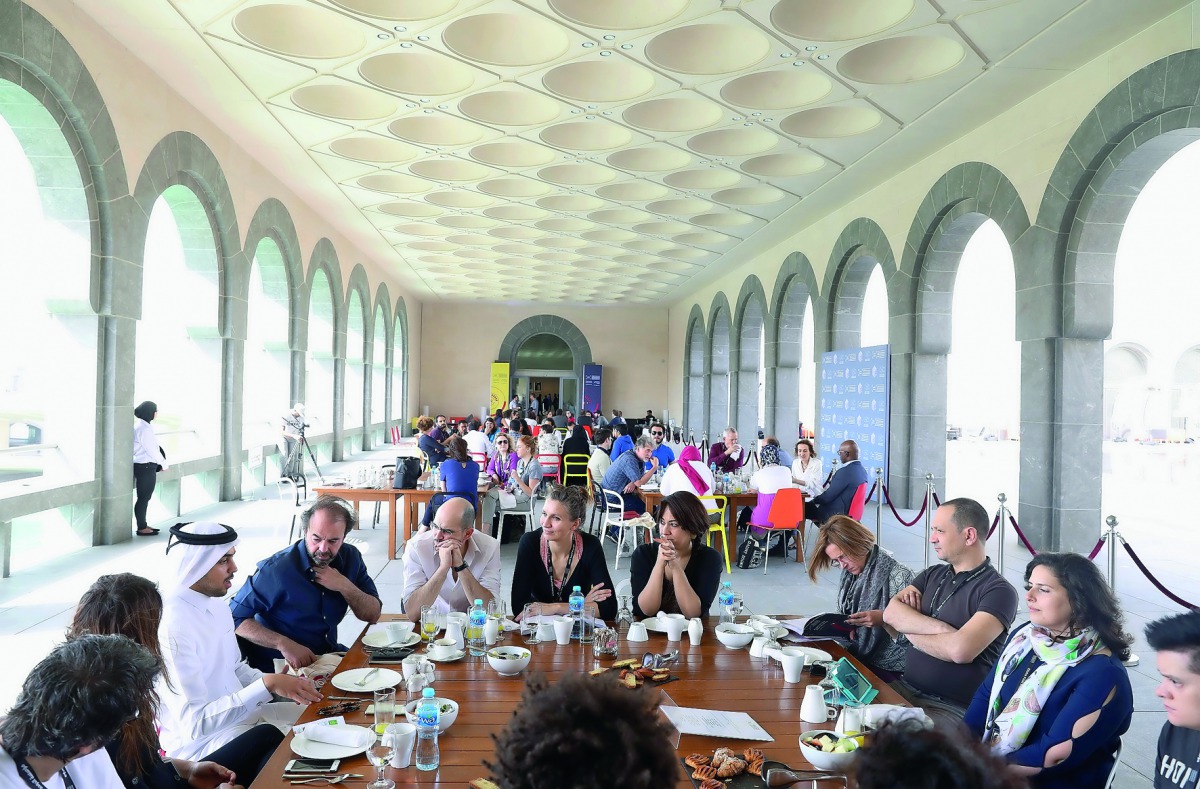
A session during the fourth Qumra, the annual industry event by the Doha Film Institute (DFI).
DOHA: “Be courageous, be daring, be vulnerable and be authentic.” This was the advice of senior leaders of the world’s leading film festivals to young filmmakers at the fourth Qumra, the annual industry event by the Doha Film Institute (DFI).
It was a sentiment shared by Cameron Bailey, Artistic Director of the Toronto International Film Festival; Christophe Leparc, Managing Director of the Director’s Fortnight at Festival de Cannes; and Bero Beyer, Festival Director of the International Film Festival Rotterdam.
At the preparatory meetings at Qumra, which aims to nurture first and second-time filmmakers from around the world, the three industry representatives were unequivocal in their observation that Qumra has evolved significantly in the past three years.
“The taste of Qumra is outspoken and daring, and that is one thing special about here,” said Beyer. “The shift I am seeing in the quality of films at Qumra too has to do with it being outspoken and daring. Initially, here in the region, filmmakers were merely trying to make a good film that will connect to the audience, which resulted in middle-of-the-road films. They were trying to be too pleasing and that doesn’t work. If you are true to yourself as a filmmaker and if your story is honest, it becomes relevant to people outside your region too.”
Beyer said it is not easy to develop the courage and vulnerability to be honest as filmmakers. “Being rooted in your milieu and being honest about it, you make yourself vulnerable as a filmmaker. But then, your film becomes interesting. At Rotterdam, we focus on the avant-garde and never on anything that is middle-ground. If you want to be a filmmaker, if you want to get into festivals, be vulnerable, be outspoken.”
Leparc said he sees “projects here that deal with subjects that I am looking for. These young filmmakers are very talented, and thanks to Qumra, I know of their works right from the ideation stage to how they finally take shape. I follow their projects from script-to-screen.”
He said the quality of the films evolving from Qumra “is improving; these young talents here are not immature anymore – and it is great to see DFI help them make ‘real’ films.” Leparc too said that young talents must focus not on being ‘too exotic’ with their stories but to explore the ‘deep roots. The universality of cinema always comes from local roots.”
With the qualitative shifts seen, Qatari and Arab cinema can scale the top echelons, he said, “but you must remember that it is very competitive out there; so, focus on telling your story with honesty.”
Bailey said being at Qumra is helpful in learning about the changing landscape of cinema in the region, adding that the openness of Qumra to the world is “what cinema really needs.” He said the opportunity for young talents to access resources as well as networking opportunities make the event relevant and important.
Bailey emphasised the need for young filmmakers to tell stories rooted in their milieu because that is what people want to see – real stories of real people. “In today’s interconnected world, where ideas and information move fast,” it is important more than ever to tell your stories.