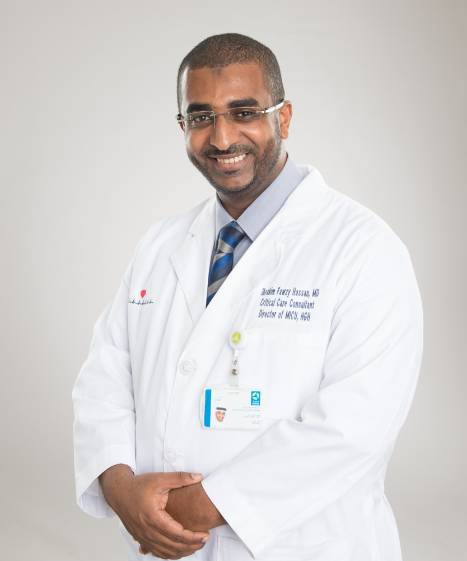
Dr. Ibrahim Fawzy Hassan, Director, Medical Intensive Care Unit
DOHA: In line with the mandate set out in Qatar’s National Patient Safety Collaborative (NPSC) to reduce sepsis-related deaths, Hamad Medical Corporation (HMC) will soon roll out a standardised care pathway for patients with suspected sepsis across its network of hospitals.
Established in January, Qatar’s National Patient Safety Collaborative (NPSC) aims to support and encourage a culture of continuous learning, improvement, and safety across the healthcare system in Qatar.
Sepsis is a life-threatening condition that arises when the body’s response to a severe infection damages its own tissues and organs. If not recognised early and managed promptly, it can lead to septic shock, multiple organ failure, and death.
“Sepsis is a medical emergency. It is responsible for between six and nine million deaths worldwide every year, many of which are preventable,” said Dr Ibrahim Fawzy Hassan (pictured), Director, Medical Intensive Care Division, Deputy Medical Director, Ambulance Service, and Chair of the Sepsis Steering Committee at HMC. “Sepsis can be triggered by a bacterial, viral or fungal infection in any part of the body and the most common causes include pneumonia, as well as abdominal, kidney, and bloodstream infections.”
According to Dr Hassan, sepsis can be difficult to diagnose because early symptoms can be confused with other conditions, highlighting the need for greater awareness of its causes, signs, and symptoms. Early symptoms of sepsis in older children and adults can include a high temperature (fever) or low body temperature, chills and shivering, confusion, cold or blotchy hands and feet, and not passing as much urine as normal.
The new sepsis care pathway, set to be fully rolled out across HMC this year, aims to improve the prevention, diagnosis, and clinical management of sepsis; it includes key definitions, treatment guidelines, and staff roles and responsibilities when caring for different patient groups such as neonates (newborn babies), children, and adults. The new care pathway will boost the existing sepsis prevention program, which was launched within HMC last year.
Sepsis was a topic of discussion at the World Health Organization’s Assembly (Committee A) meetings, held in Geneva last year, which were chaired by H E Dr Hanan Mohamed Al Kuwari, Minister of Public Health.
Delegates at the assembly agreed on a resolution to improve the prevention, diagnosis, and treatment of sepsis; the resolution encourages governments around the world to strengthen policies and care processes in relation to sepsis.
The Ministry of Public Health has mandated that sepsis care forms the foundation of a series of significant health challenges set to be addressed by inter-professional and multi-disciplinary teams working across the public healthcare sector.
Clinicians at HMC have worked on a range of quality improvement projects over the past few years, but the ministerial mandate gives rise to a corporate focus on sepsis care. The program formulates a standardized approach that clinicians take when suspecting the emergence of sepsis in a patient.