Doha, Qatar: Who among us has not enjoyed a trip into Qatar’s desert? Across the horizon, endless dunes stretch as far as the eye can see, meeting the sea in a landscape shaped by the rhythm of the tides.
Yet hidden within this seemingly barren terrain lies one of the desert’s most remarkable treasures: the desert rose, a natural cluster formed through thousands of years of geological processes and the inspiration behind the design of the National Museum of Qatar.
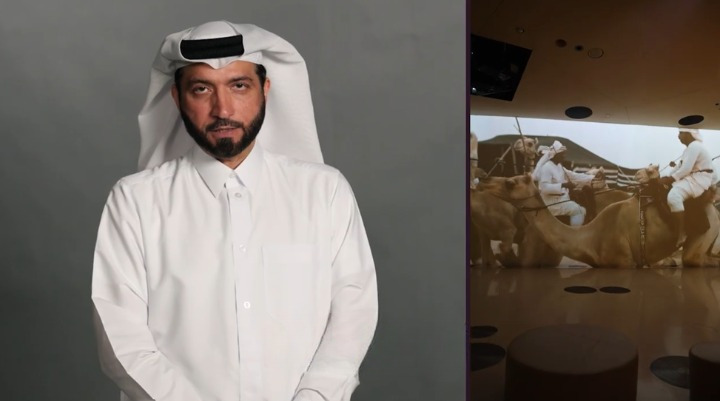
Recognising the importance of protecting these natural resources, Dr. Khaled Al Jaber, Deputy Director of Operations for the National Collection at Qatar Museums, emphasised: “My advice is to preserve natural resources and protect the natural environment with all the living creatures because it's the life we leave for future generations.”
His message underscores the value of safeguarding Qatar’s natural heritage, from its geological formations to its diverse ecosystems, which have adapted to one of the world’s most arid environments. He said this in the latest Evolution Nation video series, which celebrates the individuals, institutions and ideas that have shaped Qatar’s cultural development over the past five decades.
According to 2026 Springer’s Pathways to Nature Conservation and Resilience in Hot and Arid Lands: The Case of Qatar, 382 plant species have been identified in Qatar, while more than 440 insect species have been recorded across the country.
After joining the National Museum of Qatar nearly two decades ago, Dr. Al Jaber has recalled its original natural history galleries, where geological specimens, insects and taxidermy animals showcased Qatar’s environment and highlighted how understanding nature is crucial to understanding the nation’s identity.
“Since I began working at the National Museum of Qatar in 1995, I specialised in natural history, I worked on several exhibitions in addition to my work, one of the most important exhibitions was the Dinosaur Exhibition. What I remember most about the old museum is the natural history section, it featured a panorama with a group of taxidermy animals representing the Qatari environment, there was also a section for insects representing the Qatari environment as well as geology section with minerals and rocks.”
Dr. Al Jaber was referring to the Lost World Returns exhibition, which opened in 2006 during Qatar’s hosting of the 15th Asian Games. The exhibition featured dinosaurs from the Jurassic and Cretaceous periods, showcasing creatures that lived between 206 and 65 million years ago.
NMoQ showcases Qatar’s natural history through a series of immersive galleries highlighting the country’s natural resources. Visitors begin their journey in the Beginnings gallery, where they travel back approximately 700 million years to discover the geological forces that shaped the peninsula and the ancient life forms that once inhabited the region.
The story continues and unfolds through Qatar’s Natural Environment, which showcases the country’s diverse ecosystem and highlights the plants, animals and insects that have coexisted and adapted to the natural landscape of Qatar.
Dr Al Jaber asserted: “Art and culture are a strategic pillar of Qatar National Vision 2030, they promote the exchange of ideas, arts, and creativity, among different cultures.” Under the said vision, art and culture serve as core engines for social development, economic diversification, and national identity preservation.
Evolution Nation was launched as part of Qatar Creates, Qatar Museums’ year-round cultural movement, the campaign marks 50 years since the establishment of the original National Museum of Qatar in 1975.