DOHA: Equities have overtaken bonds to become the lead asset class for sovereigns across active, passive and factor strategies, this year.Middle East sovereign investors is showing growing interest in private markets with increased private credit and infrastructure allocations.
The sixth Invesco Global Sovereign Asset Management Study, an annual in-depth report on the complex investment behaviour of sovereign wealth funds and central banks, showed Middle East sovereigns remain the most committed users of active management, with an average of 65 percent of portfolios actively managed.
This year’s study was conducted face-to-face amongst 126 individual sovereign investors and central bank reserve managers across the globe representing $17 trillion of assets, of which 62 are central banks (35 in 2017), reflecting their growing status as sovereign investors.
Middle East sovereign investors also often pursue opportunistic strategies in less traditional, less efficient markets where active management can potentially deliver significant alpha. They also tend to have a significant internal active equity team, which means that the cost implication of higher use of active strategies is muted. Asian sovereigns have a relatively similar profile in being significant users of active management, driven largely by the perception that their local equity markets are less efficient than the US and Europe, as well as having longer average holding periods for their equity mandates.
The average allocations to equities have increased to 33 percent from 29 percent in 2017. The increase in equity allocations has been driven by a number of factors, including the equity bull market. On average, equity returns were 8.7 percent amongst respondents, which significantly supported strong outcomes at portfolio level (9.4 percent in 2017, up from 4.1 percent in 2016).
With most regions showing strong demand for private markets, Middle Eastern sovereigns are the most targeted in their programmes, with allocations into private credit increasing 44 percent and infrastructure increasing by 33 percent.
In contrast, for private equity a similar number of sovereign investors are reducing allocations in favour of other forms of private market asset classes as those making new allocation.
With allocations to equities increasing over the past five years, as a result, nearly half of sovereign investors are now incrementally or materially overweight in equities. Whilst many sovereign investors are content to remain overweight, some are not comfortable with the status quo.
More than a third (35 percent) plan to reduce equity weightings over the medium term, with the intent overall to make small reductions rather than cut significantly.
Of those looking to reduce weightings, many are driven by views that equity valuations are high on both absolute and relative bases, and that markets are at risk of correction, either due to geo-political or economic cycles. Specific issues acting as headwinds to equity markets include macro concerns such as the possibility of a trade war, China, valuations, and inflation.
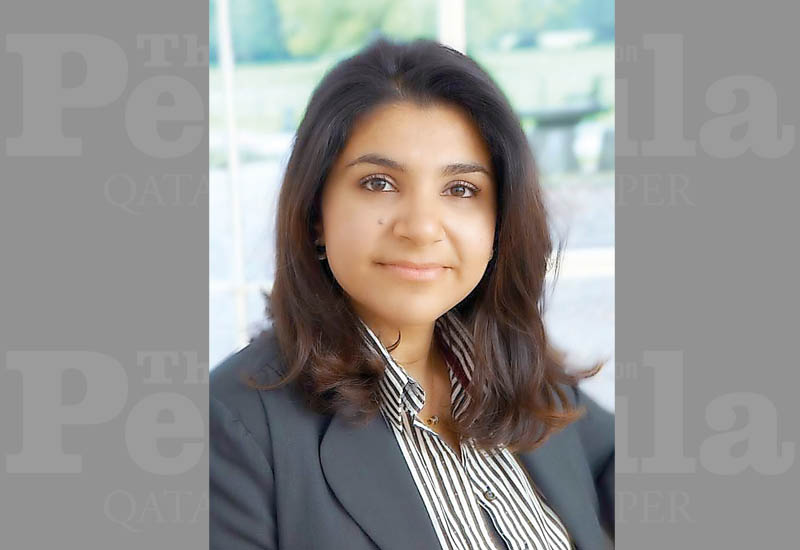
Zainab Kufaishi (pictured), Head of Institutional Sales for Middle East & Africa at Invesco, commented: “Whilst sovereigns remain increasingly committed to equities as a core growth asset, there has been a real shift within these equity portfolios.. Although passive strategies have been major beneficiaries, it is far more nuanced than a movement from active to passive; portfolio traffic is actually moving in multiple directions. Looking forward, factor strategies are the clearest winners, with sovereigns seeing factor as a third pillar between traditional active and passive management.”