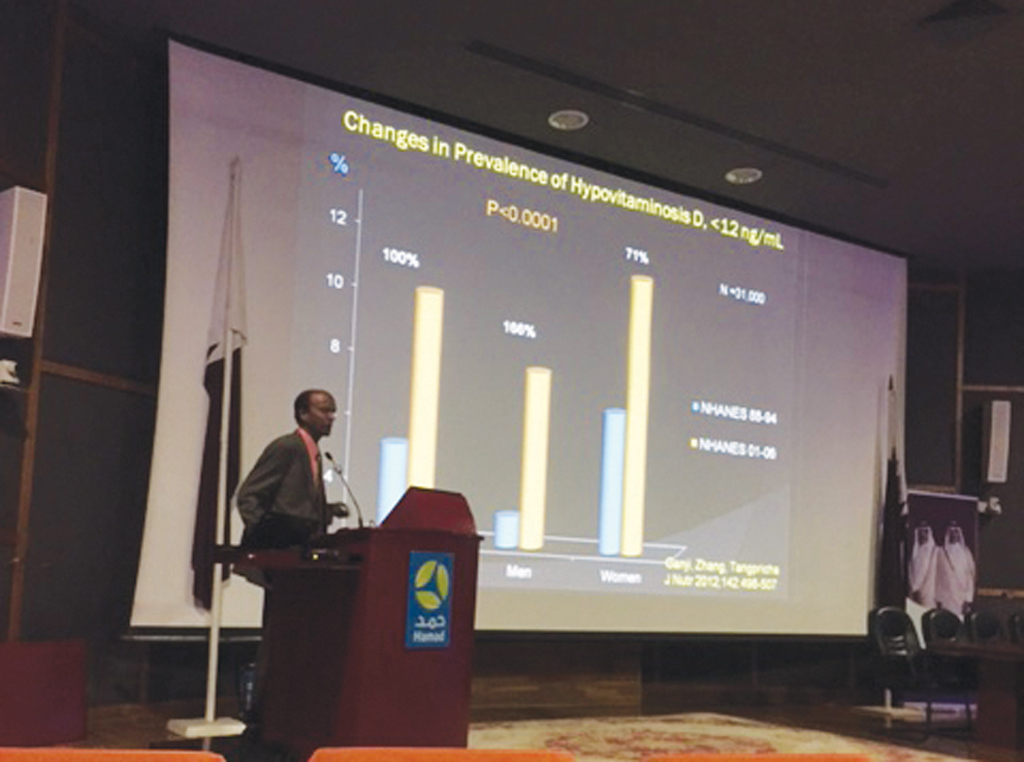
Dr Vijay Ganji, Associate Professor at Qatar University College of Health Sciences (QU-CHS) Department of Human Nutrition, speaking at the seminar.
DOHA: QU-CHS faculty addressed vitamin D deficiency and its relation with chronic diseases seminar in the presence of 115 health care professionals.
Dr Vijay Ganji, Associate Professor at Qatar University College of Health Sciences (QU-CHS) Department of Human Nutrition, presented a Continuing Professional Development (CPD) seminar on “Vitamin D and Chronic Diseases: What is the Evidence? Is it Time for Supplementation”, at Hamad General Hospital.
The seminar engaged 115 health care professionals from Hamad General Hospital, Primary Health Care Corporation, Al Khor Hospital, Al Wakra Hospital, and Aspetar. It has been approved by the Qatar Council for Healthcare Professionals.
The seminar aimed to evaluate the current evidence relating vitamin D to chronic diseases and to provide evidence-based recommendations to improve vitamin D proportion. Discussions focused on understanding various vitamin D sources, analyzing different types of supplements available for consumers, evaluating the current evidence relating vitamin D to chronic diseases such as cardiovascular diseases and cancer, understanding the current vitamin D recommendations and controversies surrounding these recommendations, recognizing the effects of vitamin D excessive intake, and making appropriate recommendation to improve vitamin D proportion.
Dr Vijay Ganji noted that more than 80% of the Qatari population suffer from low levels of vitamin D. He said: “Vitamin D deficiency is related to several chronic infirmities such as cardiovascular diseases, diabetes, several inflammatory diseases, and cancer.”
He also pointed to food-based solutions such as commonly consumed foods, i.e. vegetable oil, wheat flour, to reduce vitamin D deficiency in Qatar.
He added: “There is “no gold standard” to define vitamin D deficiency. Different investigators/organizations used different criteria to define vitamin D deficiency based on blood vitamin D concentrations. Although there is plenty of sunshine available in Qatar, still the majority of the population suffers from vitamin D deficiency due to limited outdoor activity and lack of enough vitamin D in the Qatari diet.”