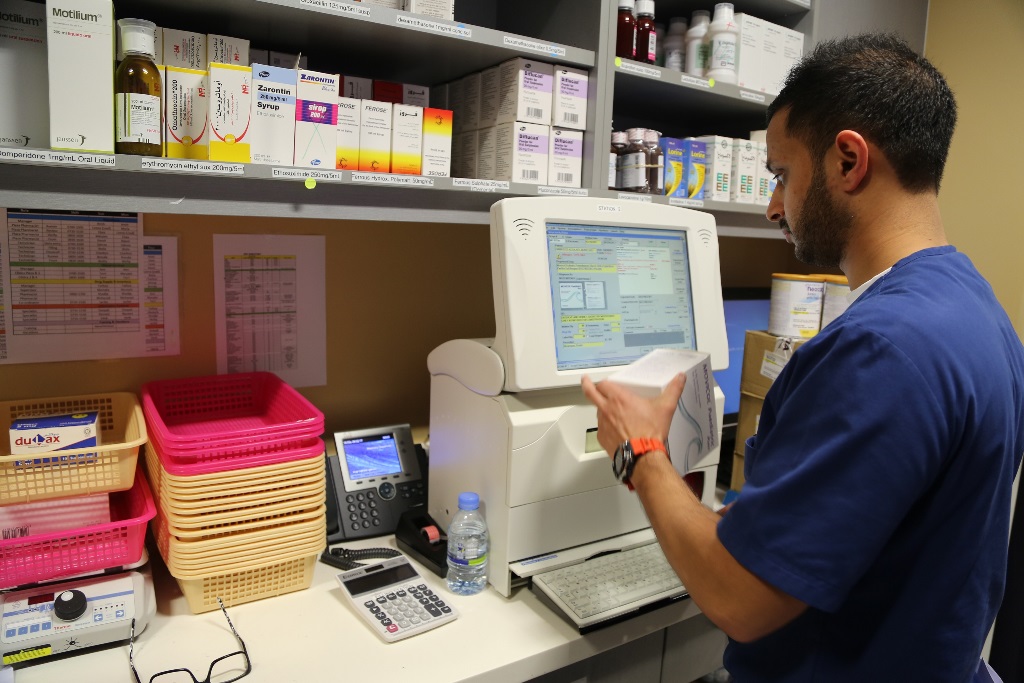
File picture of a pharmacy in Qatar used for representation.
DOHA: The State of Qatar spent about QR 1.2 billions on medicines during the past year and Hamad Medical Corporation and the Primary Health Care alone take out 14,500 prescriptions per day, up to 40,000 medical items per day, while outpatient clinics alone have more than 12,000 prescriptions, said an official.
This came during the pharmaceutical sector conference, organised by Qatar University under the theme of “Medication Sector in Qatar: Hand in Hand Facing the Blockade”, which got under way yesterday.
The conference is being attended by more than 150 pharmacists, specialists from the pharmaceutical field, expertise from pharmaceutical industries and representatives from the health sector of the State of Qatar.
The conference covers three main themes represented by medication management and accessibility to medication in Qatar, building pharmaceutical industry and innovation in Qatar and building human capacity in Qatar.
In his opening remarks, President of the Qatar University Dr Hassan Rashid Al Derham stressed the importance of the conference in raising awareness among members of the health sector on how to confront the siege and reduce its repercussions on this sector, especially with regard to the pharmaceutical aspect.
He expressed his confidence that this conference, with a number of prominent intellectual and academic figures involved, will be able to make constructive and effective recommendations and proposals that would enable the health sector to overcome the current challenges.
The Qatar University President said that the country’s health sector is an important element in building society, adding that the State of Qatar, through its full awareness of the importance of this sector, is working to provide the best level of health care and provide health services to all its inhabitants. He also pointed to a report by the Oxford Business Group which says that Qatar tops the Middle East countries in terms of the health sector expenditure relative to GDP.
Dr Al Derham touched on the national health strategy (2017-2022) of the Qatar National Vision (QNV) 2030, which states that healthy population is critical to Qatar’s future success, stressing that the State of Qatar has succeeded, thanks to its capabilities, potentials, plans and strategies to overcome the challenges and difficulties arising from the current siege and to turn them into opportunities that contribute to capacity-building and sustainable development.
He added that the sudden siege imposed on the State of Qatar contravenes all international legislation guaranteeing the patient’s right to health care and treatment. “The blockade was intended to affect the normal course of life in the state, but Qatar has been able to overcome this challenge.”
He stressed that the state worked tirelessly to support the future plans and the promising QNV 2030, of which the health sector is part, as it is keen on this sector and considers it a priority.
Dean of College of Pharmacy Dr Mohammad Diab said the conference provides a platform for all stakeholders in the medical sector in Qatar to discuss and exchange ideas, share the initiatives of the various institutions, and coordinate between them to ensure the security of this important sector and ensure its optimal progress.
For his part, chairman of the medicines committee at Hamad Medical Corporation Abdullatif Al Khal made a presentation on the performance of pharmaceutical sector in the State of Qatar, the repercussions of the siege on this sector and the successful efforts exerted by the State to ensure medicines security.
For his part, Dr. Abdul Latif Al Khalid, Chairman of the Medical Committee of Hamad Medical Corporation, said that the State of Qatar has succeeded in overcoming the impact of the siege on the pharmaceutical sector and it is working hard to strengthen this sector through carefully studied measures.
Dr Abdullatif Al Khall, told reporters on the sidelines of the conference that the State of Qatar has spent about Qr 1.2b on medicines during the past year, “which are used by Hamad Medical Corporation and Primary Health Care Corporation”, reflecting its keenness to provide health services and medical care to citizens and the residents.
He pointed out that the National Health Strategy ensures the provision of high-quality health care free of charge for citizens and semi-free to residents in Qatar .. He said that government health institutions receive daily tens of thousands of patients who receive high-quality medical care and the best medicines available in the world.
Hamad Medical Corporation and the Primary Health Care alone take out 14,500 prescriptions per day, up to 40,000 medical items per day, while outpatient clinics alone have more than 12,000 prescriptions.
Dr Abdul Latif Al-Khall pointed to the repercussions of the siege on the pharmaceutical sector and the successful efforts of the state in confronting these repercussions and its plans to strengthen this vital sector.
He pointed out that there is a new strategy to ensure the provision of sufficient medical stocks for at least 12 months instead of 6 months before the blockade .. reassured citizens and residents and everyone living on this land that the pharmaceutical sector is strong and that all measures taken by the State succeeded in securing this sector “to provide Medicines at the same pace before the siege and even better. “