By Satish Kanady
DOHA: Supported by the GCC, the Middle East sovereign debt will continue to remain positive throughout the year. There have been steady issuances from financial and corporate names across the rating curve and maturities and this has made the year so far a very active one. The market is expecting close to $20-25bn of new issuance over the next four months, said a top asset manager.
Sharing his thoughts on Mideast’s current sovereign debt market activities, Mohammed Al Hashemi, Executive Director at Invest AD Asset Management said the market will be more buoyant in the coming days.
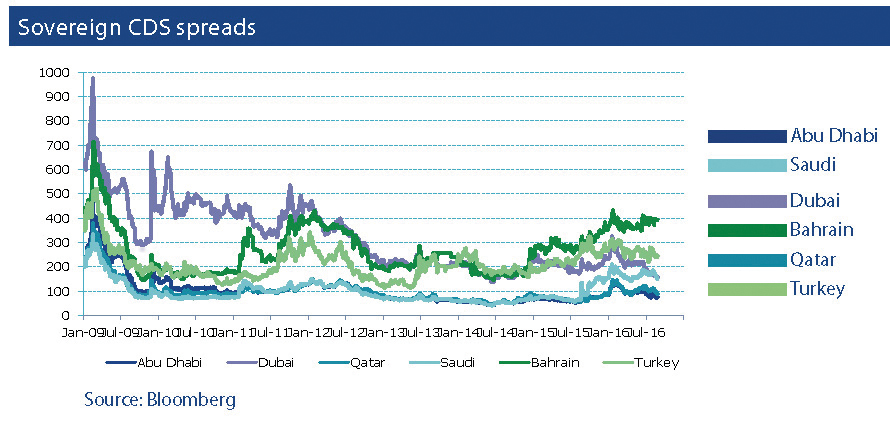
The $9bn issue from Qatar this year was one of the largest emerging market sovereign issuances ever. This is likely to be surpassed by Saudi Arabia, which is expected to come to the Eurobond market later this year with an anticipated size in the range of $10-15bn. Risk re-pricing and spread widening in the Middle East debt markets happened mainly in the second half of 2015 and early 2016. From February 2016, the market has remained positive and in the last few months, oil prices have also been relatively stable and this has brought back international investors looking to invest in high quality names.
According to Al Hashemi, the GCC remains a very highly rated sovereign universe, and this has maintained international investor interest in the regional investment grade names. After the risk re-rating in the second half of 2016, international investors have been more receptive to the new spread levels in the region, especially in the context of very low or even negative interest rates in the sovereign space in many developed economies. International investors have been particularly active in new issuances so far this year, as they seek to capture higher absolute and relative yield levels.
GCC sovereigns have been slowly looking to extend their maturity profiles from the traditional 5-10 year segment. This attempt has been aided by increased demand from both local and international investors, seeking yield and higher duration in their portfolios. Issuers have therefore been able to extend their maturities to as much as 30 years. The slowing economy has put the brakes on corporate lending and this has shifted the attention of regional banks to the bond markets to use excess liquidity is present in the system. Also, banks continue to hold large chunks of regional bonds and with annual redemption of close to $20bn in 2016, the resulting liquidity is expected to be re-cycled into the bond markets to a large extent, he said.
Middle East credit markets are likely to be driven in the coming days by anticipation of an opening of the new issuance pipeline after the summer lull. While global markets have been relatively quiet in the absence of any major news, particularly from central bankers meeting in Jackson Hole, the regional markets have been trading sideways in a tight range. The global search for yield continues with strong inflows into emerging market funds and this has helped to maintain support for regional credits. The new issuance pipeline is expected to be strong in the coming weeks.
The Peninsula