Doha: Oil extended gains on Friday, with Brent topping $72 a barrel for the first time since 2019, as OPEC+ supply discipline and recovering demand countered concerns about a patchy COVID-19 vaccination rollout around the globe. Brent rose about 3 percent on the week while US crude notched gains of nearly 5 percent. This marks the second week of gains for both contracts. Brent crude rose 0.8 percent, to settle at $71.89 a barrel, after touching $72.17, its highest since May 2019. US West Texas Intermediate crude rose 1.2 percent, to settle at $69.62. The session high was $69.76, its highest since October 2018.
A slow rate of inoculations and surging infections in the likes of Brazil and India are renewing demand concerns in high-growth oil markets. While, rising demand and the fast pace of vaccinations in countries such as the United States have boosted oil.
Also boosting oil last week was a slowdown in talks between the United States and Iran over Tehran’s nuclear programme, which reduced expectations of a return of Iranian oil supply. “Energy markets are locked in on Iran nuclear talks that should pick up next week,” Edward Moya, senior market analyst at OANDA said.
Oil extended gains after US figures showed nonfarm payrolls increased by 559,000 jobs last month. The US dollar weakened after the report, making oil cheaper for holders of other currencies and lending support to oil prices.
Meanwhile, US crude output is likely to grow slowly than expected as shale producers have added a limited number of extra rigs to boost production, opting to push for higher prices and profits instead. US oil rigs were steady at 359 last week, after rising for four weeks in a row, according to data from Baker Hughes.
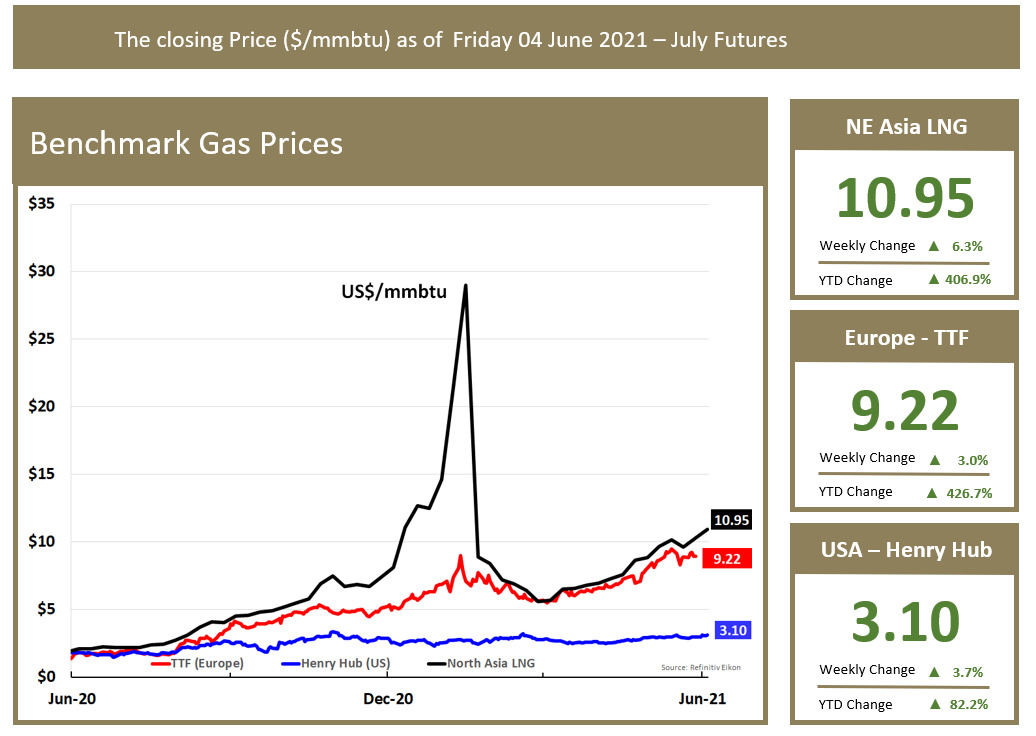
Asian spot prices for liquefied natural gas (LNG) have risen for a second consecutive week and touched their highest since January, buoyed by higher oil prices and firm demand from China and Europe. The average LNG price for July delivery into Northeast Asia was estimated at about $10.95 per million British thermal units (mmBtu), up 65 cents from the previous week. “LNG prices are expected to recover over the course of 2021 as vaccination rates improve and strict restrictions are gradually repealed,” Fitch Group said in a note on Friday. Demand from China remains robust, with the country importing more than 7 million tonnes of LNG in May, a record for the month, as industrial activity picked up pace amid strong domestic demand. China’s robust imports are expected to continue in June and July, continuing to boost prices, traders said. Further, China National Offshore Oil Corp (CNOOC) sought 10 LNG cargoes for delivery over July to March in a tender that closed on Friday.
Further supporting prices, a buy tender by Pakistan LNG received offers in the range of $10.2937 to $11.7747 per mmBtu for cargoes to be delivered in July, and $10.51 to $10.8312 for cargoes to be delivered in August.
Also, Brazil’s Petrobras is seeking four cargoes for delivery over July to August as dry season and low reservoirs at hydroelectric generation plants is spurring buyers to seek LNG cargoes to complement power generation with thermal plants.
US natural gas futures rose almost 2 percent on Friday after forecasts called for hotter weather over the next two weeks than previously expected. Traders said they expect that extra heat will prompt power generators to burn more gas to keep air conditioners operational. Front-month gas futures rose 5.6 cents, or 1.8 percent, to settle at $3.10 per mmBtu. That put the front-month up about 4 percent for the week after it gained almost 3 percent last week.
The number of rigs drilling for gas in the US this week fell by one to 97, putting the gas rig count down for a fourth week in a row for the first time since May 2020, as drillers focus more on improving cash flow, paying down debt and returning money to shareholders rather than increasing output.