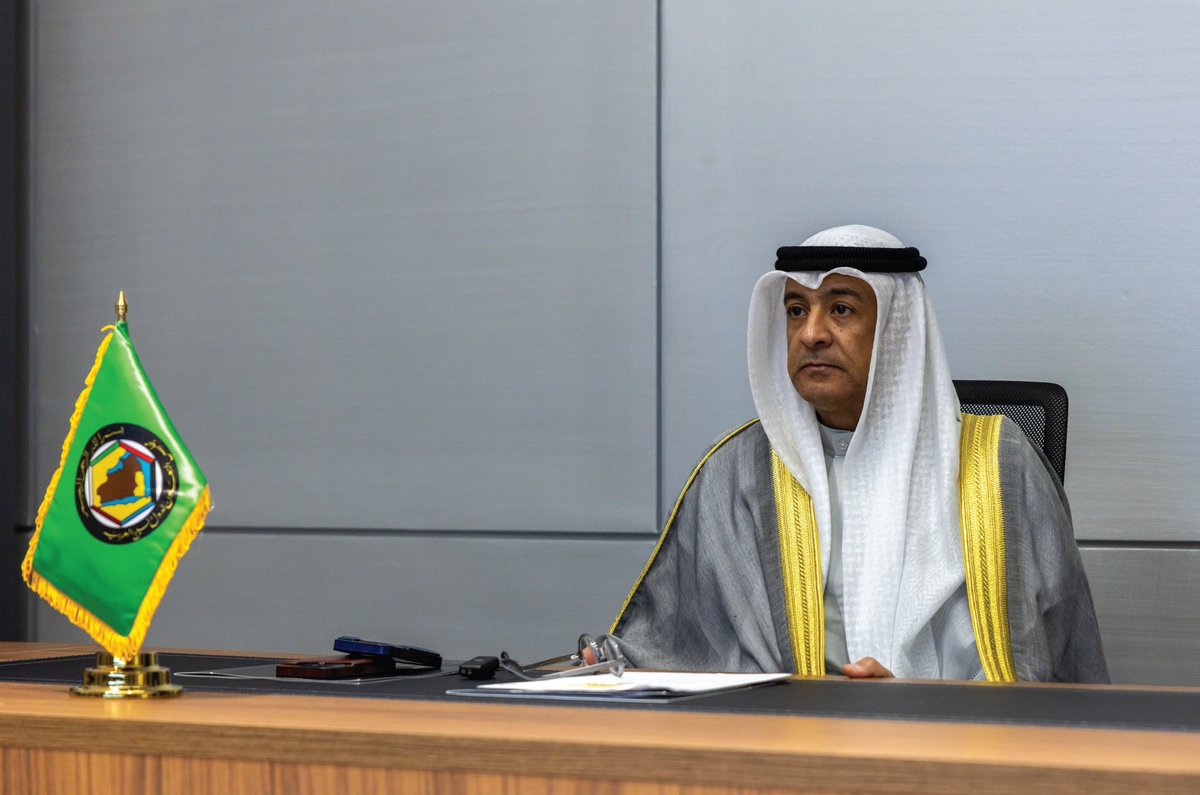
Riyadh: GCC Secretary-General Jassem Mohammed Al Budaiwi called for concerted international efforts to protect energy security and take the necessary measures to ensure the stability of supply chains, safeguard the continuity of international maritime navigation, and achieve global food security.
Al Budaiwi said maintaining maritime security and the security of the region as a whole constitutes a fundamental pillar for preserving regional and international security and stability, stressing the need to adhere to international law to protect the security and freedom of navigation in maritime routes, in accordance with relevant international resolutions and treaties.
He also stressed the importance of ensuring a permanent halt to Iranian attacks on the territories, ports, and interests of GCC member states in Gulf waters, preventing their recurrence, and taking all necessary measures to guarantee the continuity of international navigation through all maritime straits, particularly the Straits of Hormuz and Bab el-Mandeb.
His remarks came during a virtual meeting held on Thursday to discuss a new political initiative titled "Supporting Food Security and Access to Fertilizers," attended by Deputy Prime Minister and Foreign Minister of Italy Antonio Tajani and Croatian Minister of Foreign and European Affairs Gordan Grlic Radman, currently chairs the Mediterranean Group.
The GCC Secretary-General said GCC states moved swiftly to protect supply chains and ensure their continuity by activating alternative logistics corridors and redirecting shipments from Gulf ports to alternative ports on the Red Sea and Arabian Sea, supported by customs and logistical facilitations to maintain the flow of supplies and meet global demand for energy and fertilizers under the current circumstances.
He noted that Iran's aggression against the sovereignty of GCC countries, the disruption of maritime navigation, and the closure of the Strait of Hormuz constitute blackmail against the entire world and a clear violation of the 1982 United Nations Convention on the Law of the Sea, as well as international law and the UN Charter.
Al Budaiwi warned that the repercussions of disrupted maritime navigation extend beyond GCC countries to affect the global economy as a whole, noting that the world is already facing shortages in oil, gas, petrochemical products, and agricultural fertilizers. He added that urea prices have risen by between 30 and 40 percent, posing a direct threat to global food security.
He further stressed that developing countries reliant on energy and food imports will bear the greatest burden of the escalation at a time when they are already facing inflationary pressures and rising sovereign debt burdens, calling for collective action to develop practical mechanisms, including supporting price stability and intensifying logistical coordination to ensure uninterrupted flow of essential goods.