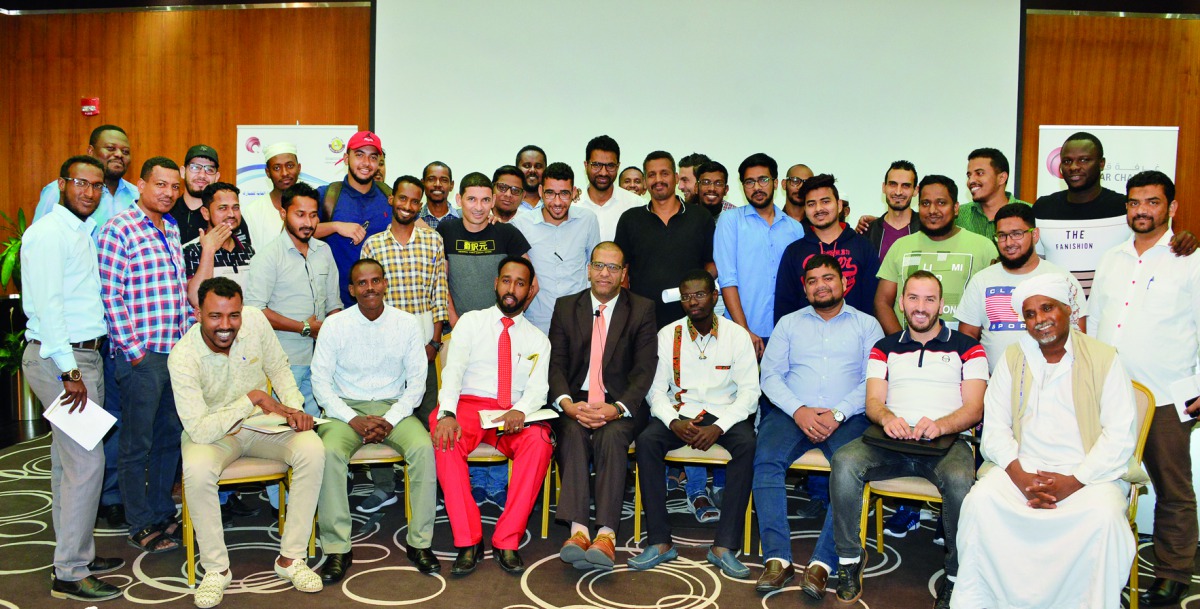
Trainees posing for a group photo after completing the programmes at Qatar Chamber recently.
As many as 814 customs agents have been qualified by the Qatar Chamber (QC) under its customs clearance course which it has been conducting since 2015, Qatar Chamber announced in a press statement yesterday.
The 17th session for the customs clearance programme concluded here recently with 40 new trainees successfully completing the course. The programme was held by Qatar Chamber in cooperation with the General Customs Authority. After completion of the programme, the trainees receive certified certificates from the Chamber, qualifying them for the final test prepared by the General Authority for Customs.
The programme aims to train customs clearance personnel and assist them in obtaining knowledge and familiarity with customs clearance regulations, laws, and procedures. It also seeks to enhance the customs clearance profession in addition to improving the performance of workers in this sector and providing customs clearance services to the public and reducing the congestion on customs outlets.
The course which lasted over 75 training hours distributed over 15 days, included training related to the work of customs agent, in addition to practical training, all modern laws related to customs, in addition to customs procedures and exemptions, customs clearance, outstanding conditions of fees, and rules of origin and prevention.
The programme also focused on commercial and customs terms and international agreements, Intellectual Property Protection, Customs Law, and practical applications in the presence of a distinguished group of customs experts.
Meanwhile, Qatar Chamber also recently concluded a training programme titled ‘International Consultant in Sustainability Applications’, which was organised by the Chamber in cooperation with the Regional Network for Consultations from April 28-30.
The programme, which was presented by Dr Ali Al Ibrahim (pictured), discussed the concept of sustainable development, its historical development, determinants, and motives, including the scale of civilisation of nations, sustainable development and sustainable societies, models and applications.
During the programme, Al Ibrahim also discussed sustainable development in institutions, the Green Community and its tools for the implementation of the United Nations Sustainable Development Goals 2030, its goals and role in guiding projects and community and professional initiatives, designing the organisation’s operations according to the criteria and objectives of sustainable development, financial and institutional sustainability and sustainable development.
The programme also highlighted the sustainable development reports by various international institutions as well as the programme of the United Nations Sustainable Development Agenda 2030.
Participants during the event received certificates and international consultant cards in sustainability applications.