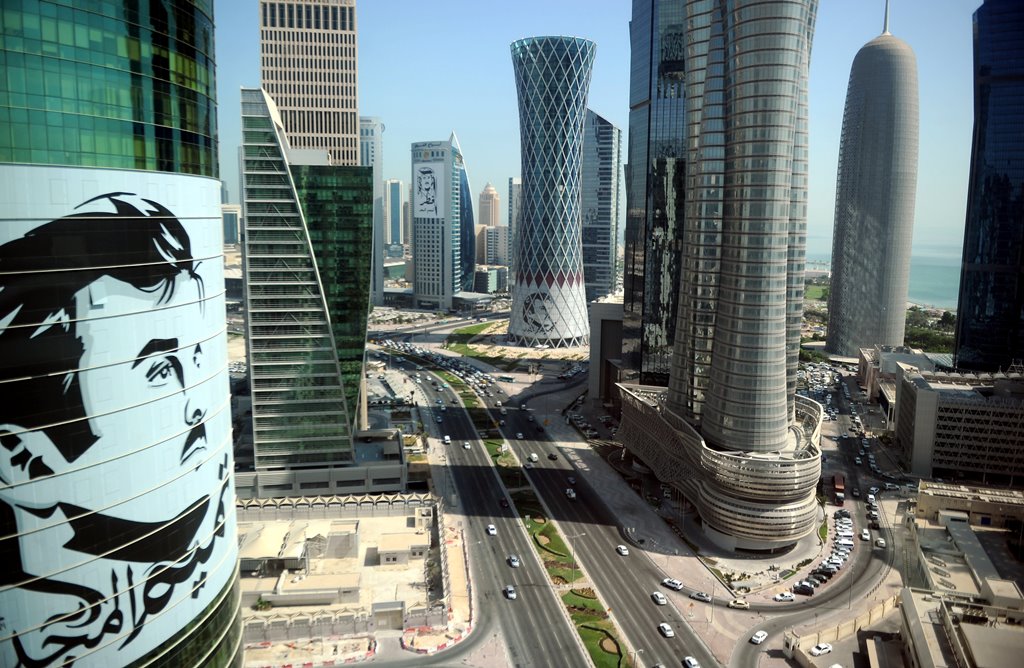
File photo of Doha Skyline used for representation.
Doha: Qatar’s economy continues to adjust successfully to lower hydrocarbon prices and the country’s financial system remains sound, IMF noted yesterday as the preliminary findings of its staff at the end of an official staff visit to Qatar.
The IMF noted that the availability of fiscal buffers has allowed a gradual fiscal consolidation anchored mainly on reducing current expenditures, with the merger of ministries and cuts in subsidies. Tariffs of some utilities (water and electricity) have been increased and domestic fuel prices are now adjusted regularly in line with movements in international prices. An infrastructure program in the amount of $200bn, equivalent to 121 percent of Qatar’s 2017 GDP, is under way to diversify the economy and prepare for the FIFA 2022 World Cup.
The IMF Mission noted that the direct economic and financial impact of the diplomatic rift between Qatar and some countries in the region is fading. While economic activity was affected, this has been mostly transitory and new trade routes were quickly established. The banking system has also adjusted.
“Following the rift, foreign financing (non-resident deposits and inter-bank placements) and resident private sector deposits fell by about $40bn. This decline has been offset by liquidity injections by the central bank and public-sector deposits, particularly from Qatar Investment Authority (QIA). The decline in non-resident liabilities of banks has abated, obviating the need for further support of the Qatar Central Bank (QCB) and QIA to the banking system, as banks mobilize funding from other (non-GCC) sources. High frequency financial indicators, following the initial deterioration, are improving”, the Fund report said.
Qatari authorities continue to enhance the existing framework for liquidity management. Emphasis has been placed on greater coordination and information sharing between the central government, QCB, and the QIA.
Further progress in upgrading liquidity management can be made by improving liquidity monitoring and forecasting. Efforts to further deepen domestic financial markets to promote saving and offer borrowing and investment opportunities remain important.
While QCB liquidity injections and increased public-sector deposits have helped mitigate the funding pressures on Qatari banks in the wake of the diplomatic rift, the banking system has to adjust to a new funding model.