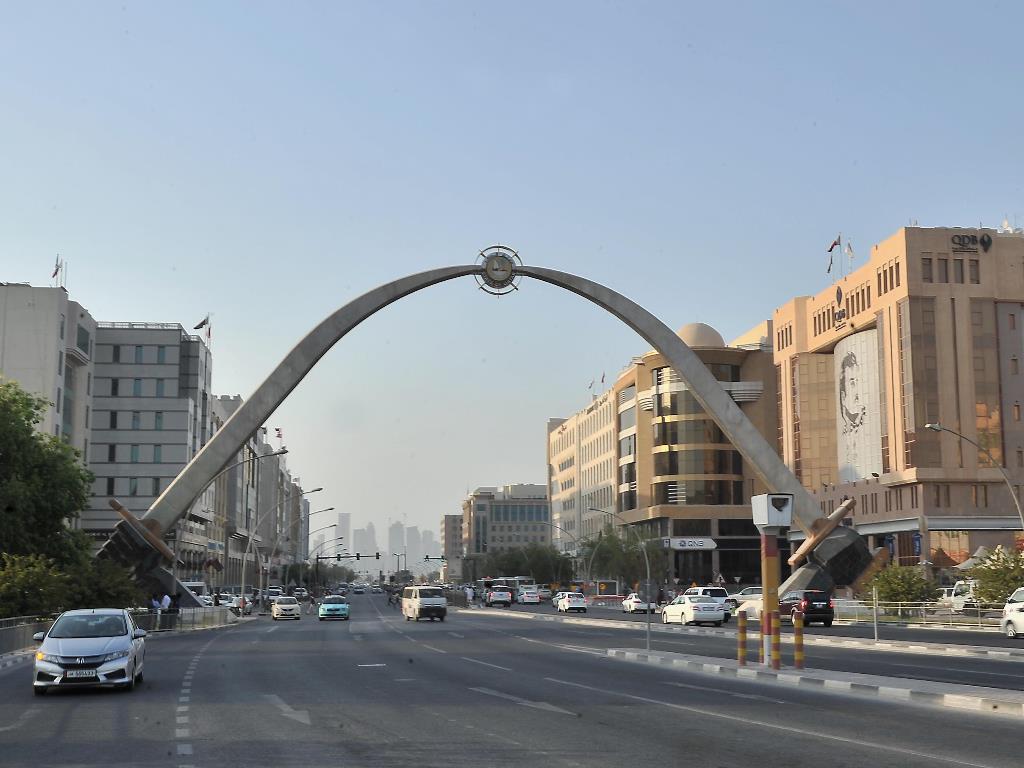
File picture of bank street in Qatar.
DOHA: Credit rating agency Moody’s Investors Service upgraded the outlook for Qatar’s banking system to stable from negative, reflecting the resilience of the country’s economy and banking system to the ongoing regional dispute, as well as the stable outlook on the Government of Qatar’s Aa3 long-term issuer rating.
The Qatar has been able to rebalance the country’s economy following the regional dispute which began in June 2017, and the high level of government spending on infrastructure in preparation for the FIFA World Cup in 2022 has been unaffected. Moody’s expects average real GDP growth of 2.8 percent in 2018-2022, up from 1.6 percent in 2017. “The Qatari economy has rebalanced as supply chain disruptions recovered rapidly following the blockade from other Gulf states and Egypt,” said Nitish Bhojnagarwala, Vice-President and Senior Credit Officer at Moody’s.
“Likewise, the banking system rebalanced its funding profile with the reduced liquidity from GCC sources offset by inflows from government and related entities,”said Nitish Bhojnagarwala, a Vice President and Senior Credit Officer at Moody’s.
Public sector inflows have stabilised domestic liquidity, which have reduced Qatari banks’ reliance on market funding and offset funding pressures caused by the ongoing dispute.
Loan performance will remain broadly stable as the economic slowdown of previous years and continued challenges in the construction and contracting sectors will put only modest pressure on their performance.
Moody’s expects system-wide problem loans to increase slightly, to between 2.2 percent and 2.5 percent of gross loans by 2019, up from 2 percent in June 2018.
Tangible common equity at Qatari banks will also remain stable at 15.5 percent of risk-weighted assets, driven by a combination of credit growth and profit retention. Qatari banks’ capital ratios remain resilient even under our high-stress scenario.