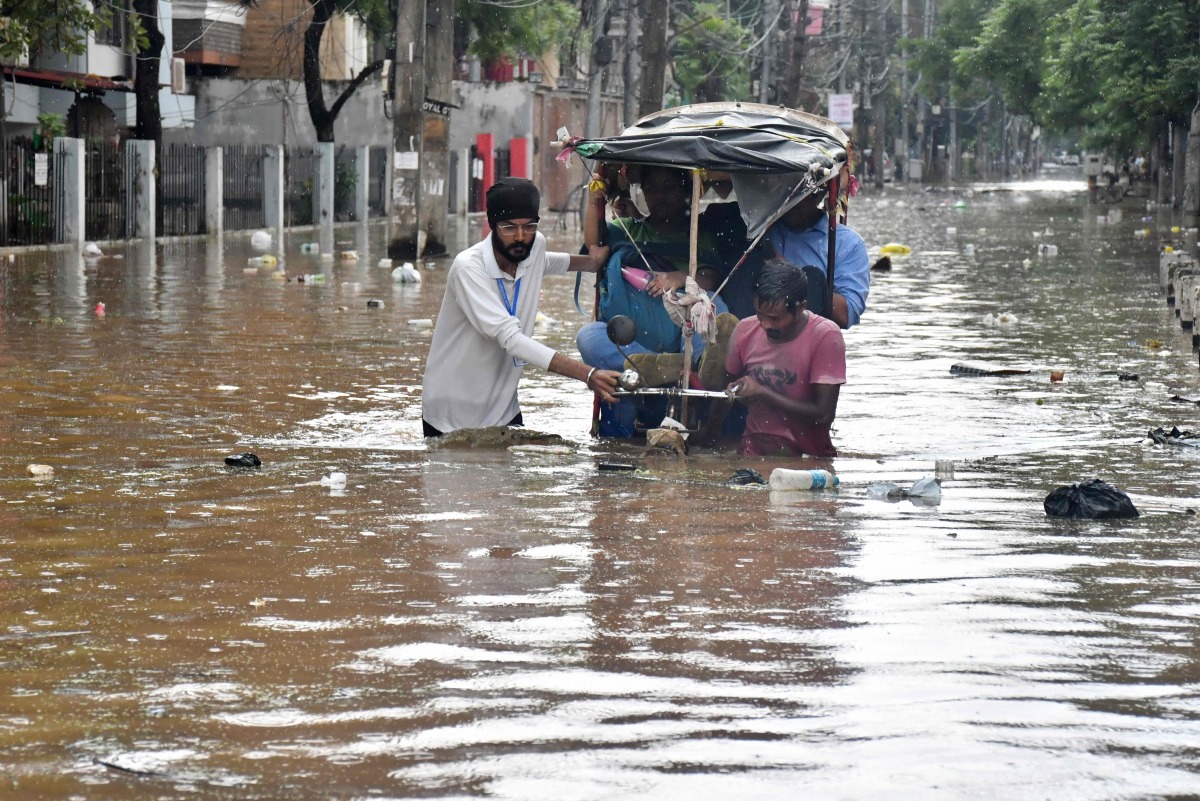
Residents wade through a flooded street following heavy monsoon rains in Guwahati on August 4, 2026. (Photo by Biju BORO / AFP)
New Delhi: Floods and landslides triggered by monsoon rains have killed more than 100 people across India since July, official data showed Wednesday, with thousands forced to flee their inundated homes.
While the annual monsoon brings rainfall that farmers depend on, scientists say climate change is making the phenomenon more erratic, unpredictable and deadly across the South Asia region.
India's northeastern state of Assam is among the hardest hit by the annual rains, with at least 87 people killed, according to Chief Minister Himanta Biswa Sarma.
In the state's worst-affected Sivasagar district, 47 people have been killed, and several areas are flooded.
State authorities have appealed for financial donations from the public to help.
"The devastation here is unlike anything these areas have witnessed before," Sarma posted on X.
"Material losses can be restored, but no compensation can replace a loved one."
Severe weather
AFP images showed residents using rafts and inflatable boats to reach higher ground.
In India's southern state of Kerala, Chief Minister VD Satheesan said at least 15 people have been killed and another seven were missing, after heavy rains over several days.
More than 300 relief camps have been set up in the state, sheltering over 10,000 people, after rains triggered landslides and swollen rivers breached their banks.
In the Himalayan territory of Jammu and Kashmir, at least 31 people been killed in several short bursts of extremely intense rainfall, according to a report by the public state broadcaster.
Lightning strikes, common during monsoon, killed at least 22 people in the eastern states of Bihar and Jharkhand since Tuesday, local disaster response officials said.
The dead, mostly farmers working in paddy fields and cattle grazers, included four children, the officials said on Wednesday.
Monsoon-related disasters are an annual occurrence across India after the region's long summers when many parts of the country face water scarcity and drought.
Neighbouring Sri Lanka has also seen unusually heavy monsoon rains that have caused flash floods and mudslides, claiming the lives of at least eight people since Monday, according to the Disaster Management Centre.
Some 12,000 people have been driven out of their flooded homes in the central region.
At the same time, the country's eastern regions were in the grip of a severe drought, with authorities having to transport drinking water for residents in tanker trucks.
The government last month said the severe weather events were due to this year's El Nino weather phenomenon, which warms surface temperatures in the central and eastern equatorial Pacific Ocean.