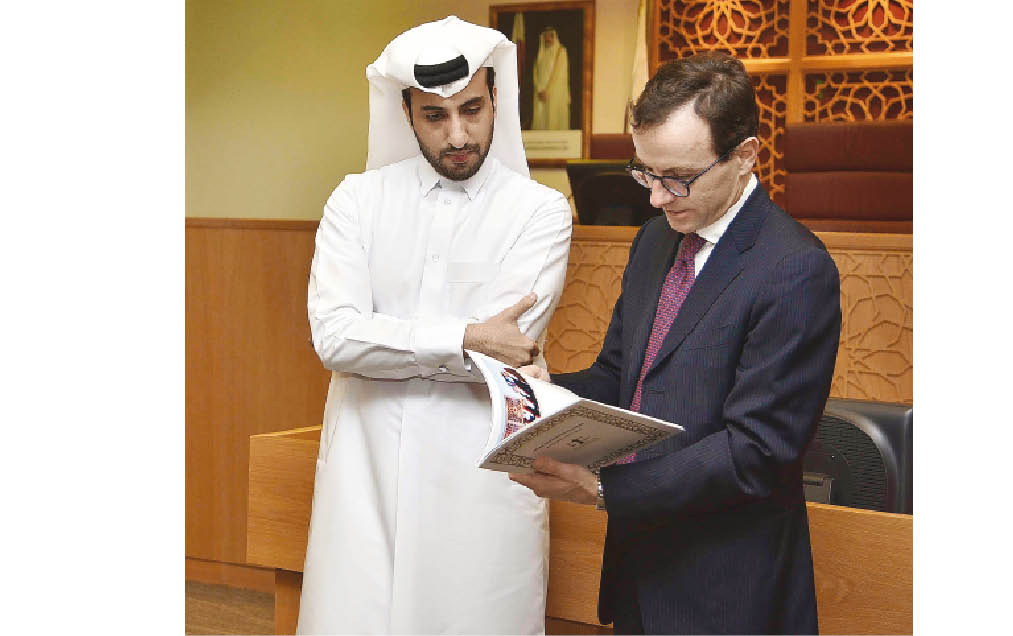
DOHA: The Qatar International Court and Dispute Resolution Centre (QICDRC) yesterday welcomed the Secretary-General of ICC International Court of Arbitration, Andrea Carlevaris, and the Regional Director of ICC Dispute Resolution Services, Sami Houerbi, to its premises in Doha.
Carlevaris, who had earlier been delivering a lecture on the ICC Emergency Arbitration Rules at an Energy Disputes conference at the Grand Hyatt, met with the QICDRC CEO, Faisal Al Sahouti, to discuss matters relating to domestic and international arbitration, the role of the ICC in Qatar and the work of the QICDRC in relation to litigation and other forms of dispute resolution.
Al Sahouti provided the attendees with an overview of the work the QICDRC was undertaking in the field of arbitration which included its present role, namely acting as a supervisory body under the QFC Arbitration Regulations, but more importantly its aspirations to assist with the development of international arbitration in Qatar and the desire to provide a fully administered arbitration service to those who wish to conduct international arbitration in Qatar.
Carlevaris spoke of the growing significance of arbitration both locally and regionally as well as the importance that is to be attached to having an “arbitration friendly” judiciary who understand arbitration and arbitral concepts and will be ready to enforce arbitral awards where appropriate.
During a tour of the QICDRC’s facilities, the QICDRC’s Registrar, Christopher Grout, provided an explanation of the role of the Court in resolving civil and commercial disputes arising within the Qatar Financial Centre. In particular, Grout stressed the importance of having an international judiciary, an efficient case management system and making appropriate use of information technology, including holding “virtual hearings”, where possible.
Carlevaris thanked Al Sahouti for welcoming him to the QICRDC and expressed his admiration as regards the impressiveness of the QICDRC’s facilities. Both expressed their mututal desire to work together and cooperate on future projects, such as those relating to education and training in the field of arbitration.
The Peninsula