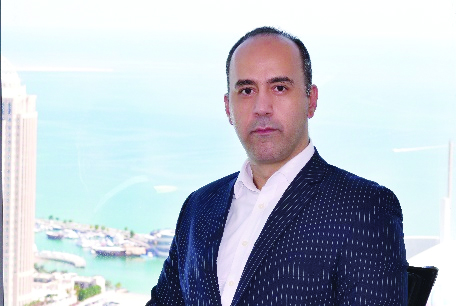
GECF’s Energy Technology Analyst Seyed Mohsen Razavi
As global society keeps pursuing a zero-carbon energy system, hydrogen’s role is becoming more notable, with global demand for hydrogen estimated to increase by more than four times by 2050, said Doha-based GECF’s Energy Technology Analyst Seyed Mohsen Razavi.
Citing the results of the updated GECF Hydrogen Scenario, Razavi said that due to sanctioned projects and the advancement of related technologies with a set of adopted strategies, it is believed that the hydrogen era will materialise much earlier. However, he added that hydrogen is not the only piece of the puzzle to achieve carbon neutrality, but it is the one that promises a feasible pathway towards net zero-emission through complementing other routes such as electrification and natural gas coupled with carbon capture, utilisation and storage (CCUS).
“The supremacy of hydrogen is based on the possibility that it can be employed to decarbonise the so-called hard-to-abate sectors or in sectors in which other decarbonisation pathways, such as electrification, are challenged. These sectors include but are not limited to steel, iron and cement, as well as heavy longhaul vehicles, aviation, and maritime and railways transportation. However, the carbon saving through hydrogen penetration is forecasted to be less than 6 GtCO2, which is far below the amount needed to achieve the Paris Agreement goals,” said Razavi.
He added: “Firstly, the hydrogen production supply chain needs to advance in all parts, and the cost should be reduced to gain more share in the future of the energy system. Secondly, the result highlights that hydrogen could not be the only solution in the carbon neutrality pathway, and other clean and decarbonised options, such as the application of natural gas coupled with CCUS has to be seriously taken into consideration by all stakeholders”.
The GECF Hydrogen Scenario, which was published in February, highlights the latest updates and strategies adopted by countries and groups and assessed their impacts. Currently, several countries have officially published their hydrogen strategies or hydrogen roadmaps. In some of the roadmaps and strategies such as the EU Hydrogen Strategy, the main priority has been attached to renewable hydrogen.
While in some others, such as for Japan, Russia, and South Korea, blue hydrogen is envisaged to take a meaningful role. In certain strategies, definite and clear targets are set, like for the EU Hydrogen Strategy that considers a minimum of 40 GW installed renewable hydrogen electrolyser or 10 million tonnes (mt) of renewable hydrogen by 2030.
Within the EU Hydrogen Strategy, another 40 GW is also defined as a target to install in the neighbouring countries and import to the EU. By looking into this subject from a global perspective, it can be observed that much more hydrogen is needed to decarbonise even these socalled hard-to-abate sectors. According to the latest modelling results published in the GECF Global Gas Outlook 2050, the global energy demand from hard-to-abate subsectors within transportation will stand at around 1800 million tonnes of oil equivalent (mtoe) per annum by 2050.
"In a hypothetical assumption, to provide this amount of energy only through green hydrogen production, more than 6,000 GW of electrolyser will be needed. This level is around five times more than the total current wind and solar installed capacity. With similar calculations again on the imaginary only-green hydrogen assumption, 1,500 GW of electrolyser should be installed for the decarbonisation of iron, steel, and cement sectors. While numerous sectors are still not included in these calculations, other measures are assumed for the purpose of decarbonisation as well,” said Razavi.
He added: “In conclusion, the undeniable fact is that that there is no sole solution for carbon neutrality. Indeed, a combination of measures needs to be applied to achieve a net-zero emission. Apart from the energy conservation and energy efficiency enhancement that results in a reduction in final energy demand, clean energy supply should be diversely sourced from all clean available potentials. Renewables, natural gas, and CCUS will take greater roles in their original form, and all of them should contribute to the hydrogen production. Renewables, natural gas, CCUS, and hydrogen are inevitable parts of a fully decarbonised energy system”.