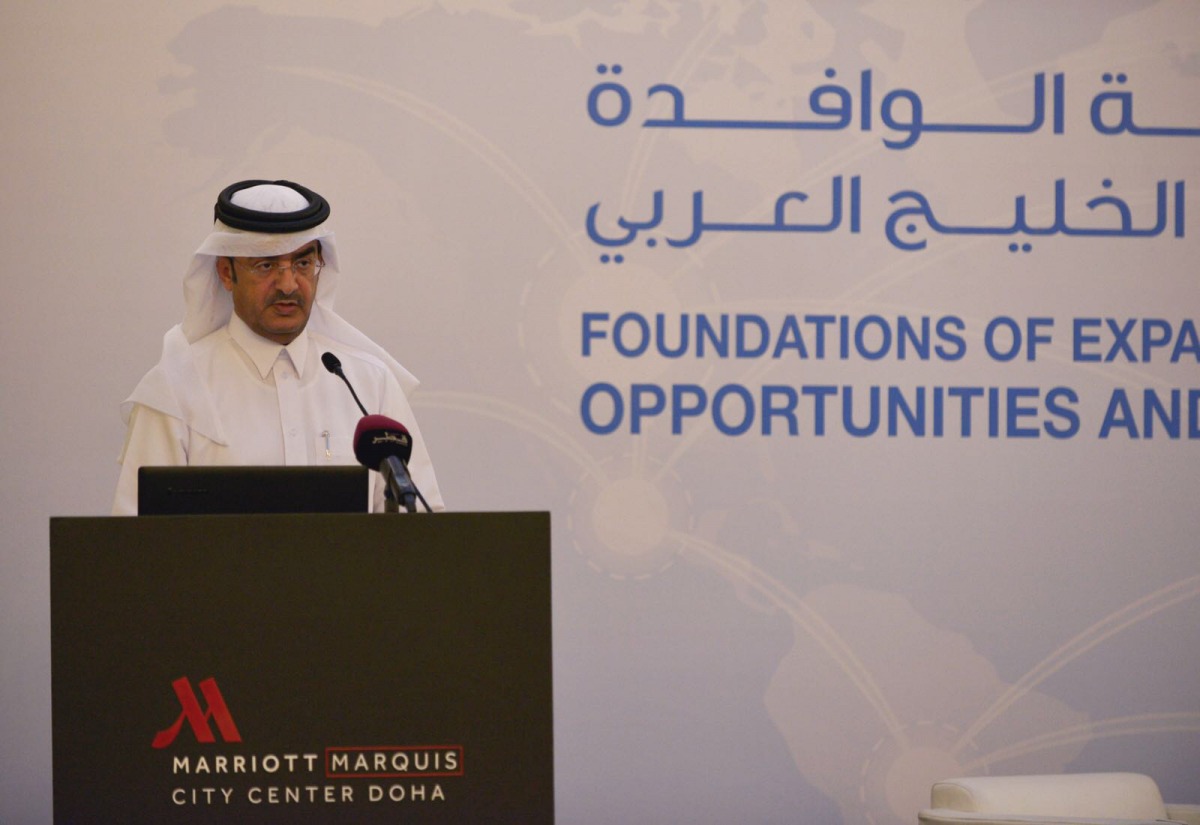
Assistant Under-Secretary for Statistical Affairs at the Ministry of Development Planning and Statistics Sultan Al Kuwari addressing the audience at the workshop
DOHA: Minister of Development Planning and Statistics, H E Dr Saleh bin Mohammed Al Nabit, has said that expatriate workers in Qatar are living in a climate of cooperation and collaboration with Qatari citizens and enjoying all the rights recognised by Qatari legislation and complying with their duties.
Permanent Population Committee (PPC) organised a workshop yesterday on the basics of the management of expatriate workers and opportunities and challenges in the Arab states of the Gulf, in cooperation with the United Nations Population Fund (UNODC) of the Gulf Cooperation Council (GCC), and the International Organization for Migration, with the participation of experts and technicians Academics, representatives of ministries and civil society concerned with this area.
On that occasion, Minister of Development Planning and Statistics and PCC Chairman, H E Dr Saleh bin Mohammed Al Nabit, said that Qatar has been receiving over the past 10 years an increasing number that exceeds 2 million workers, coming from different countries of the world, working in different service sectors of the State, living in a climate of cooperation and collaboration with Qatari citizens and enjoying all the rights recognized by Qatari legislation and complying with their duties.
In a speech delivered by Assistant Under-Secretary for Statistical Affairs at the Ministry of Development Planning and Statistics, Sultan Al Kuwari, on behalf of the minister of development planning and statistics, he noted that due to the insufficient Qatari human resources to achieve the country’ ambitious development plans, the state has been keen to bring manpower with the levels and specialization required by these plans, with the duration of labor stay in the country linked to the duration of the projects. These workers then return home with resources and expertise to help them improve their living conditions and contribute to the development of their countries of origin.
The aim of the workshop is to consider the management of expatriate workers from the perspective of studying the realities and future of labor mobility policies in GCC countries., to familiarise participants with the international concepts of the term immigrant, and to clarify the difference between a permanent immigrant and a migrant worker, as intended workshop to monitor international practices and experiences of the foundations of international migration management and to familiarize those concerned with the areas of migration management on expatriate employment issues and to consider policies for the management and mobility of such employment in the GCC countries.
Al Kuwari pointed out that the migration of expatriate workers to the GCC countries differs from the rest of known international migrations, which led to different systems the laws adopted by GCC states. He noted that migrants to regions such as Europe, Canada, America or elsewhere are often permanent migration, which requires the development of legislation different from those involving migrants who come under fixed-term employment contracts and return to their home countries upon the expiration of the working contracts.
While the State of Qatar appreciates the efforts of its expatriates, whether experts or ordinary workers, it is also keen to address the effects that large arrivals and the diversity of their nationalities and cultures can have on the demographics and cultural characteristics of the Qatari society, Al Kuwari said.