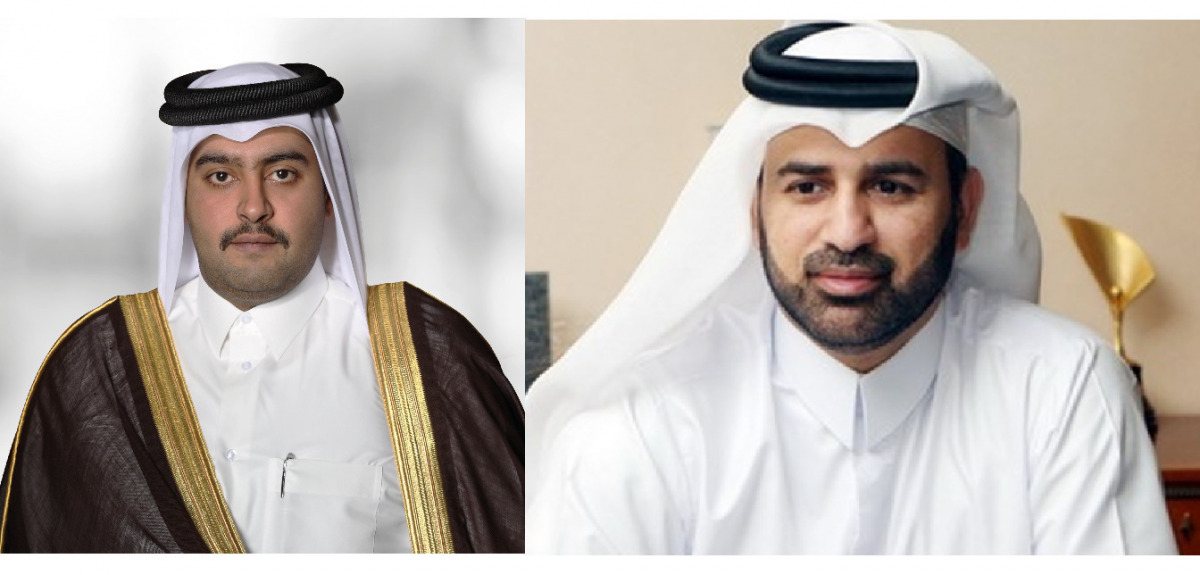
Chairman & Managing Director of Dukhan Bank, Sheikh Mohammed bin Hamad bin Jassim Al Thani and Chairman of the Organising Committee and Vice Chairman of Bait Al Mashoura Finance Consultations Company, Prof. Dr. Khalid bin Ibrahim Al Sulaiti
The 7th Doha Islamic Finance Conference concluded yesterday with a call for global partnerships between government institutions and the private sector to support digital transformation efforts in the finance industry that are in line with Shariah-based principles. The three-day virtual conference titled ‘Digital Economy & Sustainable Development’ was held under the patronage of the Prime Minister Minister and Minister of Interior H E Sheikh Khalid bin Khalifa bin Abdulaziz Al Thani. Organised by Bait Al Mashura Finance Consultations Company with the strategic partner and exclusive sponsorship of Dukhan Bank, the conference explored various themes including “Global Economic Recovery after the Crisis”, “Virtual World Economies” and “Role of Social Finance in Achieving Sustainable Development”.
During the event, participants highlighted the pioneering experience of the State of Qatar in the digital field, e-commerce platforms, and digital Islamic financial technology; and recommended greater coordination between private sector institutions and government agencies to support digital transformation in line with Sharia objectives in order to achieve the Qatar National Vision 2030. The delegates, in a closing statement included visions and recommendations, also reiterated that Islamic finance can contribute to the global economic recovery.
The statement added that the flexibility of Sharia makes Sharia provisions accommodate the developments of financial transactions, including digital financial transactions. Sharia controls also represent solutions to the problems arising from digital transactions, which may protect clients from fraud and manipulation. It added that the digital world has led to the emergence of a largely anonymous and uncontrolled financial system. Along with the absence of developed and specialised laws to regulate global transactions and address the violations as well as the attempts to implement laws governing traditional transactions in the finance sector, the statement recommended the urgent need for coordination between government agencies and various institutions in the world to highlight the importance of implementing Sharia-based principles in the digital transformation of the finance industry. It is expected that the postCOVID economy will be shaped by the rapid spread of digital technologies in the public and private sectors, along with the rapid growth of digital markets.
Islamic finance can play a role in dispelling various concerns in the market through Sharia controls for protecting individuals’ rights and the general morals of society. The statement added that the Islamic economy is characterised by its tools that paved the way for the global agenda in sustainable development, including the achievements of Zakat and Waqf institutions in preserving individuals, environment and society. The conference recommended to seek to activate the role of social finance institutions and their tools in order to achieve Sharia objectives and social justice. Delegates also highlighted the importance of using participatory products in Islamic banks, which serve as the pillars for achieving comprehensive development.
The statement recommended that Islamic banks pay more attention to these products: take into account the authenticity and true representation of Sharia principles in these products, take into account development and innovation away from imitating traditional products, and to seek to discuss potential risks with Sharia, legal and technical bodies, as well as comply with controls to avoid the risks. Central banks and supervisory bodies shall also be called to enact laws supporting participatory contracts in Islamic finance institutions; and protective funds and investment funds shall be established to enhance these products. It added that the participatory economy significantly helps in overcoming crises by breaking barriers, alleviating poverty, filling the gaps between supply and demand, and optimal use of resources. The conference recommended that government agencies should enhance opportunities for participatory economy by enacting supporting laws and encouraging innovations that have social and economic impact.