As tensions continue to escalate amid the ongoing confrontation between the United States, Israel and Iran, the Gulf region is navigating a period of heightened complexity and uncertainty. While security developments dominate the immediate narrative, an equally critical dimension demands sustained focus: the resilience of supply chains and the uninterrupted flow of trade. Encouragingly, there is no cause for alarm at present. Markets across the GCC countries remain stable, shelves are stocked, and essential commodities, from food to medicine and fuel are readily available. This resilience is not accidental. It reflects years of strategic planning, investment in infrastructure, and the foresight of GCC governments in preparing for precisely such contingencies.
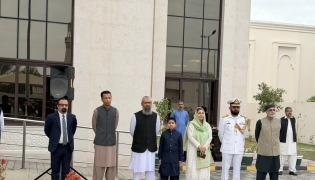
The uncertainty generated by the Iranian attacks on GCC states poses inherent risks to global and regional supply chains, particularly given the Gulf’s central role in energy exports and maritime trade routes. The Strait of Hormuz, a vital artery for global oil shipments, remains a focal point of concern. And any disruption can ripple across economies far beyond the region. It is in this context that the recent 28th extraordinary meeting of GCC transport ministers, with Qatar represented by Minister of Transport H E Sheikh Mohammed bin Abdulla bin Mohammed Al-Thani, assumes heightened significance. The meeting underscored a collective recognition: safeguarding supply chains is not merely a logistical exercise, but a cornerstone of economic security. The measures agreed upon reflect both urgency and strategic clarity. Flexible and exceptional procedures to facilitate land transport, the activation of green corridors, and the prioritisation of essential goods routes are all pragmatic responses to emerging challenges.
Equally important is the shift towards modern, technology-driven inspection systems that reduce delays while maintaining security standards. The emphasis on alternative ports outside the Strait of Hormuz demonstrates forward-thinking risk mitigation. By diversifying entry points and strengthening connectivity between ports and inland logistics hubs, GCC countries are effectively building redundancy into their supply networks which is an essential feature in times of uncertainty. Perhaps most noteworthy is the decision to establish a permanent joint taskforce comprising port authorities, transport entities, and customs officials. This institutional mechanism ensures that coordination is not episodic, but continuous and capable of responding in real time to evolving disruptions. These efforts highlight that the transport and communications sector is not merely a service industry, but the backbone of economic resilience. It is the system through which nations secure their basic needs and stabilise their markets during crises.