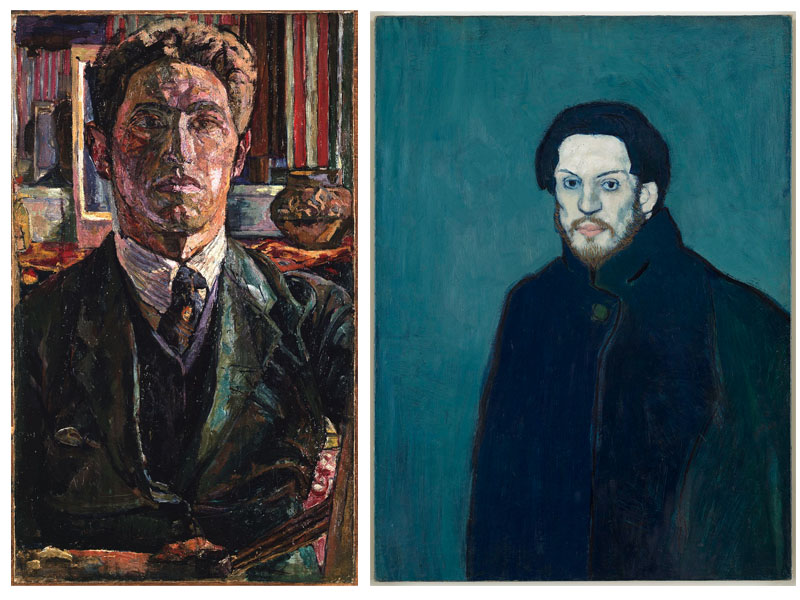
From Left: Self-portrait by Alberto Giacometti and self-portrait by Pablo Picasso
Over 120 works by Pablo Picasso and Alberto Giacometti, two of the most important artists of the 20th century, will be shown for the first time in the Middle East at a major exhibition at the Fire Station-Artist in Residence next year.
Qatar Museums (QM), under the patronage of its Chairperson, H E Sheikha Al Mayassa bint Hamad bin Khalifa Al Thani, in collaboration with the Muséenational Picasso and the Fondation Giacometti, will present this first-f-its-kind exhibition which will run from February 23 to May 21 next year.
The exhibition, curated by Catherine Grenier, Director of the Fondation Giacometti, with Associate Curators, Serena Bucalo-Mussely and VirginiePerdrisot, brings together Picasso’s and Giacometti’s works from the collections of the Muséenational Picasso and the Fondation Giacometti in Paris, as well as exceptional loans from French and other international collections, covering paintings, sculptures, sketches, photographs and interviews with the artists.
The exhibition reflects two years of research undertaken by the Fondation Giacometti and the Muséenational Picasso, which reveals for the first time the previously unknown relationship between these two artists, who, despite an age gap of 20 years, shared many moments, both personal and professional.
The exhibition is organised in six sections, evoking different aspects of each artist’s production, including the development of their work as young artists through to their modernist creations, showing the correspondences between their works, the influence of the surrealist movement, and the return to realism during the post-war period.
The exhibition includes key works by each artist, such as: Self Portrait (1901), Woman Throwing a Stone (1931) and The She Goat (1950) by Picasso and Flower in Danger (1932), Tall Woman (1960), and Walking Man (1960) by Giacometti, presented alongside rare and fragile casts, some newly discovered drawings and photographic archives as well as some replicas of Giacometti’s works for visually impaired visitors.