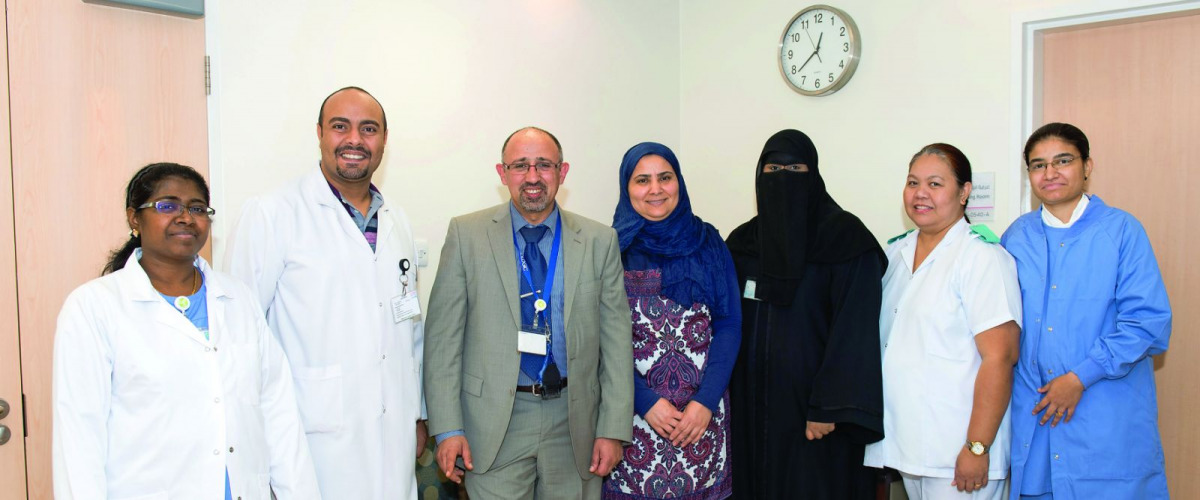
DOHA: Although many women suffer from pelvic organ prolapse, a condition related to the uterus, only a few seek medical help, says an expert.
Common causes of a pelvic organ prolapse include childbirth, lower levels of estrogen at menopause, being overweight and chronic illnesses such as lung disease, which create pressure inside the abdomen from coughing.
It affects many women and most of them have no idea there is a problem until years later, when the muscles weaken with age and are no longer able to hold the organs in place.
“Although up to half of women are thought to suffer to some degree from a pelvic organ prolapse, far fewer seek help. Those that do are typically offered a hysterectomy which requires the removal of the womb,” said Dr Ayman Elnaqa, Senior Consultant and Subspecialist in Urogynaecology and Pelvic Floor Reconstructive Surgery at Women’s Hospital.
However, after a life-changing 90-minute operation and an overnight stay in HMC’s Women’s Hospital, a young mother was able to return to work, travel again and play with her children.
“After my second pregnancy, I started feeling more and more uncomfortable every day.
“I had severe back pain and even worse, I couldn’t control my own bowel movements.
“I didn’t know what was happening and I had nobody to talk to,” said the 27-year-old mother of two.
After being referred to Dr Ayman, the patient was given the option of undergoing a procedure called a Sacrohysteropexy.
A minimally invasive technique done robotically or through an open surgical procedure, a Sacrohysteropexy is performed under general anaesthetic to put the womb back into its normal position.
“This procedure when done robotically or through a minimally invasive approach offers the patients a much better alternative because it requires a shorter operation and a shorter recovery time,” said Dr. Ayman.
Since joining HMC in June 2015, Dr Ayman and his team have performed several of these life changing procedures for the first time in Qatar and the region. Presently, a Sacrohysteropexy is only carried out by a fraction of gynaecological surgeons because of the limited number of clinicians who can perform the surgery.
The Peninsula