
Farmers in a rice field in Nueva Ecija, Philippines. (Martin San Diego/For The Washington Post)
In 1988, the chickpeas and rice in this curry were part of a well-balanced meal - a serving of each provided a plethora of essential nutrients, including roughly 22 percent of the zinc a person needs to consume each day.
Today, the very same meal has become a little less wholesome, meeting only 20 percent of the Food and Drug Administration’s recommendation for daily zinc intake, according to a Washington Post analysis of data from the FDA and a meta-analysis of relevant research.
And by 2040, chickpeas could contain even fewer nutrients, including just 17 percent of recommended daily zinc - putting those who rely on them at greater risk of life-threatening deficiencies.
Chickpeas and rice are not the only foods steadily growing less nutritious. Many of humanity’s most important crops - including wheat, potatoes, beans - contain fewer vitamins and minerals than they did a generation ago.
The invisible culprit behind this damaging phenomenon? Carbon dioxide pollution.
Surging concentrations of carbon in the atmosphere, caused largely by burning fossil fuels, have produced potent changes in the way plants grow - from increasing their sugar content to depleting essential nutrients like zinc. Experts fear the degradation of Earth’s food supply will cause an epidemic of hidden hunger, in which even people who consume enough calories won’t get the nutrients they need to thrive.
“The diets we eat today have less nutritional density than what our grandparents ate, even if we eat exactly the same thing,” said Kristie Ebi, a professor at the University of Washington’s Center for Health and the Global Environment.
People in wealthy countries with strong health care systems will have many tools to cope with the change, experts said. But for the world’s poorest and most vulnerable, the consequences could be devastating.
- - -
One study concluded that by the middle of the century the phenomenon could put more than a billion additional women and children at risk of iron-deficiency anemia - a condition that can cause pregnancy complications, developmental problems and even death. Meanwhile, some 2 billion people across the globe who already suffer from some form of nutrient shortage could see their health problems grow even worse.
“The scale of the problem is huge,” Ebi said.
More sugar, fewer minerals
Plants depend on carbon dioxide to perform photosynthesis - but that doesn’t mean they grow better when there’s more carbon in the air, scientists say. A sweeping survey of changes among 32 compounds in 43 crops found that nearly every plant that humans eat is harmed by rising CO2 levels.
“As a scientist, it’s really interesting,” said Sterre F. ter Haar, an environmental scientist at Leiden University in the Netherlands and lead author of the survey, published in November. “As a person … you don’t want to see such a shift, because it’s so negative.”
For the past several years, ter Haar and her colleagues have worked to compile a database of all existing research on nutrient changes linked to rising CO2. They tracked down hundreds of studies, ranging from tightly controlled lab experiments to sprawling global analyses of real-world crops.
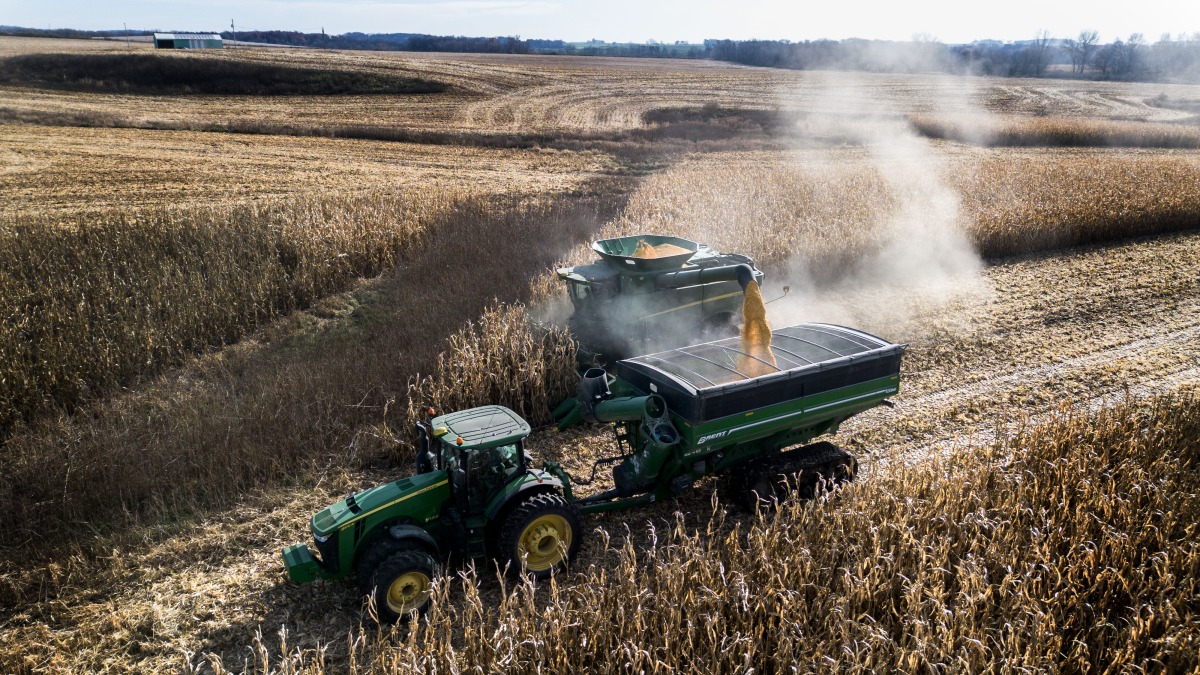 Diminished nutritional value in crops isn't the only impact high levels of carbon dioxide can have on our food. (Melina Mara/The Washington Post)
Next the team used their dataset to calculate the nutritional densities of each crop under different carbon dioxide levels - and to predict how their composition could continue to shift in the future.
On average, they found, nutrients have already decreased by an average 3.2 percent across all plants since the late 1980s, when the concentration of carbon dioxide in the atmosphere was about 350 parts per million.
That figure may seem small, ter Haar said, but with so much of the world already living on the brink of nutrient insufficiency, a drop of just a few percentage points has the potential to push millions of additional people into a health crisis.
Researchers are still trying to understand the exact causes of this change.
One of the primary theories is related to the fact that extra carbon dioxide helps plants produce more carbohydrates - like the cellulose in leaves and stems, and the starch that’s found in grains.
Those who oppose efforts to reduce carbon emissions frequently cite this effect to justify burning fossil fuels, ter Haar noted, arguing that carbon dioxide is “plant food.” But without a corresponding increase in mineral uptake, plants aren’t able to produce more of the proteins, acids and other molecules that make them nutritious.
The result is that crops have the potential to grow bigger and faster and produce higher yields, but each bite of food will have more sugar and fewer nutrients than before.
This “dilution effect” is probably not the only factor at play, said Lewis Ziska, a plant biologist at Columbia University who conducted pioneering work on the issue during more than two decades at the U.S. Department of Agriculture.
Plants breathe in carbon dioxide by opening their stomata - tiny pores in their leaves through which water can also evaporate into the air. If they are getting more carbon with each breath, they don’t need to open their stomata as often, which conserves moisture.
That means the plant will take up less water through its roots - and lose out on any minerals that are dissolved in that water.
“The plant is becoming more efficient, but it’s occurring at a price, from a human perspective,” Ziska said.
Climate change can also alter how minerals move through the soil, research shows, affecting plants’ ability to absorb them. Microbes energized by warmer conditions may gobble up all available nitrogen, depriving plants of an element required to build proteins. At the same time, higher temperatures can increase the solubility of arsenic in water, causing a few crops, such as rice, to take up more of the toxic heavy metal.
The degree of nutrient dilution varies widely between species. Between 1988 and 2040, zinc concentrations are projected to decline almost 40 percent in chickpeas but will barely change in other beans. Meanwhile, calcium concentrations are expected to rise in rice even as the nutrient dwindles from other crops.
“We hope this paper might be a helpful puzzle piece in saying, ‘Hey, we are seeing a shift, it is significant, and maybe we should take this seriously and figure out what’s happening to our food,” ter Haar said.
A growing threat to human health
More than half of reproductive-age women in Nigeria have low iron levels. But when Nike Bello’s patients show up at the hospital to give birth, many of them don’t know they are anemic.
The danger becomes apparent once they are in labor and begin losing blood, said Bello, a professor of obstetrics and gynecology at the University of Ibadan who conducts research on preventing postpartum hemorrhage.
Because anemic women have fewer red blood cells - the iron-rich cells that transport oxygen throughout the body - the ordinary bleeding of childbirth can deprive their organs of oxygen and eventually trigger heart failure.
For tens of thousands of Nigerian women each year, the consequences are fatal.
It’s difficult to determine how much carbon emissions will affect rates of anemia and other nutrient deficiencies, said public health professor Samuel Myers, because experts don’t know exactly how many people already suffer from these conditions worldwide. One recent study in the Lancet Global Health journal estimated over half the global population doesn’t get enough vitamins and minerals. The World Health Organization puts the number closer to 30 percent.
Either figure is much higher than the number of people who regularly don’t get enough to eat, said Myers, who directs the Johns Hopkins Institute for Planetary Health. And the consequences can be just as perilous.
- - -
Immune system problems linked to zinc deficiency are thought to cause nearly half a million excess child deaths each year from illnesses that are usually treatable, such as diarrhea and pneumonia. Women with severe anemia are seven times more likely to experience life-threatening bleeding during labor, according to a clinical study of more than 10,000 pregnancies, and their babies are more likely to suffer health problems or die soon after birth.
These deaths could be easily avoided if patients had better access to health care and good nutrition, said Benjamin Black, an obstetrician and specialist adviser for Doctors Without Borders.
In a 2018 study in the journal Nature Climate Change, Myers and his colleague Matthew Smith examined the diets of people from more than 150 countries to figure out how carbon dioxide pollution will affect nutrient deficiency rates.
By 2050, they found, an additional 175 million people could experience health problems from a lack of zinc and another 122 million could find themselves newly protein-deficient. In addition, some 1.4 billion women and children in high-risk regions could lose more than 4 percent of their dietary iron, pushing them to dangerous levels of anemia.
In wealthier countries, people can cope by changing their diets. Eating more meat can make up for missing iron, zinc and protein in plant foods. Supplements can compensate for any nutrients people aren’t getting from produce. Fortified breads and cereals containing extra vitamins and minerals can be found at any grocery store.
But in low-income regions, most people depend on a few cheap staples such as wheat and rice to provide more than half their calories. If these foods become less nutritious, people will have few places to turn to make up for lost vitamins and minerals.
“Already my patients can hardly afford the iron-rich food,” Bello said. “If the little they’re getting, they might be getting even less out of it … that would be absolutely scary.”
No simple solutions
Many countries have tried to tackle nutrient shortages through fortification programs - adding extra vitamins and minerals to staples like flour, salt and rice.
But the persistence of health problems such as anemia and zinc deficiency shows fortification alone cannot solve the issue, especially not as humanity’s continued carbon dioxide emissions degrade plant nutrients even further, Ebi said.
The best way to counteract the negative effects of nutrient dilution, experts agreed, is to ensure that people consume a wide array of foods. Since every crop responds differently to higher CO2 levels, a diverse diet ensures that mineral losses from one food can be balanced by another source.
This requires cooperation from governments, which often promote staple crops at the expense of other foods, Myers said.
- - -
In another 2018 study, he and colleagues found the introduction of subsidies for rice and wheat in India corresponded with a dramatic decline in consumption of millet and sorghum, both crops that have not suffered as much nutrient loss due to carbon dioxide pollution. As a result, iron consumption fell by more than 21 percent in rural households - a major problem in a country where more than half the population has anemia.
Governments may also have to consider policies that encourage farmers to grow crop variants that are more nutritious, Ziska said, rather than simply those with the highest yields.
Ultimately, Myers said, the best way to protect human health is for people to stop releasing so much carbon dioxide into the atmosphere, which not only depletes the nutritional value of crops but leads to escalating heat waves, intensifying floods and lengthening droughts that hurt food production around the globe.
Research shows that carbon dioxide’s positive effect on plant growth is far outstripped by the damage from rising temperatures, which could cut yields of some staples by more than 20 percent by 2050 in the worst-case warming scenarios.
“There is no silver lining,” Myers said.