By Fazeena Saleem
DOHA: Hamad Medical Corporation (HMC) provides almost 100,000 blood transfusions every year and it includes platelets, plasma and red cells, said a senior official.
Road traffic accident and other trauma patients, those suffering from obstetric disorders, various forms of cancer including leukaemia and lymphomas are among the biggest users, Dr Mohamed Yousif Elkhalifa, Senior Consultant and Assistant Chair, Department of Laboratory Medicine and Pathology, told The Peninsula. Qatar meets the regulatory requirements of the Council of Europe and the International American Association of Blood Banks. Also, Qatar was one of the first countries to treat both plasma and platelet components for infectious disease.
“By using pathogen inactivation for both platelet and plasma components, we provide state of the art protection against transmission of infectious diseases,” said Dr Elkhalifa.
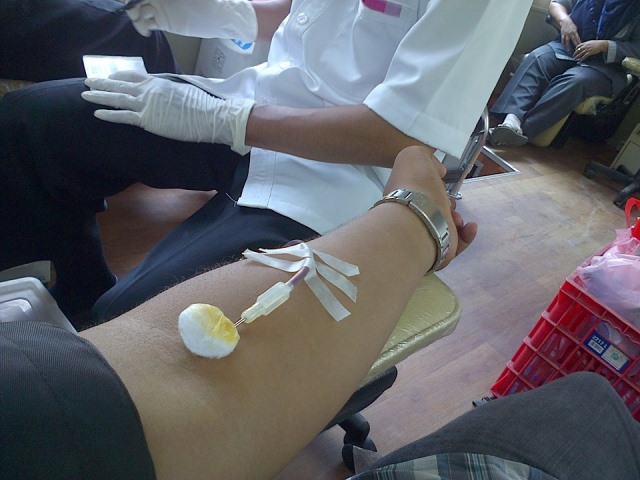
A whole blood donation is the most common form of donation in which a person gives one pint of blood from which components are separated in the laboratory.
During a platelet donation, a small amount of blood is drawn and only platelets and some plasma are collected with the red cells and most of the plasma is returned to the donor’s body.
“We have a combined technology (Mirasol — Terumo BCT) with the automated blood component processing (Reveos — Terumo BCT) to meet the highest and most exacting standards for making red cells, plasma, and platelets,” said Dr Elkhalifa.
42,515 people registered at HMC Blood Donor Centre
“We are the only site in the world to combine these two technologies together. We serve as a reference site for other countries and institutions who wish to adopt these standards. Further, we are the only country in the world which has totally computerised all processes in blood component production so we can meet the highest international standards,” he added.
A total of 42,515 people were registered as voluntary donors with the Blood Donor Centre of the HMC in 2015. “We collect either whole blood or extract platelets/plasma. We also collect specimens to determine the donor’s blood type and test for exposure to infectious agents such as Hepatitis B, Hepatitis C, HIV 1/2, HTLV 1/2, Syphilis and Malaria,” said Dr Elkhalifa.
Whole blood is then separated by automated processing system into packed red cells, buffy-coat platelets, and plasma. Concurrently, specimens for the donor are tested for the infectious markers.
“If all production criteria are met, then the final blood components are labelled using International Society of Blood Transfusion designated labels and released to the hospitals,” said Dr Elkhalifa.
The donor need to be in good health and feel well on the day of the donation, cannot have any chronic diseases of the heart, lungs or circulatory system, need to be at least 18 years old, and weigh at least 50 kilograms, have a hemoglobin level at least 12.5 grams/deciliter, blood pressure systolic between 100 and 160, diastolic 60 to 100 torr and regular pulse between 60 and 100, and an oral temperature less than or equal to 37.5C.
The donor must inform the medical staff if you are taking any medication. People interested to become a blood donor can call on 44391081to check the eligibility. Also HMC’s annual Ramadan Voluntary Blood Donation campaign is being held at various locations, including at the City Centre Mall.
The Peninsula