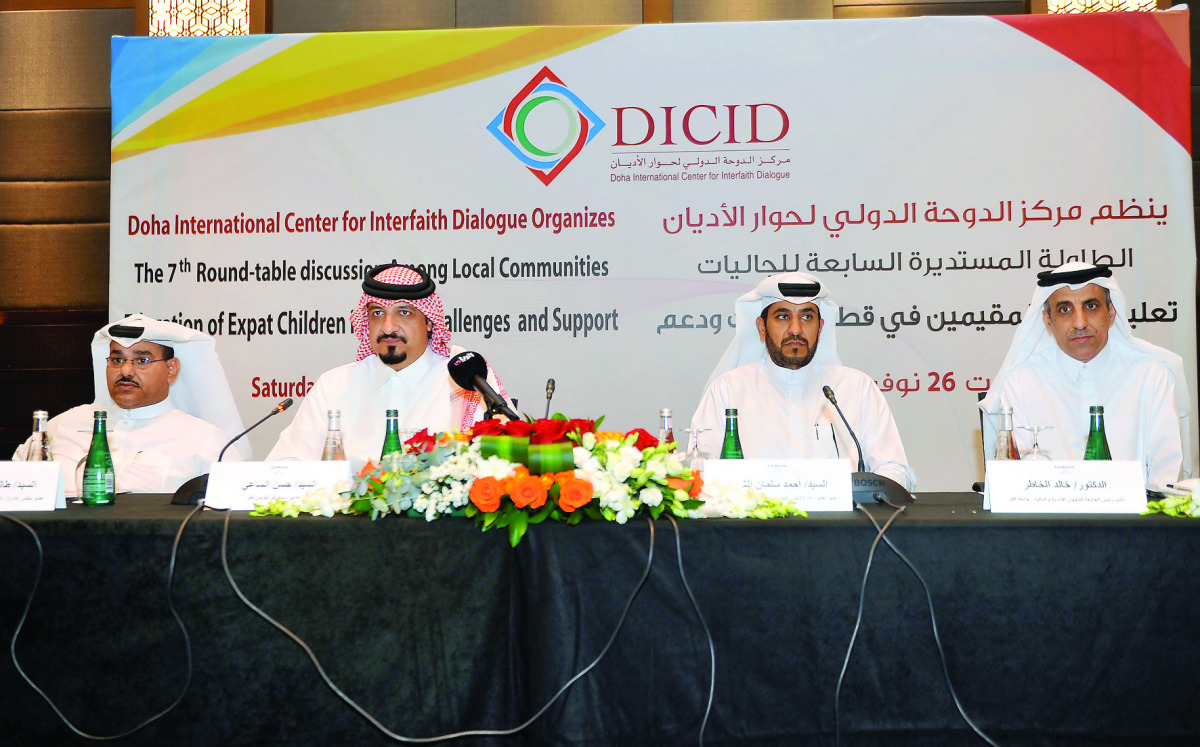
From Left: Talib Abdullah Afifa, Board Member, Qatar Society for Rehabilitation of Special Needs; Hassan Al Saaie, T V Presenter, Ahmed Slaman Al Sheeb, Education expert at School Affairs Department at the Ministry of Education and Higher Education, and
Qatar will see opening of more private universities in the near future to meet the high demand from expatriate students seeking higher education, a senior official of Qatar University said yesterday.
Dr Khalid Al Khater, Vice-President of Qatar University for Administrative and Finance Affairs, participating in a panel discussion on higher education said that the challenges being faced by expatriates in education were mostly related with the rapid growth of population in the country, “from 500,000 to more than 2.5 million in the past ten years.”
“The cost of education in Qatar today is high because there are not enough private universities to accommodate the growing population,” said Al Khater.
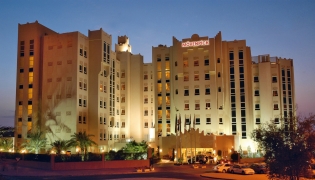
The round table discussion at Westin hotel Doha was organised by Doha International Center for Interfaith Dialogue (DICID) to discuss expatriate education at all levels and was attended by experts, diplomats, and representatives of different expatriate communities.
All the foreign universities in Qatar were established before 2005 and since then no new private university was opened, said Al Khater.
“More new private universes will open soon under the supervision of the Ministry of Education and Higher Education to create more opportunities for students,” said Al Khater
He said that Qatar has excellent universities and all of them are open for Qataris and non-Qataris including those in Education City, but the issues of high fees and limited vacancies are there because of the high standards followed by each university to provide quality education.
Al Khater noted that QU has more than 20,000 students and considerable number of them are expatriates. There are more than 1,000 expatriate employees whose children enjoy free education.
Al Khater recommended that some colleges allocate quota for expatriate students. Some colleges also need to upgrade their diploma programmes to degree level and new fields of specialisation are also needed.
“This round table discussion is to explore available opportunities for expatriate children and people with disabilities,” said Prof Ibrahim Al Naimi, Chairman of DICID, in his opening speech.
Ahmed Salman Al Sheeb, education expert at the School Affairs Department at the Ministry said that the government schools accept considerable number of expatriate children every year.
There is a special committee to consider admission of children whose parents work in the private sector as well as students living in areas which have no private schools.
However, these students face the problem of language and they need a certain level of Arabic knowledge to join these schools, said Al Sheeb.
The ministry gives two admission chances for expatriate children, from May to July and from September to January. Special consideration is given for children from countries facing crisis like Syria.
The Syrian School under the Coalition has no fees and accept even students who are on visit visa, said Al Sheeb . The President of Christian Churches Steering Committee, Archbishop Marakrios said that schools in Qatar “have become a crucible in which all nationalities and faiths dissolve”. He underlined the importance of interfaith dialogue to bring different cultures and faiths closer.
Under modern education which heavily depend on technology, Internet and social media, children are living in a virtual world away from social, and moral values, said Makarios.
Dr Ali Muhiyuddin Al Quradaghi, Secretary-General of the International Union of Muslim Scholars, stressed the role of education in dealing with disagreements over faith, sectarian basis which could be solved through dialogue in a peaceful manner.
The round table discussed in three sessions around 14 papers about expatriate education in Qatar and challenges facing the disabled. High fees, lack of teacher’s training, long waiting list for admission, and low salaries of teachers were highlighted by participants as some of the major issues facing private education.