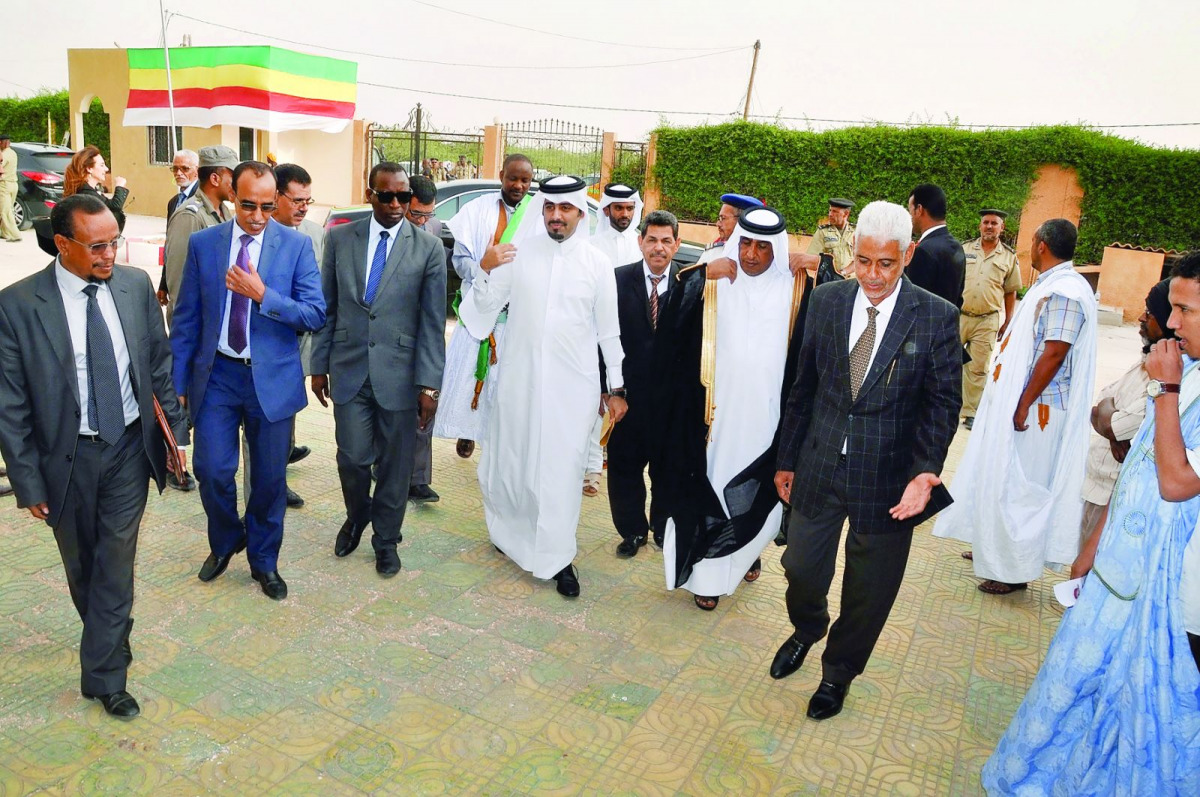
DOHA: The Qatari-Mauritanian Social Development Foundation, managed by the Education Above All Foundation (EAA), launched one its key projects — Al Imtiaz (excellence) Vocational Centre.
The centre will create vocational education opportunities across several sectors for about 200 students in the first year.
It consists of 35 classrooms and an amphitheatre equipped with an air conditioning system and loudspeakers, and an IT station.
It gives young people who missed out on secondary education the chance to receive vocational training in vital fields such as electrical engineering, renewable energy, IT and corporate, bank and insurance management.
An EAA delegation led by CEO Fahad Al Sulaiti, travelled to Mauritania for the opening of the facility and signing a memorandum of understanding.
The establishment of the centre is part of the foundation’s efforts to help alleviate poverty and mitigate its negative impact in Mauritania.
The foundation was created in December 2004 by the Ministry of Economic Affairs and Development in Mauritania and the office of H H Sheikha Moza bint Nasser.
In the intervening years, the foundation launched projects to help address poverty in Mauritania, impacting thousands of people and significantly improving the literacy rate among women.
EAA representatives took part in the inauguration of the centre and signed the MoU under which the Ministry of National Education will manage the centre.
The ceremony was attended by the Qatari Ambassador to Mauritania; the Minister of Employment, Vocational Training and ICT; the Minister of Children and Family Development, and other officials.
Al Sulaiti said, “It is an honour to attend the opening of the facility, which will make a qualitative leap in Mauritania’s vocational education and create a positive sustainable impact on society. The initiatives undertaken by the foundation are aimed at taking a holistic approach to advance Mauritanian communities by focusing on health and wellbeing and creating a skilled workforce.”
EAA’s ongoing projects include the building of a hospital, construction of five vocational training centres, a literacy programme and funding of income-generating projects.
The hospital, opened in February 2007, provides healthcare services to the population of the Boutilimit district and nearby areas. It offers treatment for free to victims of traffic accidents and dispatches teams to serve hard-to-reach populations in neighbouring villages.
The Peninsula