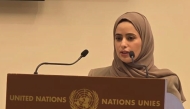
Doha, Qatar: The National Human Rights Committee (NHRC) affirmed that the ethical governance of artificial intelligence represents an urgent necessity to ensure the protection of the most vulnerable groups from the risks of discrimination and exclusion, noting that social justice is the compass guiding sustainable development in the digital age, ensuring that human beings remain at the forefront of technological transformations.
This came during a regional virtual seminar on the occasion of the World Day of Social Justice, organised by the NHRC in cooperation with the Office of the United Nations High Commissioner for Human Rights and the Arab Network of National Human Rights Institutions, and attended by the United Nations Economic and Social Commission for Western Asia (ESCWA) and the Al Jazeera Media Institute.
The seminar comes in the context of highlighting the growing intersection between digital transformation and human rights, and exploring ways to direct artificial intelligence technologies to enhance social justice and guarantee the right to decent work for all without discrimination, amid the rapid economic and technological transformations in the Arab region.
In this context, the NHRC Vice Chairman, HE Dr. Mohammed bin Saif Al Kuwari said that he emphasised that participation in organising this regional seminar represents an opportunity to renew the commitment to confronting urgent challenges and seizing available opportunities to enhance social justice based on human dignity, equality, and non-discrimination.
He added, in his speech during the seminar, that he clarified that social justice is not limited to eradicating poverty, achieving social inclusion, and ensuring decent work, but also extends to the full and effective realisation of human rights and achieving the Sustainable Development Goals, affirming that it is a continuous commitment imposed by ethical values and relevant international obligations.
He pointed out that the seminar's title reflects a legitimate ambition to harness the promising potential of artificial intelligence, particularly in developing education and vocational training systems and aligning them with labor market needs, opening broader horizons for individual empowerment, enhancing productivity, and promoting innovation.
In the same context, Al Kuwari warned of the risks of unethical use of these technologies, and what may result in exacerbating patterns of discrimination against women and girls, persons with disabilities, and migrants, widening poverty and marginalisation gaps, hindering efforts to end child labor, and other forms of exploitation.
HE the Vice Chairman of the NHRC, stressed that the committee has consistently, in line with its legal mandate, called for the ethical governance of artificial intelligence systems by adopting a comprehensive human rights-based approach that ensures the benefits of digital transformation while preventing algorithms from becoming tools that entrench discrimination and exclude the most vulnerable groups from the labor market.
He highlighted the committee’s ongoing monitoring of technological developments in the State of Qatar, as part of supporting the achievement of Qatar National Vision 2030.
He reiterated the importance of implementing the outcomes of the Doha Declaration on Artificial Intelligence and Human Rights, issued by the international conference organised by NHRC and its partners last May, calling for concerted efforts to implement the political Doha Declaration stemming from the Second World Summit for Social Development held in Doha last November, alongside the Copenhagen Declaration and Programme of Action, considering them international instruments that place human beings and social justice at the forefront of comprehensive development priorities.
For his part, the Secretary-General of the Arab Network of National Human Rights Institutions, HE Sultan bin Hassan Al Jamali said that social justice represents the compass guiding the path of sustainable development, ensuring that human beings remain at the heart of every economic or technological transformation.
He explained, in his speech during the seminar, that artificial intelligence represents a dual-edged tool: it can enhance productivity and innovation, but it may also deepen gaps and reproduce discrimination in the absence of regulatory frameworks based on human rights.
He pointed to the challenges associated with algorithmic bias, digital surveillance, and precarious forms of work, which directly affect women, youth, informal sector workers, and migrants, emphasising the need to guide digital transformation toward a fair transition based on transparency and accountability, ensuring the right to decent work without exception.
Al Jamali highlighted the pivotal role of national human rights institutions, established under the 1993 Paris Principles, as independent bodies and key partners in shaping public policies and ensuring that no one is left behind, through their work in monitoring, documentation, and accountability.
He also affirmed the importance of regional cooperation through the Arab Network of National Human Rights Institutions, in partnership with the United Nations Human Rights Office, to enhance experience sharing and develop institutional practices to address common challenges.
The seminar also included interventions addressing the impact of digital transformation and artificial intelligence on Arab labor markets, digital gaps, policy options supporting a just transition to the digital economy, the role of media in shaping public discourse on social justice and decent work, and the importance of responsible reporting in covering technological transformations.