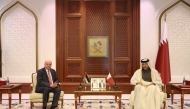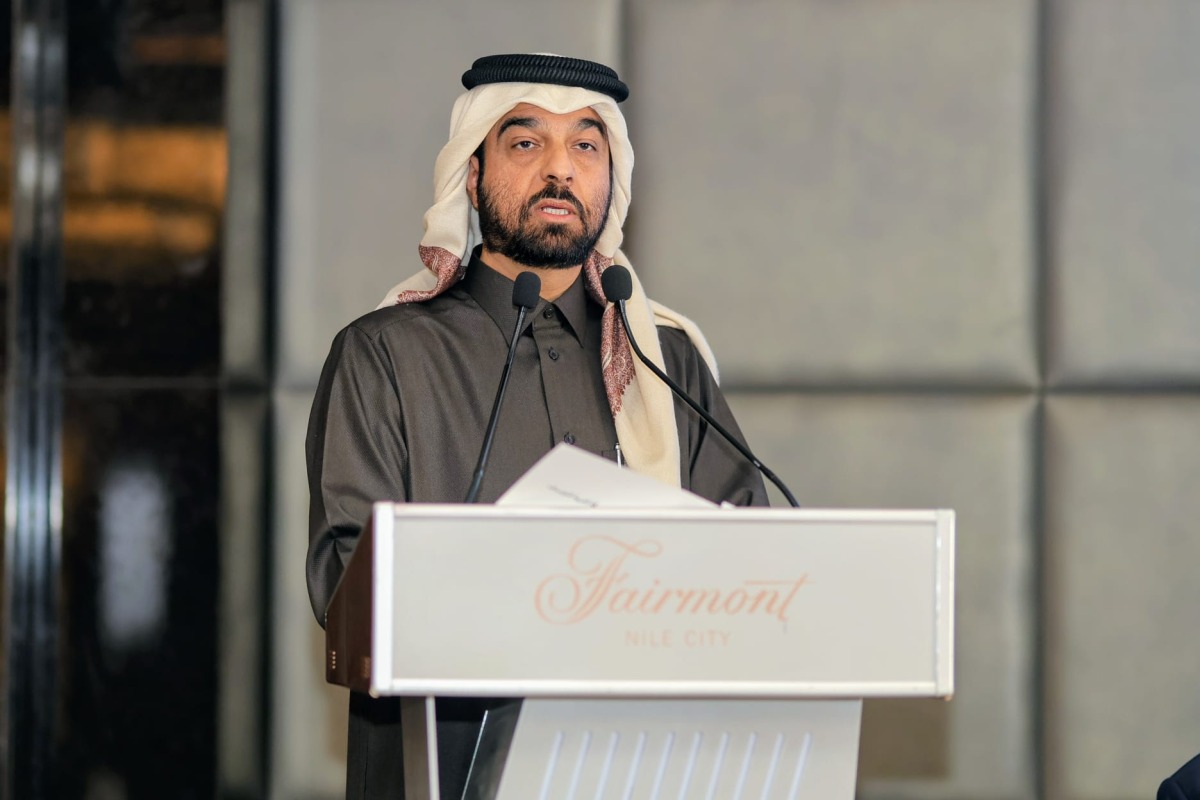
Secretary-General of the Doha-based Arab Network of National Human Rights Institutions H E Sultan bin Hassan Al Jamali addressing the ceremony.
Cairo: Secretary-General of the Doha-based Arab Network of National Human Rights Institutions (ANNHRIs) H E Sultan bin Hassan Al Jamali said that the siege and daily suffering endured by the Palestinian people, along with attempts to erase their identity and rights, place a collective responsibility on all parties to unify efforts, activate international legal mechanisms, and ensure accountability for all human rights violators without exception.
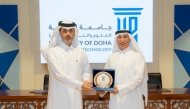
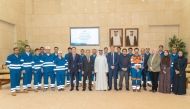
Speaking during a ceremony organised by the ANNHRIs to honour Secretary-General of the League of Arab States Dr. Ahmed Aboul Gheit at the League’s headquarters in Cairo, Al Jamali reaffirmed the Network’s steadfast commitment to standing by the Palestinian people in their legitimate struggle, working to lift injustice against them, and defending their right to self-determination in a manner that restores the values of freedom and justice and reinforces regional and global peace and security.
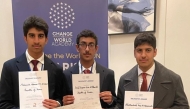
In this context, the ANNHRIs also organised in Cairo the sixth foundational edition of the “Mohamed Fayek Course” on human rights, in cooperation with Egypt’s National Council for Human Rights.
At the opening of the course, the Secretary-General stated that national human rights institutions occupy a unique position within the international system, serving as a vital link between the state and civil society on one hand, and between the state and international mechanisms on the other.
He added that these institutions play a central role in bridging the gap between international obligations and national practices, ensuring alignment of legislation with human rights standards, issuing recommendations, monitoring their implementation, and engaging constructively with international mechanisms.
Al Jamali noted that the Arab Network launched the Mohamed Fayek foundational course six years ago to deepen understanding of these roles, strengthen cooperation among stakeholders, and develop the skills of new members, contributing to the building of a coherent national human rights system and enhancing the capacity of institutions and defenders to influence public policy in line with international standards.
Vice President of Egypt’s National Council for Human Rights Mahmoud Karem said that naming the annual training course after Mohamed Fayek reflects recognition of him as a comprehensive intellectual school and a source of deep practical expertise that serves as a reference for new generations working in the field of human rights.