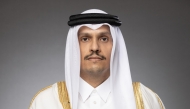
Doha, Qatar: Amir H H Sheikh Tamim bin Hamad Al Thani witnessed yesterday the completion ceremony of the Doha Historical Dictionary of the Arabic Language. H H the Amir honoured the experts, researchers, and editors who worked on the project at various stages of its completion in appreciation of their scientific and research efforts, in addition to the great service provided to the Arabic language.
The ceremony was attended by a number of Their Excellencies Ministers, other dignitaries, and representatives of regional and international organisations.
The Doha Historical Dictionary of the Arabic Language comprises nearly 300,000 lexical entries and a fully structured, dated, and documented textual corpus of around one billion words. The dictionary is distinguished by its comprehensive documentation of Arabic vocabulary from its earliest appearances in inscriptions and texts, tracing changes in word forms and meanings within their textual contexts and following the chronological development of the language.
Its electronic portal presents the dictionary’s content, enables advanced searches within the textual corpus, and offers a range of linguistic, textual, and statistical services.
The Arab Center for Research and Policy Studies launched the project on May 25, 2013. More than 500 university professors, experts, and scholars from across the Arab world contributed to the development of the dictionary.
In her address at the ceremony, Minister of Education and Higher Education H E Lolwah bint Rashid bin Mohammed Al Khater, underscored the central position of the Doha Historical Dictionary and its effective role in supporting the teaching and learning of the Arabic language.
She stressed the importance of investing in major linguistic projects, describing them as a fundamental pillar for building knowledge, preserving cultural identity, and consolidating the status of the Arabic language in both the present and the future.
Al Khater emphasised that the completion of the dictionary should not be viewed merely as the conclusion of a pioneering linguistic project, important as it undoubtedly is, but rather as a starting point and fertile ground for a broader civilizational renaissance project. The dictionary, she said, has succeeded in bringing together scholars from diverse intellectual backgrounds and schools of thought. Despite their differences, they worked collectively for more than a decade within a unified methodological framework to accomplish a comprehensive and beneficial project that opened unprecedented and pioneering horizons of knowledge, horizons that previous generations had long sought to reach.
The Minister further noted that Doha, whose welcoming intellectual environment in the past attracted thinkers, intellectuals, and creatives, remains capable and well-positioned to play a vital role in the coming phase by hosting major intellectual and renaissance-oriented projects.
Executive Director of the Doha Historical Dictionary of the Arabic Language project Dr. Ezzedine Bouchikhi, stated that the process of building a historical dictionary of Arabic necessitated the creation of a structured, annotated, dated, and fully documented textual corpus of nearly one billion words.
He explained that this corpus will become a unique and unprecedented resource for developing an Arabic model of artificial intelligence, thanks to the quality, diversity, and historical depth of the data, as well as the advanced research tools and datasets provided by the dictionary and its textual database.
Dr. Bouchikhi said this achievement opens new horizons for scientists, researchers, professors, and students, each of whom can draw from it according to their academic, research, and educational needs.
The dictionary, he said, provides words with their meanings in cultural and historical contexts, clearly defined terms across scientific fields and their civilizational cycles, authentic textual evidence validating usage and chronology, in addition to numerous other services.
At the same time, he stressed the importance of continuing to enrich and update the dictionary, in line with global historical dictionaries of living languages, given the Arabic language’s enduring capacity to generate new words and meanings that must be documented and preserved. He noted that the ceremony crowns more than thirteen years of sustained collective effort.
Director General of the Islamic World Educational, Scientific and Cultural Organization (ICESCO) Dr. Salem bin Mohammed Al-Malik, described the Doha Historical Dictionary as a work of singular distinction and excellence, one that traverses historical eras, responds to aspirations, and flows seamlessly between word and meaning while anticipating future horizons.
Dr. Al-Malik highlighted the dictionary’s expansive scope, encompassing knowledge, arts, politics, economics, tourism, sports, and many other fields, across a vast corpus approaching one billion lexical entries.
He noted that it rivals the richness of the world’s major languages, delving deeply into subtle nuances and layers of meaning that might otherwise escape attention, were it not for the unique expressive power of the Arabic language.
He affirmed that the Doha Dictionary today reinforces human dignity and identity, asserting that in the struggle for self-affirmation, language stands above all tools and instruments, as it carries the noblest honour in the epics of thought and construction and serves as a repository of collective wisdom and refined heritage.
President of the Arab Academy of the Arabic Language in Damascus Dr. Mahmoud Ahmed Al-Sayed, congratulated Qatar on the completion of this major project. He praised the sincere and highly commendable efforts invested in its realisation, expressing appreciation for the dictionary’s team, whose years of dedicated work, he noted, were remarkably few given the magnitude of the achievement.
Dr. Al-Sayed emphasised the great importance of historical dictionaries in understanding the Arabic language, its evolution, and the intellectual patterns of its speakers across different historical periods.
He commended the contributors to dictionary for significantly enriching Arabic digital content on the internet, noting that strengthening linguistic security remains a top priority for the Arab world, and can only be achieved through a combination of legal frameworks and public awareness.
Director-General of the Arab Center for Research and Policy Studies Dr. Azmi Bishara, said the project had fulfilled its promise to compile a historical dictionary of the Arabic language that traces the development of word meanings from their earliest written appearance to the present day.
He explained that the vast scope of the Arabic language and the continuous unfolding of history make the sustainability of this endeavour inevitable, with many important tasks still awaiting completion.
Dr. Bishara said a historical dictionary differs from other dictionaries in its focus on tracking semantic development across time through contextual analysis. This approach required embarking on an additional, demanding project: collecting the available Arabic language corpus, digitising it, cleansing it of errors, and then tracing each word through its contexts to document the earliest dated evidence for every meaning.