DOHA: Qatar University (QU) Health Clinic organised and hosted a training course to promote health and safety awareness about risk materials and waste.
Themed ‘Prevention is better than cure,’ the course was held in conjunction with Occupational Health and Safety Department at Hamad Medical Corporation (HMC) to raise community awareness about health and safety processes and facilitate the creation of safe workplace environments.
Over 180 students, doctors from the clinic and QU faculty and staff took part. The programme included presentations by QU Environmental Health Officer Laura Vallenius and HMC Safety Instructor Leo Dote.
They spoke about ‘Qatar University’s Environment, Health and Safety Guidelines’; and ‘Health and Safety Management of Hazardous Materials and Waste.’
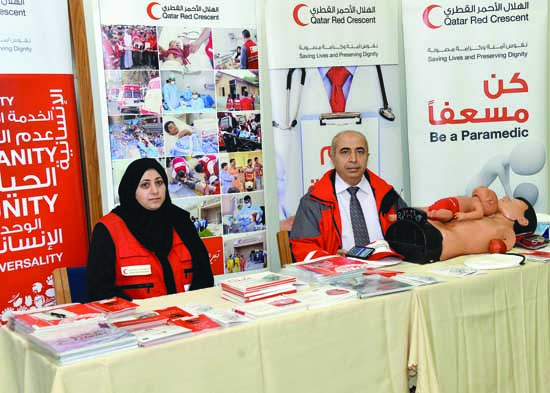
An exhibition featured information booths by QU Environment, Health and Safety Office (EHSO) and Qatar Red Crescent (QRC).
Participants were provided with information on QU’s hazardous waste disposal procedures, QRC’s health and safety services, and a brief session on first aid.
Dr Hafsa Hashad, Head of the clinic, said the event highlighted QU’s core role in raising awareness about issues related to health and well-being.
“Our aim is to ensure the best standards of health and safety systems in the workplace that can have a positive impact on overall health, welfare and productivity and an organisation’s success.”
Vallenius said QU has been consistent in upholding international best practice and standards of workplace health and safety and that the course is an example of its commitment in this regard.
“It is an opportunity to collaborate in knowledge-sharing with its partners in engaging the community on important issues such as this.”
Dote said, “Hazardous materials and waste in the workplace require sound management to ensure smooth organisational operations.
“Workers in the frontline of activities involving such type of waste are to be made aware of chemical hazards and associated risks that jeopardise their health and adversely impact productivity.
“Safety must always be considered a priority where hazardous materials are concerned, and education and training can help ensure safe operational and organisational processes.”
The Peninsula