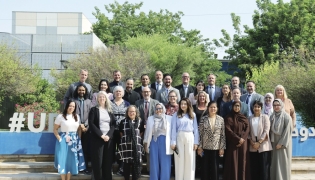
Doha, Qatar: The Ministry of Endowments and Islamic Affairs (Awqaf), represented by the Institute of Dawah and Islamic Sciences, has organised a specialised educational seminar titled ‘Knowledge Pathway for Imams 2026’ under the theme ‘Parenting… A Responsibility’, as part of its efforts to enhance mosque-based discourse and strengthen the role of religious platforms in addressing family, social and educational issues.
Held at the Imam Muhammad bin Abdul Wahhab Mosque, the seminar brought together 120 mosque Imams and preachers from across Qatar.
The event is part of the ministry’s ongoing efforts to develop the skills of Imams, preachers and religious educators by equipping them with the necessary Islamic, educational and communication tools to deliver a balanced and insightful message that combines Islamic values with an understanding of contemporary challenges.
The seminar highlighted the importance of addressing issues facing families and Muslim communities today, particularly in protecting young people, building balanced personalities, and strengthening faith-based and ethical values amid rapid social, technological and intellectual changes.
The session was delivered by the ministry’s educational expert Dr Ahmed Abdul Qader Al Farjabi, and featured active participation and discussions over three hours. The discussions reflected the Imams’ commitment to enhancing their educational knowledge and ensuring that Friday sermons and mosque lessons remain connected to people’s needs while promoting awareness and shared responsibility within families and society.
Through such programmes, the ministry aims to prepare Imams with a comprehensive understanding of parenting as a religious, social and educational responsibility that goes beyond material care to include building faith, nurturing conscience, instilling values, and creating relationships based on trust, love and positive role models.
The ministry emphasised that the role of an Imam extends beyond delivering religious knowledge, as he also contributes to guiding society, raising awareness and supporting families through the influential role of the mosque platform.
The seminar focused on providing participants with practical educational frameworks to transform religious teachings into applicable messages that address family and youth-related issues in a balanced manner while respecting modern realities without compromising core values.
The seminar also discussed the importance of developing mosque discourse to make it more effective, based on the Quran and Sunnah while responding to contemporary questions and challenges.
Speakers noted that families today face various pressures, including digital influences, weakened communication between generations and declining positive role models in some environments. These challenges require thoughtful and balanced religious guidance that addresses issues with wisdom and understanding.
The seminar highlighted several objectives, including helping Imams derive educational principles from the Quran, particularly the advice of Luqman the Wise, which emphasises faith, self-accountability, prayer, moral values and patience.
The seminar covered four main themes combining Islamic foundations, educational practices and prevention of common parenting mistakes.
The first session examined the Quranic and Islamic foundations of parenting, stressing that raising children is an act of worship and a responsibility before God. It reviewed Luqman’s approach to nurturing faith, encouraging prayer, developing good character and teaching patience.
The second session focused on building healthy relationships between parents and children through trust, affection, dialogue and participation. It highlighted the importance of unconditional love, allowing children to take responsibility, avoiding excessive criticism and maintaining meaningful communication between generations.
The third session addressed common parenting mistakes, including misunderstanding children’s personalities, excessive harshness, neglect of digital supervision, overindulgence, negative behaviour in front of children, and insufficient attention to religious upbringing.
Speakers warned against extremes in parenting, noting that excessive strictness may create distance and resistance, while excessive pampering may weaken children’s ability to handle responsibility.
The fourth session presented strategies for successful parenting, including strengthening identity and values, adopting positive role models, recognising different talents and abilities among children, and maintaining balance when correcting mistakes.
The seminar went beyond theoretical discussions by providing practical tools for implementation through mosques. Participating Imams were provided with structured topic outlines to help them prepare a series of Friday sermons on “Responsible Parenting”, ensuring a consistent and gradual awareness campaign for worshippers.