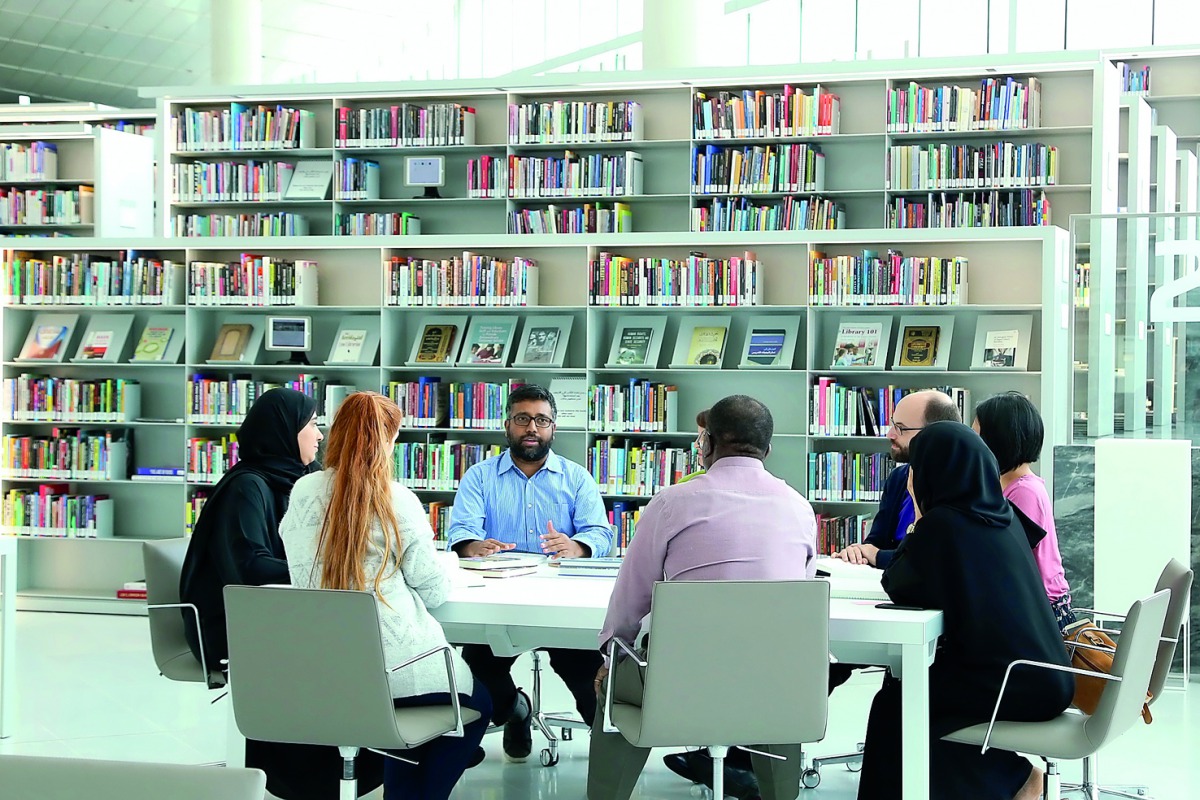
The monthly sessions of the network are practical, focussing on research methodology such as how to build an argument in a thesis, what makes an effective argument, and how you corroborate your argument with evidence and statistics.
Doha: The Qatar National Library informal Postgraduate Peer Support Network offers current and aspiring postgraduates, mostly PhD students in need of intellectual and emotional support, a relaxed environment to meet and support each other.
The group meets once a month at the Library to exchange ideas and share research, thoughts, tips, experiences and personal milestones and achievements. The network is one of the key services that the Library provides to these members of the academic community.
Sayeed Mohammed, Information Services Librarian at the Library and a PhD student at the Queensland University of Technology, who runs the network sessions while managing his own doctoral studies, explains the motivation for establishing the network: “There are many PhD students who are struggling alone. They’re either enrolling in online courses, or are registered with universities in some other part of the world. They are all managing different struggles - access to information, access to people, struck with their research methods and lack of specific set of skills required to complete their PhD tasks. And they have nobody to ask or cannot travel very often to their universities to get help from their supervisors.”
Creating a network is one way of “bringing together stranded and desolated PhD students to encourage and motivate one another and also to give emotional support to each other,” Sayeed adds.
The monthly sessions of the network are practical, focussing on research methodology such as how to build an argument in a thesis; what makes an effective argument; and how you corroborate your argument with evidence and statistics. There have also been sessions on writing a PhD research proposal, critical reading techniques, survey analysis, and software skills this year.
“The network is not an academic, technical, or scientific forum, but a platform that creates a supportive environment for postgraduate students and even researchers to network and support one another, whether its support at the intellectual or business or even emotional level.”
The Library has vast resources including access to databases. These are not skills, which are formally taught at universities at graduate level, notes Sayeed.
“The Library is using its resources and its place in the community to facilitate skills development in areas such as writing, critical reading, research methodology and other skills, which many of the PhDs can offer.”
The network is succeeding in having its intended effect. “PhD students meet each other through the network are finding ways to collaborate, where they are from similar fields, and some have worked on publications together.”
In the meantime, students in the network are benefitting from having this forum to share knowledge, information and expertise.
Maya Röder, a regular participant in the network, who is currently finalizing her PhD application, said: “I have been living in the Gulf region for more than ten years and have been thinking about doing a PhD for some time.
Due to a lack of academic literature, it was very difficult to even prepare a proper proposal to apply. Access to relevant books was always an issue for me, and academic journals were not available to someone who was not affiliated to an academic institution. The Library is changing this completely.”
The network recently organised, “Researcher’s Dialogue”, a focus group and workshop where researchers shared their stories, including the challenges they face and how to solve them. Sayeed thinks that such seminars will link researchers and their work with Qatar’s stakeholders and bring these stakeholders more to the fore in their research.