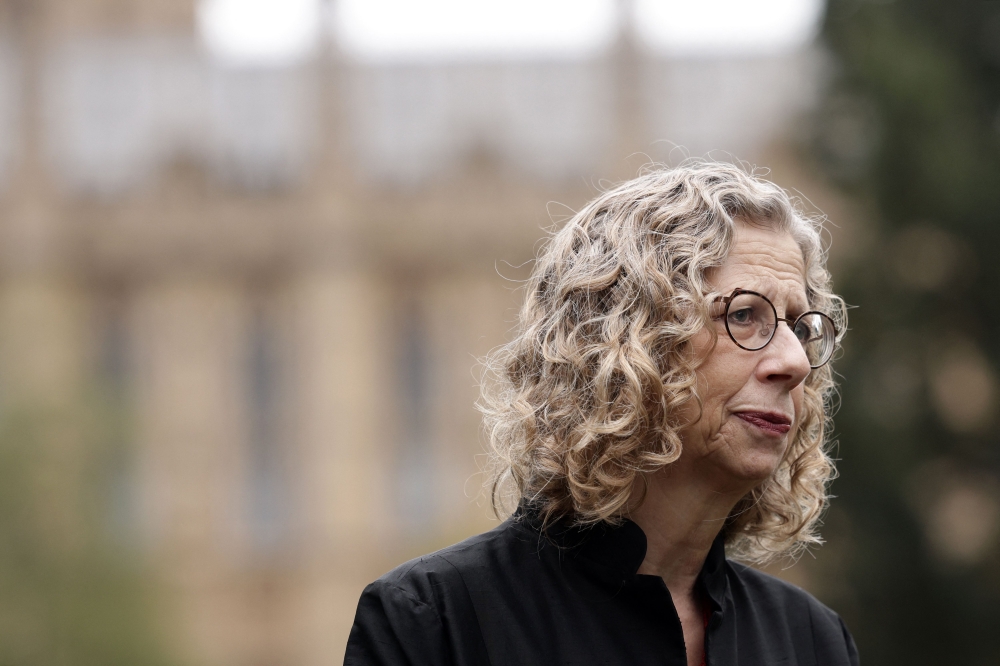
United Nations Environment Programme (UNEP) Executive Director, Inger Andersen, speaks during an interview with AFP in Westminster, central London on October 21, 2026. (Photo by Brook Mitchell / AFP)
Paris, France: Global commitments to cut planet-heating emissions are falling far short of the Paris climate goals and put the world on course for 2.6C warming this century, the UN warned Wednesday.
The report by the United Nations Environment Programme (UNEP) lays bare the chasm between rhetoric and action when it comes to tackling global warming, and the challenge before political leaders at November's COP31 climate summit.
Even if countries deliver their latest climate pledges in full, global temperatures could still rise 2.6C above pre-industrial levels by 2100, said the annual Emissions Gap Report.
That would blow past the historic goal agreed in 2015 in Paris: keeping warming well below 2C while striving for a safer 1.5C. Any chance of keeping to 1.5C had been "lost" due to decades of insufficient action, the report said.
"The world can no longer avoid overshooting the 1.5 degree limit, and the consequences are already devastating," said UN chief Antonio Guterres in a statement to launch the closely watched report.
"Deadly floods, brutal heatwaves, raging wildfires, lost lives, crippled economies, deepening inequalities, and those least responsible are suffering first and worst."
Overall, global greenhouse gas emissions in 2025 were broadly on a par with record levels in 2024, with the difference between the two years too small to call, the report said.
Carbon emissions just from burning coal, oil and gas -- the main driver of climate change -- rose slightly in 2025 compared to the previous year.
Guterres said deep and immediate cuts were needed to protect humanity from worsening impacts, but instead "emissions remain at record levels. And national climate plans and current policies fall dangerously short".
Sticking just with current policies would see warming hit 2.8C by the end of the century, the report said.
No country immune
Scientists warn that every additional fraction of a degree above 1.5C increases extreme weather events and the likelihood of irreversible changes to the planet, from dying coral reefs to melting permafrost.
The world has already warmed roughly 1.4C relative to pre-industrial times, and crossing 1.5C is expected in a matter of years.
This latest UNEP warming outlook is worse than last year's because of the formal withdrawal of the United States from the Paris accord and upward revisions of historical emissions, said report co-author Anne Olhoff.
Emissions growth slowed among the G20, but the United States was a "major exception", it added.
The Group of 20 major economies accounts for three-quarters of global emissions.
Among the world's top six emitters, preliminary data for 2025 showed emissions increases in the United States, Indonesia and China, and decreases in India, Russia and the European Union.
But the US increase of 133 megatons of CO2 equivalent "far exceeded" that of any other country, driven by higher electricity demand and a rebound of coal power generation.
The next-largest increase was recorded in Turkey, which is hosting the UN climate summit in Antalya from November 9 to 20.
The US is the world's second-largest polluter, behind China. US President Donald Trump has called climate change a hoax and rolled back clean energy policies while boosting fossil fuel production.
UNEP executive secretary Inger Andersen told AFP she would not put the blame "squarely on one nation", saying every country, especially those in the G20, has "a specific duty to find a way to phase down their carbon emissions".
To limit the overshoot beyond 1.5C, Andersen said the world has an "urgent to-do item": adding another 5,000 gigawatts of renewable energy over the next five years.
'Historic failure'
The report details a scenario with a 50-percent chance of bringing global warming back down to 1.5C by 2100.
To get there, warming must peak around 1.8C by 2050, and vast amounts of carbon dioxide would have to be removed from the atmosphere to bring temperatures down further.
But this scenario assumes immediate emissions cuts of six percent per year, every year, until 2035 -- nowhere near current projections.
Some climate-vulnerable developing nations have accused bigger emitters of abandoning the Paris goals, and a showdown over the 1.5C target is expected at COP31.
"This is a historic failure of political leadership," said Mohamed Adow, director of Kenya-based think tank Power Shift Africa.
"The science has been clear for decades, but governments have chosen delay over action," Adow said. "The consequences will be measured in lives lost, not just degrees of warming."