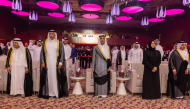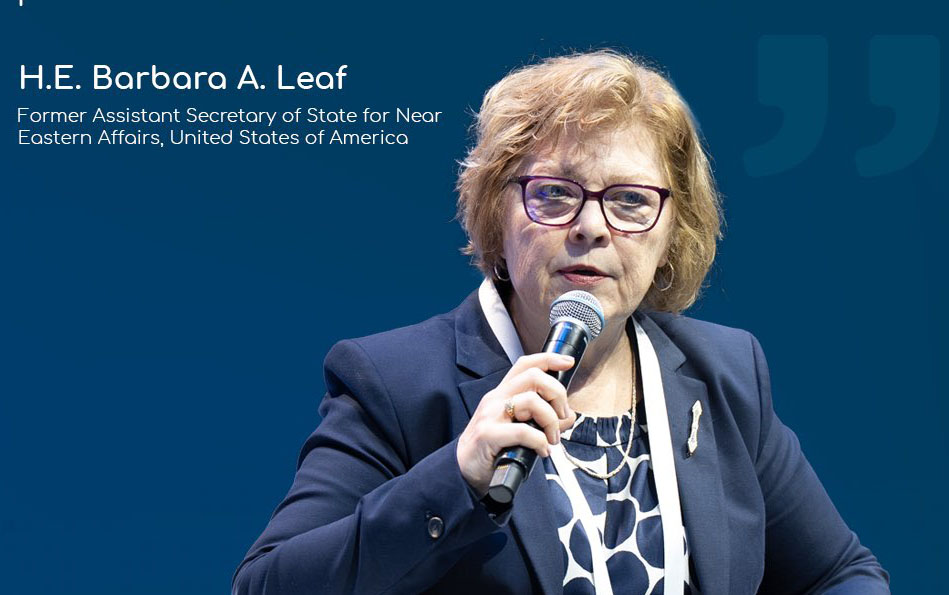
Doha, Qatar: Escalating security threats across the Gulf underscore the dangers of misjudging adversaries and failing to anticipate the wider consequences of military action, former senior US diplomat Barbara A Leaf has warned, arguing that major geopolitical shocks are often preceded by warning signs that governments struggle to interpret.
Speaking at the Global Security Forum during a session titled “Alliances Amidst Rapidly Changing Regional Dynamics,” Leaf challenged the tendency to label every major geopolitical crisis a “Black Swan” event, arguing that genuinely unpredictable events are rare.
“So I tend to think that the term Black Swan is a much overused and not well understood term in the sense that we tend to label everything that’s sort of exciting, explosive, undesired as a Black Swan,” she said.
“The fact is true Black Swan events that really come out of nowhere, that catch the world or country or government by surprise are actually pretty rare.” Leaf, who served as US assistant secretary of state for Near Eastern Affairs from May 2022 to January 2025 and as US ambassador to the United Arab Emirates from 2014 to 2018, said the intentions of political leaders remain among the most difficult elements to assess, even when military preparations and escalating rhetoric are visible.
“Ultimately, it’s the intent of the aggressor that is often most difficult to suss out,” Leaf said.
The sudden collapse of Bashar Al-Assad’s government in Syria in December 2024 offered another example of how seemingly durable political systems can unravel. Leaf said the speed of the Syrian army’s collapse surprised Assad himself, illustrating how difficult it can be for leaders and regional observers to recognise the fragility beneath an authoritarian system’s outward appearance of strength.
The lesson, she suggested, extends beyond regime change to the security challenges confronting Gulf states, where non-state actors can threaten critical infrastructure and international shipping despite facing conventionally stronger military powers. Leaf said such actors had developed increasingly sophisticated military and information capabilities, allowing them to wage asymmetric warfare and expand the consequences of regional conflicts. She pointed to attacks on Gulf energy and civilian infrastructure, pressure on the Strait of Hormuz and the potential for the Houthis to open another front. She also warned that military campaigns could generate consequences beyond their immediate objectives, particularly when policymakers failed to account for the wider regional effects.
For Gulf states, diversifying security partnerships and defence capabilities remains important, she said, but the regional environment remains fluid and the extent of future threats is uncertain.
Leaf’s broader concern was that escalation could become increasingly difficult to contain.
“I absolutely agree with Advisor to the Prime Minister and Official Spokesperson for the Ministry of Foreign Affairs Dr. Majed bin Mohammed Al Ansari’s comments this morning that we are nearing a brink where escalation becomes uncontrolled, uncontrollable. It doesn’t stay in the region. It goes beyond,” she said.
She argued that military and economic pressure alone could not resolve the security and political dilemma, emphasising the need for diplomacy to work alongside other instruments of national power.
“The diplomacy has been the least used tool,” Leaf said, adding that regional partners had strong incentives to help bring the conflict to a negotiated end.
“That’s why it’s really quite urgent that an open diplomatic track begin to resume,” she said.