DOHA: Qatar’s National Human Rights Committee (NHRC) has asked representatives of the offices of expatriate communities functioning at its premises to investigate the facts about the complaints being raised to the Committee so that they could be forwarded to the authorities concerned accurately.
NHRC yesterday signed a “memorandum of cooperation” with the representative offices of expatriate communities to improve the mechanism for taking up the issues of the respective communities to the NHRC.
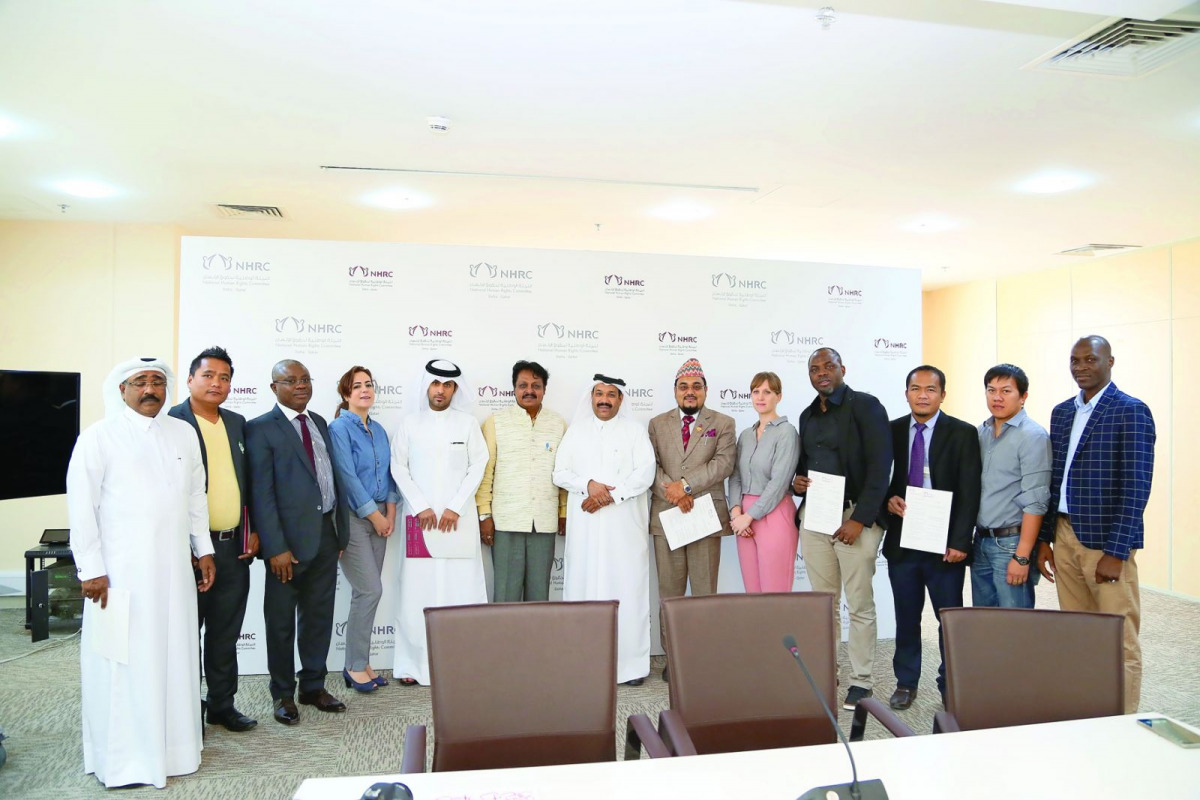
The memorandum was signed by Jaber Al Huwail, Director, Legal Affairs, NHRC and representatives of four expatriate communities (from India, Philippines, Nigeria and Nepal) at a meeting the NHRC headquarters yesterday.
The agreement seeks to strengthen cooperation and coordination between the two sides.
NHRC also agreed to appoint researchers from its legal affairs department as liaison officers to coordinate between the department and the representative offices.
They will also supervise the process of coordination in registration of cases being submitted for study and taking necessary actions. They will also discuss with the coordinators of the expatriate communities and legal affairs departments and give their opinion in this regard.
The memorandum is also meant to boost the interaction to solve the problems of the expatriate communities, NHRC said in a statement.
According to the agreement, the coordinators of expatriate communities will work voluntarily in cooperation with NHRC in raising the problems faced by members of their respective communities on a priority basis.
Memorandum specifies role of NHRC
The supervisory committee will keep coordinating with the coordinators on certain points. The coordinators will maintain strong relations with the members and volunteers of their respective communities. They will be able to talk on behalf of the communities for their interests. They should enjoy good reputation, respect and sympathy.
Although there is no official working hours, the community representatives should give around 10 hours weekly for volunteer works.
The representatives should be keen to support their community members and could speak and write Arabic or English. They should not be affiliated to any organisation abroad except those accredited by NHRC.
The memorandum has also specified the role of NHRC that is focused on cooperating with the coordinators and holding training courses about legal system in Qatar. The courses will be focused on the issues related to the works, residency, understanding the problems and bringing about appropriate solutions.
They will also be taught how to cooperate with legal affairs department according to the nature of the cases.
The Peninsula