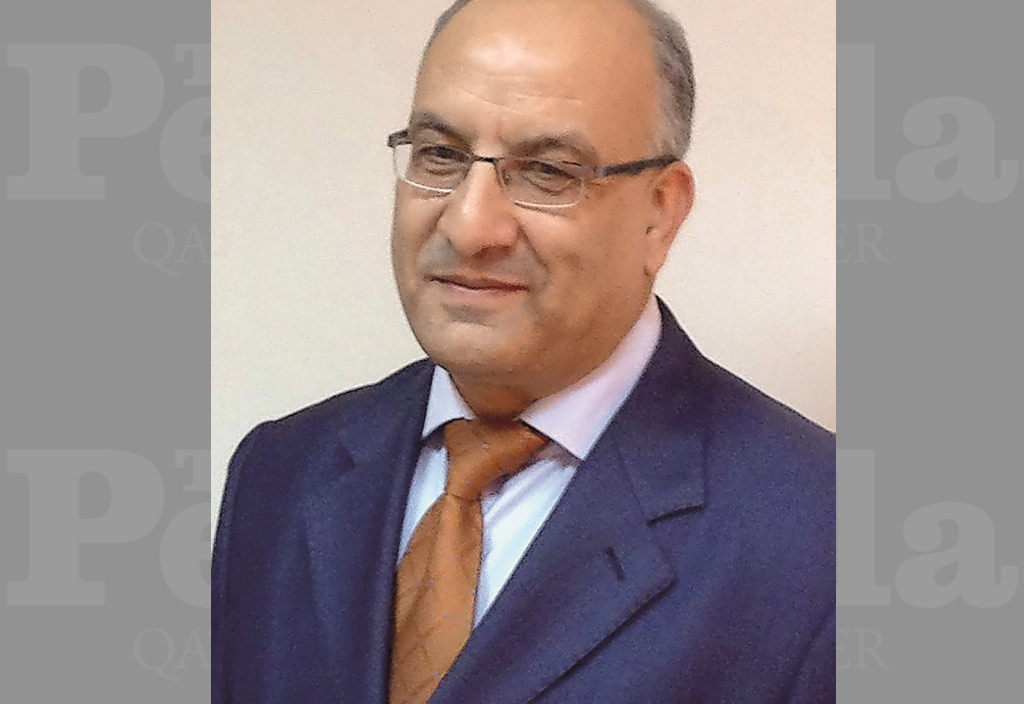
Dr Ibrahim Abu Hashash, the winner of the 4th Sheikh Hamad Award for Translation and International Understanding for his translation of Die ‘Philosophie der Aufklärung’ by Ernst Cassirer.
Doha: Arab translators are facing several challenges today and non-profit organisations should come forward to help them, said winner of the 2018 edition of Sheikh Hamad Award for Translation and International Understanding. Indifference of Arab universities towards translators is another big challenge, he said.
“Arab translators face many financial and subjective challenges and issues related to the cultural industry in general, such as access to translation, publishing, printing, editing, etc. Therefore, I believe that large non-profit institutions are primarily qualified to take responsibility of such great job,” said Ibrahim Abu Hashash, translator and winner of Sheikh Hamad Award for Translation and Understanding in an exclusive interview with The Peninsula.
In addition to these challenges, most of the Arab universities do not recognise translation as part of the important scientific disciplines which requires promotion of its faculty members, although I can claim that the effort to translate a book such as “The Philosophy of the Enlightenment” is equal to two times of researches which gets promotion said Dr Ibrahim Abu Hashash, lamenting the apathy of Arab universities towards the field of translation.
Asked how he sees the role of such awards in encouraging translation between Arabic and other languages, he said there was no doubt that “such award has an important role in stimulating translation and appreciation to translation works as cultural creativity which is indispensable for renaissance and intellectual process, intellectual and cognitive development, and communication between cultures,” he said. In addition to the award’s very positive role in valuing the translators and rewarding their efforts financially and morally, this will improve the level of translation, starting with the selection of suitable materials for translation and its quality.
“No doubt that the Sheikh Hamad’s award seeks to restore the scientific and historical status of translation and translators in the Arab region,” said Dr Abu Hashash, adding this is clear from the remarkable interest in encouraging translation and professionalism, which puts translation in its proper place as a lever of advancement in the general sense.
Asked about the future of translation in light of the proliferation of artificial intelligence and online translations, he said translation was a creative, intellectual, linguistic and comprehensive cultural process, which cannot be done by the artificial intelligence, no matter how it evolves, especially in the fields of literature and various fields of humanity, such as philosophy, thought, aesthetics and sociology etc. “Translation is one way or another re-writing, and this can only be done by humans,” he added.
According to Dr Ibrahim, the book which he translated and which won the Sheikh Hamad’s Award “Die Philosophie der Aufklärung” derives its importance from the field of philosophy,” noting that the author of the book, Ernst Cassirer, is one of the most important philosophers of the 20th century renowned for his depth of analysis, insight and knowledge mastering philosophical methods.
Giving reason for choosing “Die Philosophie der Aufklärung” for translation Dr Abu Hashash said the book has great importance in Western philosophical culture in general, and German in particular. There is personal reason that,“I prefer to do such hard work that translation requires to convey valuable books with profound contents important to the readers. Translators generally like to present to readers what they love or believe, it is important contents but in another languages,” he explained. Arab readers need any book whatever its subject is about, he said highlighting the importance of the book for Arabic readers, adding “I think readers of Arabic are the most needy for such books in particular at this time under the Arab renaissance that experiencing a great setback or relapse, or indulge in overflowing, consumption and flattening. Therefore we need such intellectual works published and the book is in a central position of this field; it is a great lesson in respecting the mind that represents power, he said pointing out that enlightenment is a continuous mental intellectual act, not an end of era in the history of human thought.
Regarding his other translations from German to Arabic or vice versa, he has published five books of intellectual and literary books, in addition to eight books for children, all of them translated from German language he said. He added “I participated in the translation of two works from Arabic to German”.
“It is difficult to answer such question” he said when asked about the reason for selection of his book whether it is because of its content or accuracy of the translation? The Steering Committee of the Award and the juries have their rules and conditions and their decision is based on the reports of specialized arbitrators consisting of top professional translators and experts mastering both languages. After the winners’ names were revealed I came to know competitors can see the assessment reports on their works which is available at the headquarters of the Sheikh Hamad Award. Personally I did not read it because I trust the integrity of juries regardless of the outcome," said Dr Hashash, noting that mechanism of arbitration and its objectivity in this award or similar Arab awards are almost same.
Most of the works that won this year were related to German language is because the 5th edition of the award was dedicated to German language and every year there is a different main language in addition to Arabic and English.