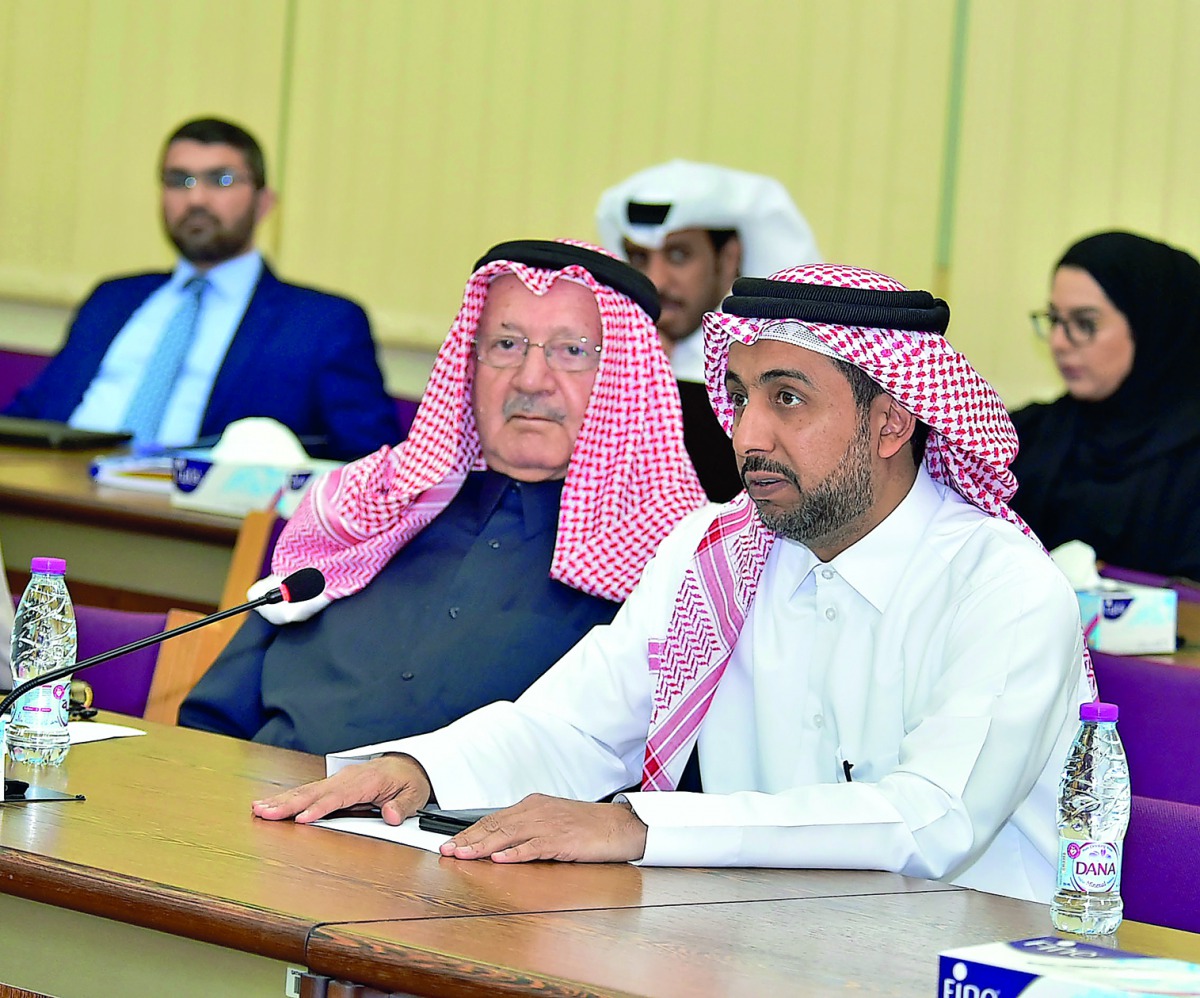
Dr. Hassan Al Derham, President of Qatar University, and senior representatives from Qatar University attending the seminar.
Doha: Qatar University (QU) hosted a seminar on “The United States Position on Issues Related to the Middle East” featuring William Grant, the Chief of Mission and Chargé d’Affaires of the United States to Qatar since August 2018.
Grant conducted the informative session followed by a discussion with the audience.
The seminar was attended by Dr. Hassan Al Derham, President of QU, along with other senior representatives from the University, students, faculty and staff.
Grant began the seminar by providing an introduction to the US government saying, “We value the opportunity to explain our country’s policy, in our own voice, to the people of Qatar, and people of all backgrounds. The best way to understand other nations is through dialogue.”
He explained the role of the US embassy in four basic functions: establishing relationships with key people from the host country; providing certain services such as visas, services to American citizens living or visiting Qatar, and helping companies seeking to do business in Qatar; keeping the government informed about key developments in Qatar, such as the energy business, which is important to Qatar and has a major impact on the world energy market; and finally informing people from the government and informing regular citizens about the US policies and interests through various ways such as through seminars and social media, which is increasingly popular in the region.
He also discussed the structure of the US government explaining that the US has a very active democracy and they have three branches of government.
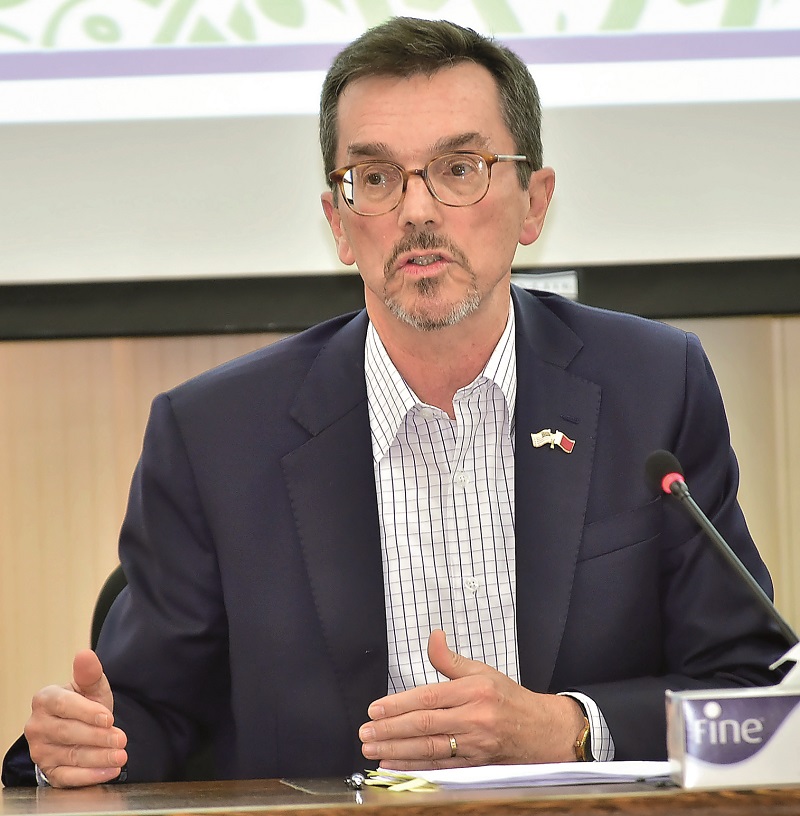
William Grant, Chargé d’Affaires of the United States to Qatar
The first branch is the judicial branch, the second is the president or executive branch and the last is legislative. The executive and legislative branches are called co-equal governments.
“Any country, when determining foreign policy, has to determine its interests and the other countries interests. Different countries of the world can have various interests such as energy, human trafficking, counterterrorism efforts, and much more,” Grant said.
He explained that the US has relations with most countries, and established relations with Qatar soon after it declared independence, adding that the US has a very active role in the Middle East region and views this region as very important, noting that relations between Qatar and the US are “very good and very strong” and “the cooperation we have with Qatar is very wide.”
“It’s much more than just defence,” he said, adding that Qatar and the US cooperate in terms of labour matters, education, energy, terrorism control, trade and investment, security for the World Cup and law enforcement.
He also noted that the Deputy Prime Minister and Minister of Foreign Affairs H E Sheikh Mohamed bin Abdulrahman Al Thani praised Washington’s efforts toward the current Gulf crisis during the Munich Security Conference earlier this week.
In concluding the seminar, the floor was opened to question and answer from audience members, where students, faculty and staff alike asked various questions related to the US foreign policy. In responding to a question about the current blockade, Grant said, “I do want to mention the question of the blockade. Our position is very clear and we have stated many times, we are opposed to this dispute. We believe it is hurting our interests in this region. We’re not happy with the dispute, we want to see it end.”