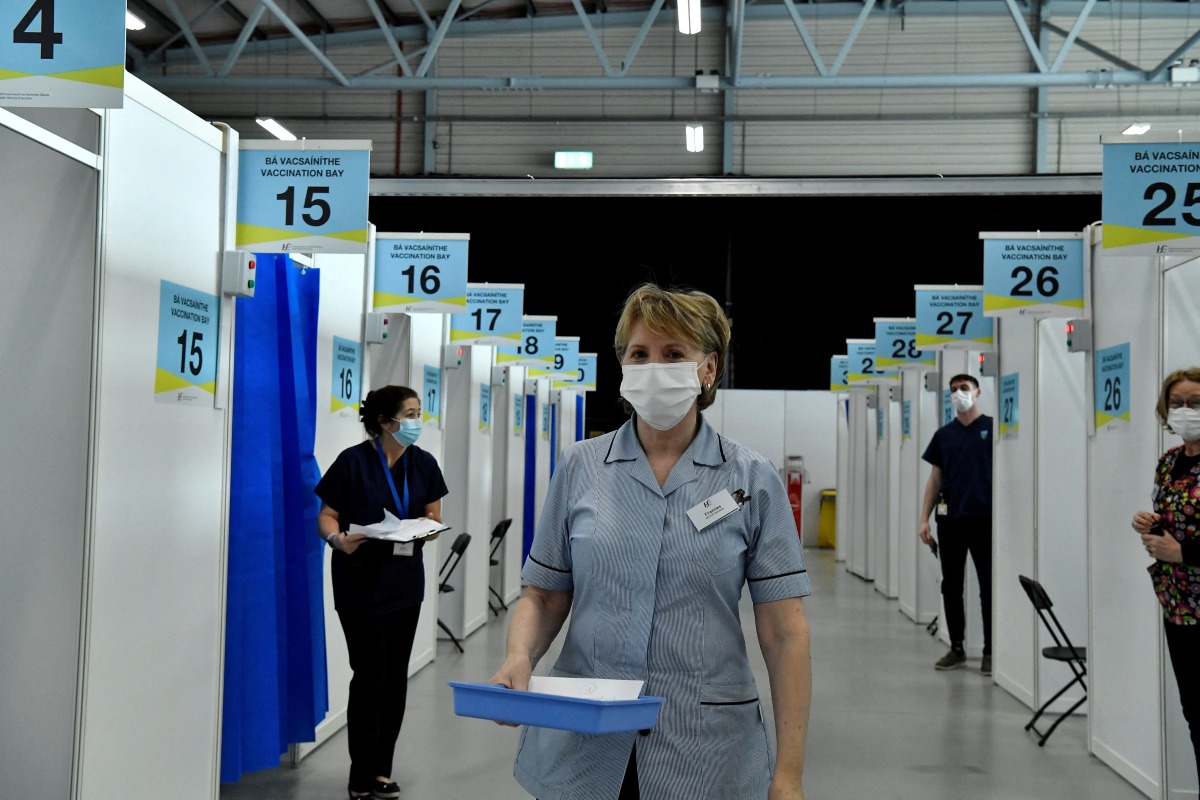
FILE PHOTO: A nurse Frances Whyte brings a tray of Moderna coronavirus disease (COVID-19) vaccine boosters to a bay for a person to be vaccinated at the RDS (Royal Dublin Society) vaccination centre in Dublin, Ireland, January 12, 2022. REUTERS/Clodagh Kilcoyne/File Photo
DUBLIN - Ireland looked set to rapidly unwind almost all COVID-19 restrictions with ministers due to meet on Friday to agree on a timetable after being given the all clear by public health officials.
Ireland had the second highest incidence rate of COVID-19 in Europe just last week but also one of the continent's highest uptake of booster vaccines, which has helped keep the number of seriously ill people well below the previous peak.
An 8 p.m curfew on the hospitality sector could be lifted as soon as this weekend, alongside the ditching of vaccines passes with capacity in indoor and outdoor venues also set to return to full capacity, including for next month's Six Nations rugby championship, local media reported.
Ministers have said previously said that some measures, such as the need to wear a mask on public transport or in shops, are likely to remain in place beyond the ending of the restrictions put in place late last year when the Omicron wave struck.
"I think it is reasonable to expect that we will be able to exit the regulations on a faster basis than would have looked likely a number of days ago," Finance Minister Paschal Donohoe told national broadcaster RTE late on Thursday.
Ireland's hospitality sector has been particularly hard hit by one of Europe's toughest lockdown regimes.
While the economy recovered rapidly last year, around one third of employers have chosen to defer tax payments and the wages of one-in-twelve workers are still being supported by a state subsidy scheme set to end in April.