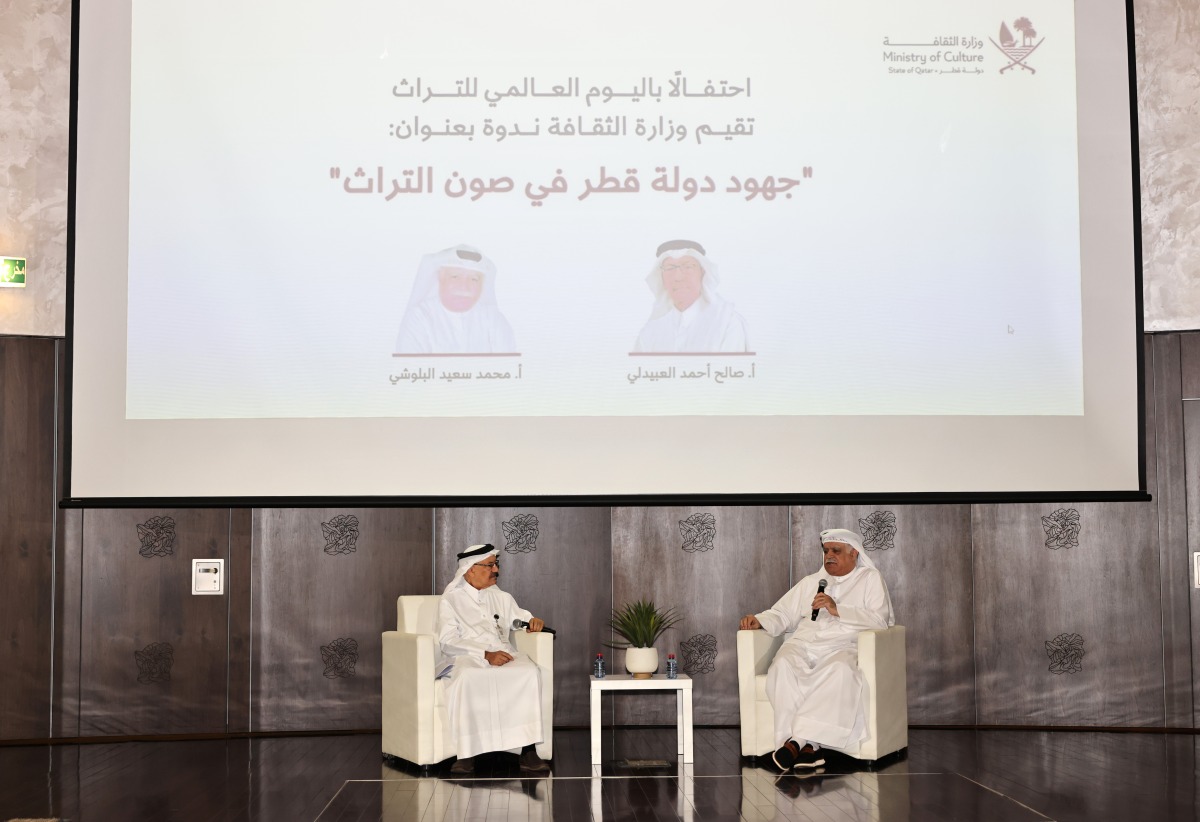
Doha, Qatar: The Ministry of Culture (MoC) hosted a high-level symposium yesterday titled “The State of Qatar’s Efforts in Safeguarding Intangible Cultural Heritage,” marking the International Day of the Intangible Cultural Heritage.
The event, held at the ministry’s headquarters in Doha, brought together policymakers, cultural practitioners, academics, and heritage experts to examine the country’s progress in preserving its living traditions.
The event was attended by Undersecretary of the Ministry of Culture H E Dr. Ghanem bin Mubarak Al Ali and Assistant Undersecretary for Cultural Affairs at the Ministry of Culture Mubarak bin Abdullah Al Khalifa.
In his remarks, Heritage Researcher at the Department of Heritage and Identity, Ministry of Culture, Mohammad Saeed Al Balushi, underscored Qatar’s growing commitment to safeguarding intangible cultural heritage, aligning national initiatives with international frameworks set by Unesco.
“From falconry and traditional majlis gatherings to the artistry of henna and the weaving of the Arab bisht, these practices connect generations and enrich our cultural diplomacy on the global stage,” he said.
The symposium emphasised that heritage preservation extends beyond monuments and artefacts to include oral traditions, performing arts, social practices, and traditional craftsmanship.
Participants highlighted several flagship programmes spearheaded by the ministry, including documentation projects, community engagement initiatives, and educational campaigns aimed at passing cultural knowledge to younger generations. Special attention was given to traditional practices such as falconry, dhow building, and Arabic calligraphy, which remain integral to Qatar’s cultural identity.
A panel discussion explored the legal and institutional mechanisms that underpin heritage protection in the country. Experts pointed to Qatar’s ratification of key international conventions and the establishment of specialised cultural institutions as evidence of a structured and forward-looking approach.
Speakers also noted the importance of collaboration with local communities, describing them as “custodians of living heritage” whose active participation is essential for sustainability.
The symposium also addressed contemporary challenges facing intangible heritage, including globalization, urbanisation, and the rapid pace of technological change.
While these forces present risks to traditional practices, participants agreed they also offer opportunities for digital preservation and wider dissemination.
Speakers also showcased innovative tools, including digital archives and virtual exhibitions, that are being deployed to document and promote Qatari traditions.
In a session dedicated to youth engagement, educators and cultural advocates stressed the need to integrate heritage education into school curricula. They argued that fostering cultural awareness among young people is critical to ensuring continuity, particularly in a rapidly modernising society.
The event concluded with a call for continued investment in research, capacity-building, and regional cooperation. Delegates recommended strengthening partnerships with Gulf and international institutions to exchange expertise and develop joint initiatives.
By convening the symposium, the Ministry of Culture reaffirmed Qatar’s strategic focus on cultural sustainability, positioning intangible heritage as a vital pillar of national identity and social cohesion.
The discussions reflected a broader recognition that preserving living traditions is not only a cultural imperative but also a means of fostering dialogue, creativity, and inclusive development in an increasingly interconnected world.