DOHA: A new study by Northwestern University in Qatar (NU-Q) will examine whether young people care about their health and pay attention to public health campaigns.
The study, ‘Qatari adolescents: How do they use digital technologies for health information and health monitoring?,’ will be conducted in collaboration with other researchers in Qatar and the US.
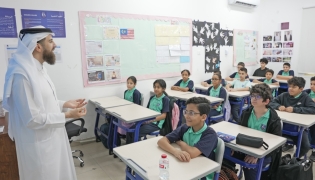
It will examine how Qatari youth aged 13 to 18 acquire and evaluate information about health issues of all kinds. The study will probe into what is known about young people’s specific health concerns and conditions and how they use technology to acquire and share such information.
The project is funded by a $300,000 grant from Qatar National Research Fund.
Aimed at discovering how future public information campaigns can better reach youth beyond typical media sources and school settings, the study is being carried out by Dr Klaus Schoenbach (pictured), Associate Dean for Research, NU-Q, and internationally known media researcher, and Dr Ellen Wartella, an expert in children’s media and health and Professor of Communication, Psychology and Education, Sheikh Hamad Bin Khalifa Al Thani at NU’s Evanston, Illinois campus in the US.
They are joined by Dr Salma Mawfek Khaled, Survey Researcher at Qatar University’s Social and Economic Survey Research Institute (SESRI) where she is an assistant professor; and Dr Paul Amuna, who heads the research section of the Primary Health Care Corporation and will serve as consultant.
“We are evaluating the channels adolescents use to find answers for their health concerns to find what works best. We hope that information that will improve the options available to them,” said Schoenbach, who will lead the research team.
Qatar’s youth are subject to some of the highest rates of obesity-risk in the world, exposed to cultural vices such as shisha smoking and environmental restrictions such as extreme weather conditions.
“The threshold for physical activity is much higher in this part of the world than in most countries, so we’re trying to communicate the best ways to educate and train using digital sources,” Schoenbach said.
The research project begins this year and will be completed in 2017.The Peninsula