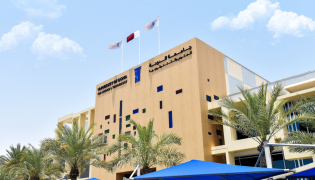
Aimed to bring together language practitioners and experts to network and share research and teaching experiences, Qatar University Foundation Programme (QU-FP) recently organised the second annual International Conference and Exhibition on English Language Teaching.
The event brought together over 350 researchers, practitioners and scholars from Qatar, Bahrain, Iran, Kuwait, Oman, Saudi Arabia, UAE, and the UK. The conference held yesterday and today is focused on a wide range of topics related to English language teaching and learning.
Themed “Promoting Innovation in English Language Teaching and Learning: The Future Landscape”, the two-day event is organised in collaboration with Qatar Ministry of Education and Higher Education (MEHE) and Teachers of English as a Foreign Language-Qatar (TEFL-Qatar) Association.
During the event, QU Foundation Programme and Core Curriculum Director Dr Maha Al Hendawi, announced the launching of TEFL-Qatar as a Foundation Programme effort to bring together English language professionals under one umbrella. It is an associate of IATEFL (International Association for Teachers of English as a Foreign Language) which is formed to provide support and professional development opportunities for English Language Teaching professionals in Qatar and the Gulf.
The conference included a plenary session on “Meaningful face-to-face communication” presented by Peter Grundy. Featured speaker, Dr Sufian Abu-Rmaileh, gave a presentation on “Critical thinking classroom experience”.
The event featured the screening of two video messages by International Association of Teachers of English as a Foreign Language (IATEFL) President Marjorie Rosenberg and TESOL International Association President Dudely Reynolds. It also included sessions in the form of panel discussion, workshops, tech-workshops and research tips.
The event also included an exhibition featuring 20 booths presented by exhibitors from various QU teams, publishers, educational organisations and US Embassy.
“Today, employers have expectations from the higher education sector to prepare well-educated workforce with abilities to deal with constant challenges. Universities and have the responsibility to shape up a generation of professionals who would meet the expectations of future employers,” said Dr Hassan Al Derham, QU President.