By Raynald C Rivera
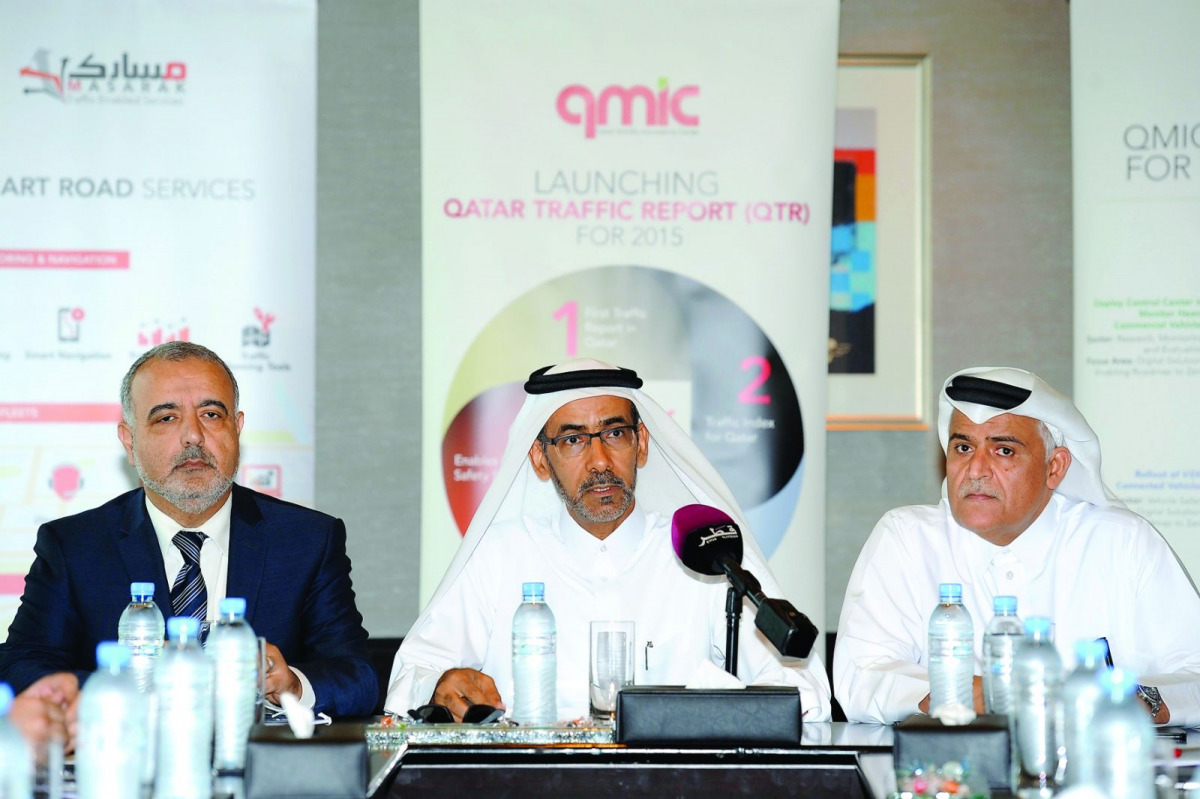
DOHA: Traffic congestion cost the Qatari economy between QR5.2bn and QR6.8bn last year, says the Qatar Traffic Report (QTR) released by Qatar Mobility Innovations Center (QMIC) yesterday.
At an average a commuter wasted 102 hours on the road in 2015 because of traffic congestion, the first edition of the report added.
“Based on productivity loss with 102 hours commuters lost, we believe the cost of congestion in Qatar is about R5bn to QR7bn in 2015. This translates to about 0.8 percent of the country’s GDP,” , said Dr Adnan Abu-Dayya, Executive Director and CEO of QMIC at the launch event yesterday at Marriot Marquis hotel.
QMIC is the first independent innovations centre in the region with a focus on developing and deploying smart mobility systems and services.
Correlating it to other countries, the economic cost of congestion in Qatar is similar at about .8 percent of their GDP, he explained.
The average number of extra hours spent by commuters due to congestion, however, “looks high compared to other countries in the world but it can be understood because we had lots of road projects in 2015.”
Considering other effects of traffic congestion such as accidents, negative impact to the environment and fuel consumption, the actual economic cost could be higher, added Abu-Dayya.
The study also found March was the most congested month last year while the highest congestion period is the morning peak from 7am to 8am.
Other significant findings of the report were November had the highest travel time index in the morning peak hours while December in the evening peak hours.
The report was based on analysis of more than 50mn speed estimations in major road segments available in the Masarak Data Bank from January to December last year.
QTR introduces concept of Masarak Congestion Index
“For the first time in Qatar we have a complete and comprehensive system that allows us to monitor the traffic and mobility behaviour in the country. The QTR is one of the key outputs of the Masarak System which was fully developed and deployed by QMIC and is the most comprehensive in the region,” said Abu-Dayya, adding the system will be used to produce the QTR in an annual basis.
QTR is the first national traffic report that could help ministries, national authorities, and the private enterprises in traffic studies, urban planning, and performance monitoring in the areas of transportation and road safety. Examples of important use cases the QTR can help in include assessing the impact of road/infrastructure projects on traffic over time; monitoring changes in congestion levels across Qatar; identifying problematic congestion areas in specific times/days and quantifying the economic and environmental impact of road congestion.
QTR uses a number of key globally accepted metrics to report on the severity, time, and locations of traffic congestion in Qatar. In particular, the QTR introduces the concept of Masarak Congestion Index, which indicates average reduction in speed due to congestion, and the Travel Time Index, which indicates the increase in travel time due to congestion, to assess the level of road congestion.
The Peninsula