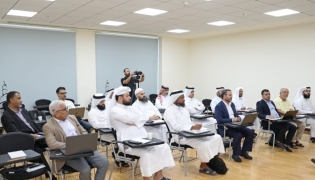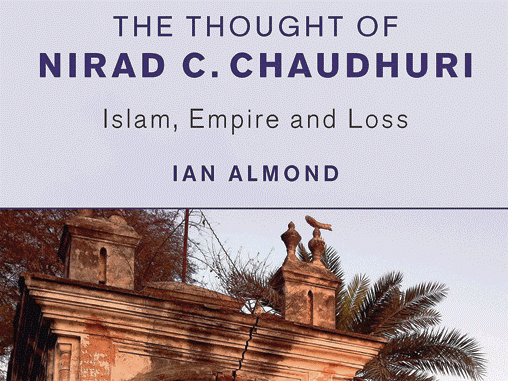

DOHA: Georgetown University in Qatar (GU-Q) will today host the launch of a new book by Dr Ian Almond, Professor of World Literature at GU-Q, titled, “The Thought of Nirad C. Chaudhuri: Islam, Empire, and Loss.” The event will take place at GU-Q’s bookstore at 6pm.
The author revisits South Asian intellectual history to present a critical examination of the notorious writer and defender of Western colonialism, Nirad C Chaudhuri (1897–1999).
The book, which took almost four years to produce, was partially funded by a Qatar Foundation grant. GU-Q’s Center for International and Regional Studies (CIRS) provided further support through a workshop for the manuscript.
Through analysis of Chaudhuri’s views on Islam, his use of related research material, and his opinions on Empire, Almond dissects the constitution of an Indian writer and locates the precise ways in which colonial powers influence and create ‘native informants’, enabling local subjects to critically dismiss their own cultures.
The book explores how Chaudhuri was able to produce the kind of discourses he did, exploring how conservative, pro-Western intellectuals are formed in postcolonial environments. A strong comparative element in the book places Chaudhuri’s views in relation to conservative intellectuals from Latin America, the Middle East and South Asia, and concludes by considering present-day ‘native informants’ from these regions.
Commenting on the challenges of writing about Chaudhuri’s controversial views, Dr Almond, who has studied India and Indian fiction for over 15 years, said: “I didn’t want to turn Nirad Chaudhuri into a circus act. However, I do want to show exactly how a small boy, coming from a rural area of what is today Bangladesh, was able to cultivate a consciousness which longed to be European — indeed, which convinced itself it was European. It seems to be a perfect example of ideology in action. He was not simply an imperialist pawn of the British, he also offers an example of how power can alienate people from their own cultures.” The book is a historical assessment but offers an insight into why a figure like Chaudhuri is relevant today, says the author. “Western media – as well as other media – depend heavily on the use of “native” experts to promote the default response that Western democracies are automatically superior despite all evidence to the contrary. To be politically conscious is to be actively and constantly aware of the possibility of being indoctrinated, and Chaudhuri’s case can teach us many lessons in this regard, both positively and negatively.”
The book is currently available in hardback from Cambridge University Press.
The Peninsula