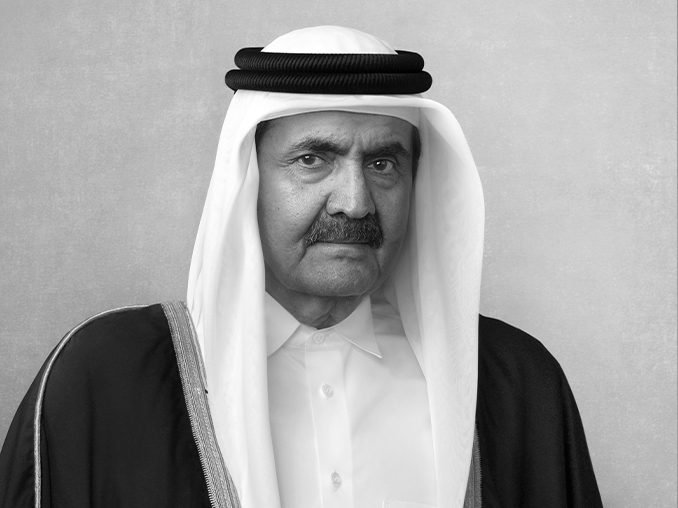
Doha, Qatar: Prominent media personalities, political analysts, academics and writers from across the Arab world and beyond have paid glowing tributes to the late Father Amir, H H Sheikh Hamad bin Khalifa Al Thani, describing him as the visionary architect of modern Qatar whose leadership transformed the country into a globally respected political, economic and diplomatic power.
Palestinian political analyst Ibrahim Al Madhoun described the Father Amir as a leader who occupies a special place in the hearts of Palestinians because of his steadfast political and humanitarian support for the Palestinian cause during some of its most difficult moments. He recalled Sheikh Hamad’s continued communication with late Palestinian President Yasser Arafat during the siege in Ramallah, describing it as an important demonstration of political solidarity.
Iraqi academic Adel Al Ghurairi said the passing of the Father Amir represents the loss of one of the Arab world’s most influential modern leaders, praising his success in establishing a foreign policy rooted in dialogue, openness and mediation.
Researcher Mahmoud Alloush described Sheikh Hamad as the driving force behind Qatar’s remarkable political and economic transformation, saying any discussion of the country’s modern renaissance would be incomplete without recognising his decisive leadership.
Speaking to France 24, Alloush said the Father Amir successfully transformed Qatar from a small Gulf state into an influential regional actor whose policies helped shape political developments across the Middle East over the past several decades.
Across the Gulf, writers reflected on the profound impact Sheikh Hamad had on the region’s development.
Writing in Kuwait’s Al-Qabas, Dr. Abdulhamid Al Shayji described the Father Amir as one of the Gulf’s outstanding statesmen whose leadership ushered in a defining era in Qatar’s modern history. He pointed to sweeping advances in education, economic development and international engagement while preserving the country’s Gulf identity and close fraternal ties with neighbouring states.
Similarly, Kuwaiti columnist Abdulrahman Al Otaibi wrote in Alrai that Sheikh Hamad’s passing marked the end of an extraordinary chapter in Gulf history. He noted that the Father Amir oversaw landmark modernisation projects that reshaped Qatar’s infrastructure, economy, culture and sports sectors.
Al Otaibi also highlighted the launch of Al Jazeera Media Network during Sheikh Hamad’s leadership, describing it as one of the Arab world’s most influential media institutions. He further noted that Qatar’s successful hosting of the FIFA World Cup represented the culmination of decades of strategic planning and investment initiated during the Father Amir’s reign. Omani writer Nasser Al Abri said Sheikh Hamad’s legacy extends well beyond Qatar, describing his development model as an inspiration for the wider Arab world. Writing in Alroya newspaper, Al Abri said the Father Amir believed that a nation’s true wealth lay not merely in its natural resources but in investing those resources wisely to improve people’s lives. Guided by this philosophy, Sheikh Hamad directed energy revenues towards schools, universities, hospitals, research centres and world-class infrastructure, making investment in human development a defining feature of his leadership.
He also praised the establishment of Education City, which helped position Qatar as a global centre for higher education, research and innovation.
Lebanese journalist Nader Ezzeddine described Qatar’s mediation efforts under Sheikh Hamad as one of the country’s defining diplomatic achievements.
Writing in Annahar, he recalled Qatar’s successful facilitation of negotiations involving Lebanon, Sudan, Palestine and Yemen, noting that mediation became a cornerstone of Qatari foreign policy and significantly strengthened the country’s international standing. Ezzeddine also highlighted Sheikh Hamad’s commitment to education, sports and economic diversification, describing Education City as one of his most enduring contributions to regional knowledge development.
Saudi writer Mirza Al Khuwaildi described Sheikh Hamad’s era as one of the Gulf’s most remarkable political and developmental experiences in recent decades.
Writing in the London-based Asharq Al-Awsat, he noted that Qatar’s gross domestic product more than doubled during the Father Amir’s reign while per capita income rose significantly, driven by strategic investments in liquefied natural gas production and economic diversification.
He also praised Qatar’s active diplomatic engagement in African and Middle Eastern conflicts and highlighted Sheikh Hamad’s historic 2012 visit to Gaza as evidence of his unwavering support for the Palestinian people. European commentators likewise underscored Sheikh Hamad’s global influence.
Spanish writer Eduardo Alvarez described him as a leader of exceptional political foresight whose initiatives transformed Qatar into an international hub within a remarkably short period.
Spanish journalist Alberto Ochoa added that Sheikh Hamad oversaw sweeping economic, social and cultural reforms while successfully leveraging the country’s natural gas wealth to establish Qatar as a major investment destination and diplomatic power.