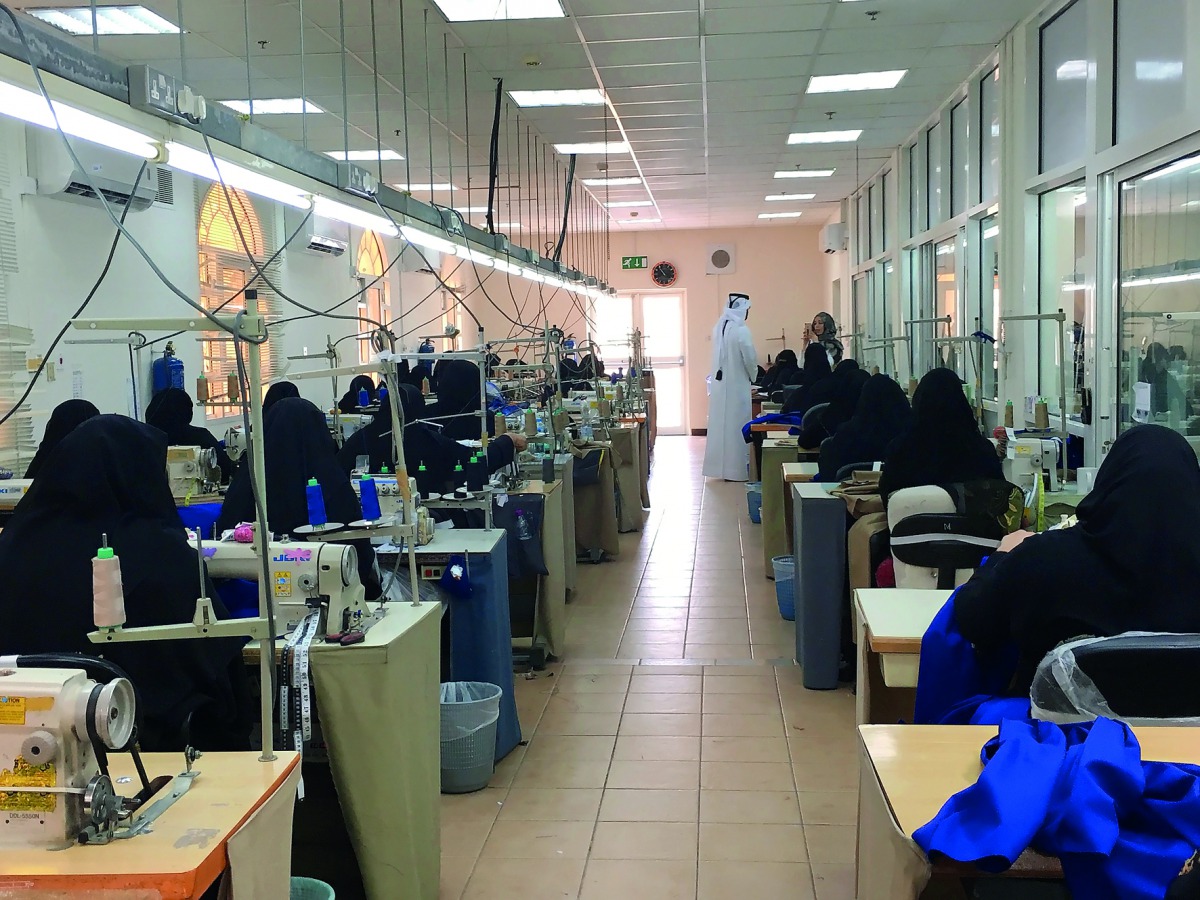
A view of the factory of Sheikha Haya for Industrial Sewing.
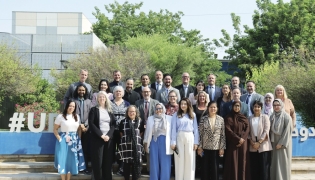
Nama Center, one of Qatar Foundation for Social Work’s (QFSW) Centers, has organised an official visit to the Factory of Sheikha Haya for Industrial Sewing in the presence of Nama Center’s officials to observe the progress of work at the factory.
The visit included meetings with factory officials and workers, who talked about their most important successes and achievements and addressed the challenges and difficulties facing them, especially in light of the current crisis.
They further discussed measures to overcome them and get past their side effects.
Since its inception in 1997, the Factory of Sheikha Haya for Industrial Sewing – a non-profit developmental institution with administrative and financial autonomy – has achieved a qualitative leap through the implementation of its charitable, developmental and humanitarian goals. The factory provides many training, recruitment and employment opportunities for families, individuals, people with special needs, as well as women with low incomes. At present, the number of workers at the Factory of Sheikha Haya for Industrial Sewing stands at 72, including 67 women. There is also a plan to increase that number and expand the factory in the future.
The factory aims at empowering families in need across Qatar, with the provision of training and qualification courses, and the creation of job opportunities that provide families with a sustainable source of income in order to help them improve their standard of living, cope with the daily burdens of life, as well as overcome their problems and achieve social integration. The factory adopts a high quality management approach to ensure the highest level of customer satisfaction and sufficient cash flow to support the continuity and independence of the factory's activity and development.Maryam bint Abdullatif Al Mannai, Acting Executive Manager at NamaCenter, said: “Our frequent visit to the Factory of Sheikha Haya for Industrial Sewing is an affirmation of our keenness to provide all forms of support for national products as well as to promote women's participation in development and improve their contribution in all fields so as to build a society of justice and efficiency.”