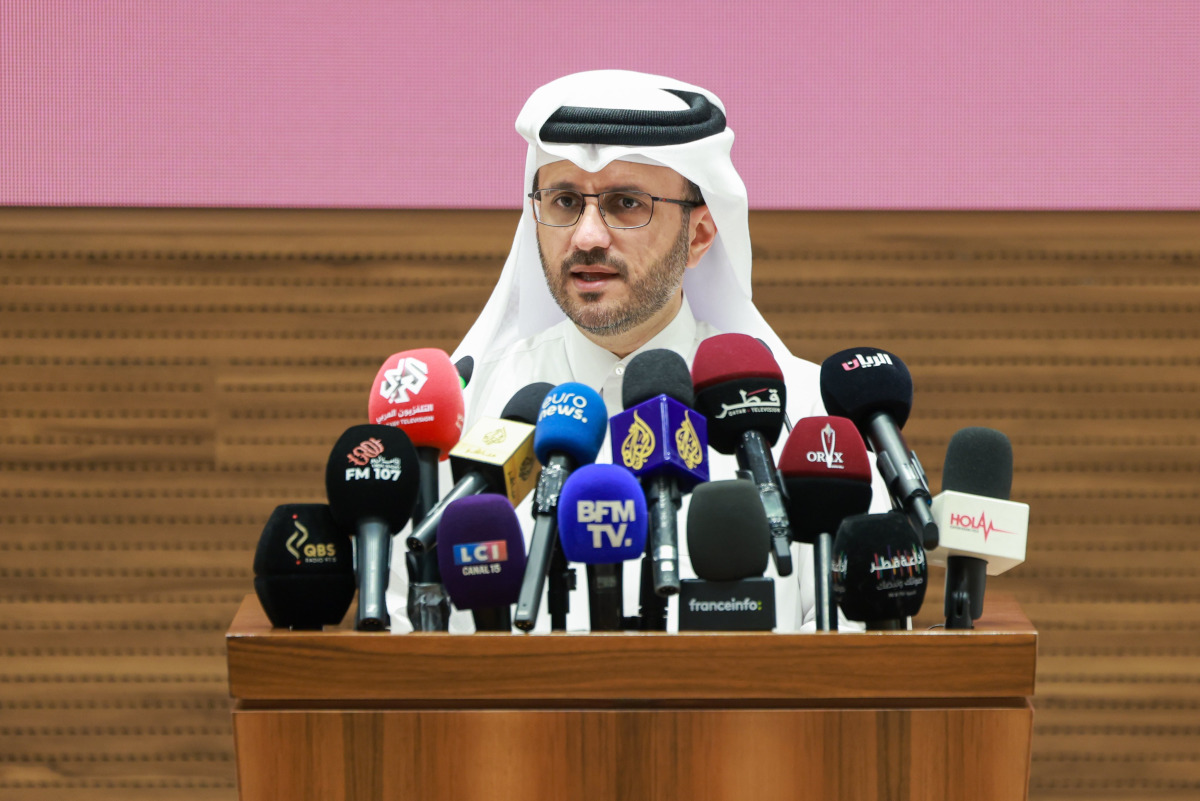
Doha: Advisor to the Prime Minister and Official Spokesperson for the Ministry of Foreign Affairs Dr. Majed bin Mohammed Al Ansari confirmed that the State of Qatar will be represented at the signing ceremony of the memorandum of understanding between the United States of America and the Islamic Republic of Iran, scheduled to take place in Geneva, Switzerland, on Friday, alongside other regional stakeholders and the Pakistani mediators.
Speaking during the Ministry of Foreign Affairs' weekly media briefing, Dr. Al Ansari said the State of Qatar participated in supporting the mediation track led by the Islamic Republic of Pakistan.
He explained that following meetings held in Islamabad, contacts were made with various countries in the region, including the State of Qatar, in order to bridge differences between the parties and bring an end to the crisis that has affected everyone.
He noted that next Friday will witness the direct signing of the memorandum of understanding that had previously been signed electronically, paving the way for the negotiation phase.
He pointed out that all regional parties, including the State of Qatar, are working to facilitate communication between the two sides to ensure the success of the process and the restoration of regional peace and security to the situation that existed before the war.
He highlighted that Qatar's role focused primarily on supporting the Pakistani efforts aimed at reaching a common understanding between the two sides, ensuring the restoration of normal navigation through the Strait of Hormuz, maintaining the ceasefire, and moving forward with negotiations between the parties.
He expressed Qatar's cautious optimism that the signing of the memorandum of understanding will lead to the next phase of negotiations, contributing to regional stability through talks focused on the nuclear file and regional security issues.
He stressed that no conflict in the world ends without a sustainable mechanism to address it, and that achieving stability in the region requires continued dialogue, while lasting peace can only be achieved through an ongoing political process.
The Advisor to the Prime Minister and Official Spokesperson for the Ministry of Foreign Affairs stressed that continued regional dialogue represents an essential requirement in the next phase, with the aim of rebuilding trust among the parties.
He pointed out that following the signing of the agreed memorandum of understanding, the Strait of Hormuz will be reopened to regular navigation, contributing to the resumption of global energy supplies and reducing the burden that the closure of the strait has placed on energy markets, as well as global food markets due to fertilizer shortages.
He noted that the signing of the memorandum will open the door to negotiations aimed at establishing a sustainable framework for this vital maritime passage.
He expressed hope that the signing of the memorandum of understanding would mark the beginning of a negotiation process leading to sustainable peace in the region, noting that all parties had participated positively in the talks.
He added that a significant portion of the discussions had taken place through telephone calls and virtual meetings, in addition to direct meetings.
He also expressed satisfaction that the contents of the memorandum of understanding have not yet been disclosed, indicating that this suggests the process is proceeding in the right direction ahead of the official signing.
He affirmed that all key issues will be discussed within the framework of the memorandum and that its details will become clear after the signing.
He noted that the efforts led by Pakistan, with the support of a number of countries in the region, stemmed from a commitment to regional peace and security, particularly the security of Gulf states.
They also took into account the security of countries affected by the closure of the Strait of Hormuz and the resulting implications for energy security and food security.
He reiterated that since the first day of the crisis, the State of Qatar has focused on the safety and security of its citizens and residents, and on protecting national and economic security as an essential component of the regional security framework.
He expressed hope that the agreement would serve as a first step toward broader regional consensus that guarantees sustainable security and stability in the region.