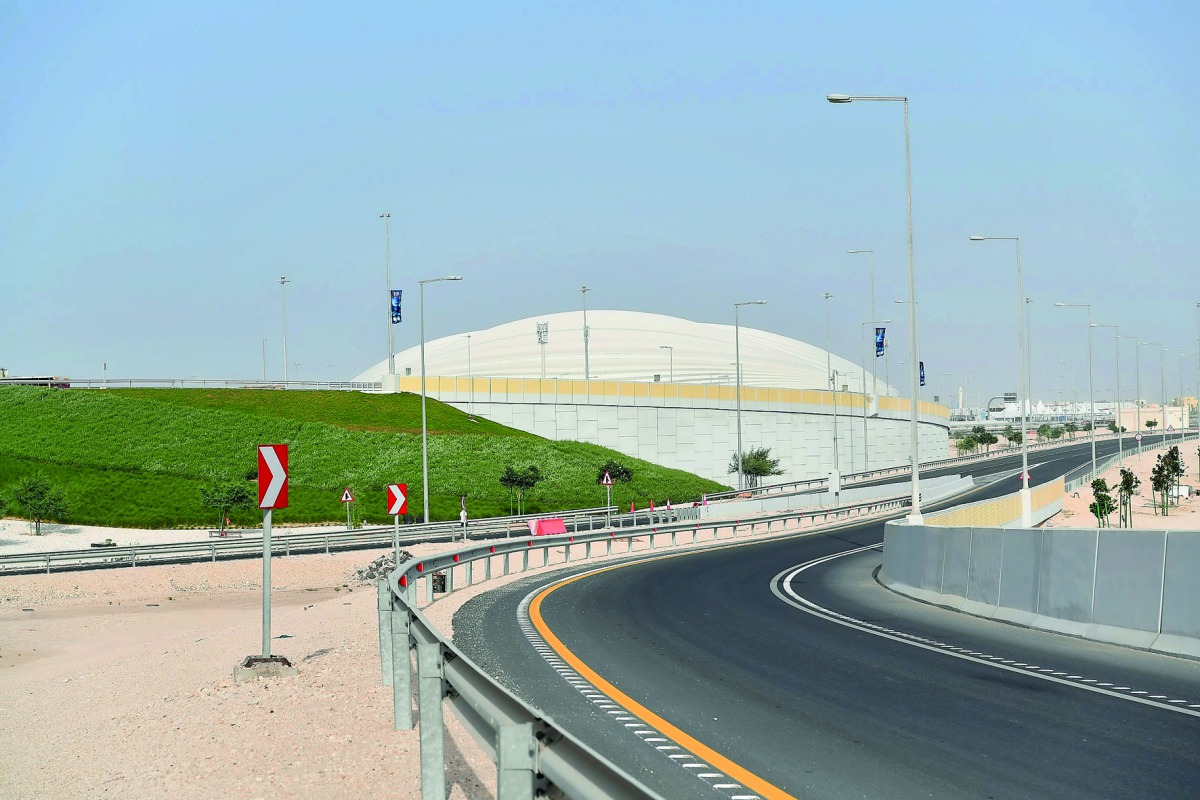
The Doha Express Highway (Southern Part) leading to the Al Wakrah Stadium.
Doha: The Public Works Authority (Ashghal) has delivered a number of local roads, expressways and various infrastructure projects that serve Al Wakrah Stadium facilities which will host today Amir Cup final.
Ashghal has developed new roads and upgraded existing roads to facilitate access to the stadium and its facilities. Aiming to provide well-developed roads that facilitate access to 2022 World Cup Stadiums, Ashghal continues to work on several projects that serve the stadiums through the completion of the surrounding roads and infrastructure in the areas in which they are located.
Through a number of projects, Ashghal is establishing a network of roads to facilitate traffic movement during the World Cup in 2022 in coordination with the Supreme Committee for Delivery & Legacy, Ministry of Interior, Amiri Guard and Qatar Football Association.
Commuting from Doha to Al Wakrah nowadays does not necessarily require passing through Al Wakrah main road, since there are new alternative routes like G-Ring Road, and the southern part of Doha Express Highway, Najma street extension, in addition to the construction of other upgraded roads that connect commuters from the north, such as Al Majd Road, and other roads facilitating commuters from the south such as Mesaieed Road and Hamad Port Road.
Ashghal has substantially completed the construction works of all expressways adjacent to Al Wakrah Stadium during 2017 and 2018, including the southern part of Doha Express Highway and G-Ring Road.
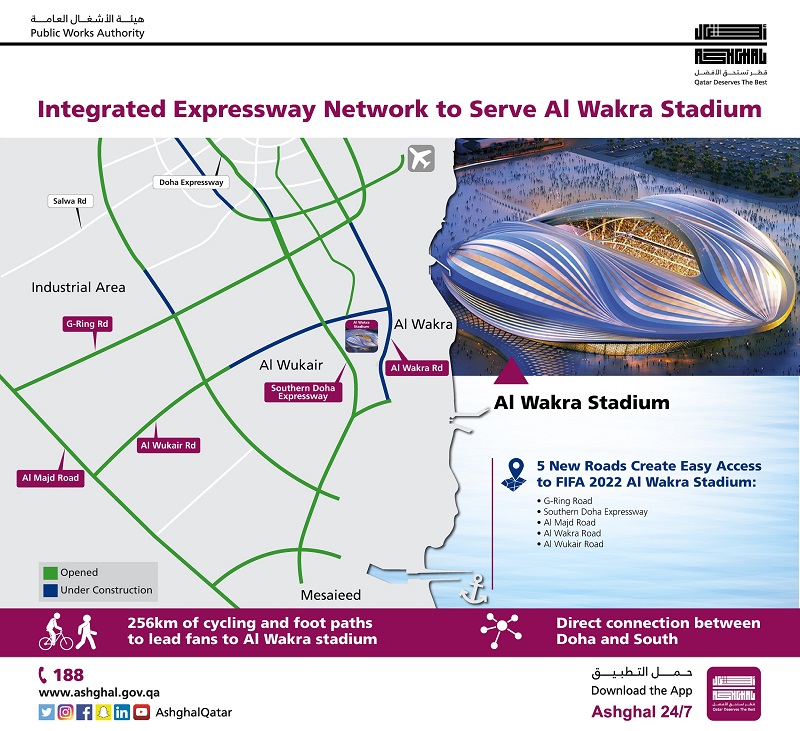
The G-Ring Road facilitates access to 2022 FIFA World Cup stadiums such as Al Wakrah Stadium where Umm Besher Interchange will enable road users coming from G-Ring Road to get on the Southern Part of Doha Express Highway and reach Al Wukair Interchange which directly serves Al Wakrah Stadium.
The Southern Part of the Doha Express Highway project is considered one of the most important roads that directly connect to Al Wakrah stadium though Al Wukair Interchange, as it connects with Doha Expressway, Sabah Al Ahmad Corridor and G Ring Road on one end, and with Al Wukair Road, Mesaieed Road and Al Wakrah Main Road on the other end.
Al Majd Road which enhanced connectivity with a number of stadiums such as Al Rayyan, Al Khor, and Lusail stadiums, also facilitated access to Al Wakrah stadium for road users coming from northern and southern regions, through Bu Al Yawabi Interchange, for those coming from Salwa Road, and through Hamad Port Interchange and for those coming from Mesaieed Industrial City, Sealine and Al Afja area. Al Wakrah Main Road will serve Al Wakrah stadium, one of 2022 World Cup stadiums. Road users can use The Pearl roundabout on Al Wakrah Main Road Project to reach Al Wakrah Stadium.
Ashghal’s achievements in implementing the highways leading to Al Wakrah Stadium from all over Qatar extended to include the development of local roads in Wakrah and Al Wukair area that serve the stadium through a series of projects.
Development works also include upgrading the road leading to Al Wakrah Central Market and the new Al Wakrah Road, Packages 5 and 7, with a total length of 23 km, which provides direct connection with Al Wakrah Stadium.
In order to facilitate the fan commute from Al Wakrah Metro Station to Al Wakrah Stadium, Ashghal has implemented 3.5km long pedestrian and cycling tracks extending from the metro station to the stadium, starting from Al Wakrah Street to pass through Najma Street extension and Al Wukair Road, within two months.
The implementation of these tracks aims to enhance the movement and transportation of visitors and fans during the Amir Cup final. The work of beautification and landscaping are carried out in order to provide shade for these tracks; Ashghal also provides shaded rest areas, in addition to providing many tunnels along these tracks if necessary.